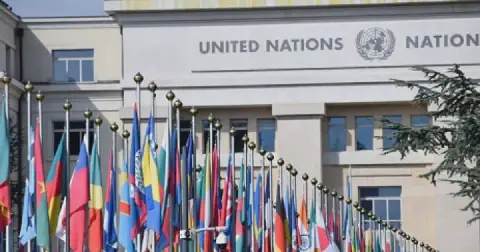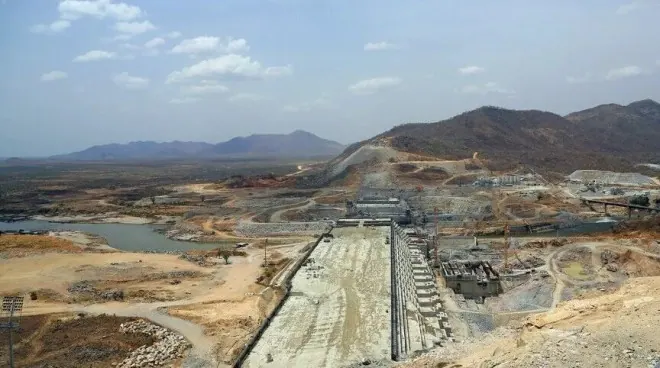
Egypt's Irrigation and Water Resources Minister Hani Sewilam stated on Sunday that his country views the Grand Ethiopian Renaissance Dam (GERD) as "illegitimate". He made these remarks during a briefing in Cairo with foreign media representatives. Sewilam emphasized that Egypt reserves the right to take necessary measures to protect its water security. This development highlights the ongoing tensions between Egypt and Ethiopia regarding the GERD.
The dispute over the GERD has been ongoing for years, with Egypt demanding a legally binding agreement to regulate the dam's operation. Cairo is concerned that the dam could impact its water security. The 2015 Declaration of Principles, signed by Egypt, Ethiopia, and Sudan, aimed to establish cooperation and coordination on the dam's filling and operation. However, Sewilam stressed that this declaration does not grant Ethiopia the right to unilaterally take measures concerning the dam.
Sewilam warned of potential risks associated with the uncoordinated operation of the GERD. He noted that it could lead to sudden changes in water flows, affecting dams in both Egypt and Sudan. Egypt's primary concern is the timing and quantity of water releases, as well as the rules governing them. Sewilam argued that Ethiopia's actions suggest that the dam's primary purpose is not electricity generation, but rather to control the Nile River's water.
The Egyptian minister rejected Ethiopia's claim that Egypt receives the "lion's share" of the Nile's water. He stated that Egypt's annual allocation of 55.5 billion cubic meters represents about 2.7% of the Nile Basin's rainfall. In contrast, Ethiopia received over 1 trillion cubic meters of rainfall in 2023, including around 467 billion cubic meters over its portion of the Nile Basin. Sewilam also highlighted Ethiopia's significant renewable water resources, totaling around 122 billion cubic meters annually.
Sewilam emphasized the need for a legally binding agreement on the GERD's operation, particularly during periods of drought or flooding. He suggested that Ethiopia could diversify its energy mix to ease water-related pressures, citing the country's potential in solar and wind power. Additionally, Sewilam called for greater cooperation on rainwater harvesting, groundwater, and improving agricultural water-use efficiency.
The dispute over the GERD has led to stalled negotiations between Egypt, Sudan, and Ethiopia. Cairo and Khartoum have pushed for a trilateral agreement to ensure their water rights and interests are protected. However, Ethiopia maintains that a binding agreement is not required, and it does not intend to harm other countries' interests. The negotiations had resumed in 2023 but stalled again in 2024.
The GERD has been a contentious issue since its construction began in 2011. Egypt, Sudan, and Ethiopia have been engaged in discussions to reach a mutually beneficial agreement. However, the lack of a binding deal has raised concerns about the dam's impact on the region's water security. Key points include Egypt's concerns over the dam's operation, the need for a legally binding agreement, and the potential risks associated with the GERD's uncoordinated operation.
Key points
- Egypt considers the GERD "illegitimate" and reserves the right to take action to protect its water security.
- The 2015 Declaration of Principles does not grant Ethiopia the right to unilaterally take measures concerning the dam.
- Egypt, Sudan, and Ethiopia have been engaged in stalled negotiations over the GERD's operation and its impact on regional water security.