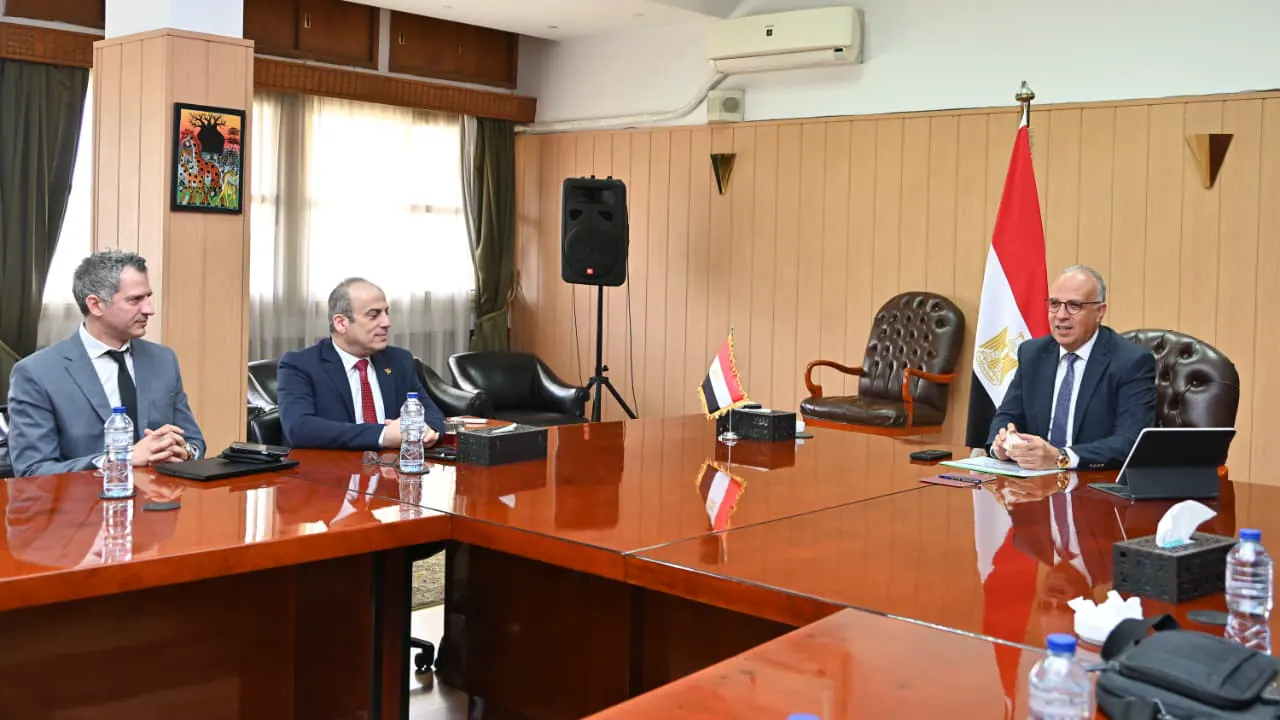
Egypt's Water Resources and Irrigation Minister Hani Sewilam and International Center for Agricultural Research in the Dry Areas (ICARDA) Director General Nizar Haddad recently met to discuss their joint programme, which aims to improve water conservation, irrigation, and soil salinity management. The programme, running through 2027, focuses on translating areas of cooperation outlined in a 2024 memorandum of understanding into practical projects. This joint effort seeks to enhance Egypt's agricultural sector by implementing innovative solutions.
The joint work programme for 2025-2027 includes several key initiatives, such as a pilot desalination unit at the National Water Research Center's Wadi El Natrun research station. This project is part of the U.N. Food and Agriculture Organization's Water Scarcity Initiative, in which ICARDA participates. The programme also involves establishing farmer field schools in Qena and Kafr El-Sheikh to introduce integrated systems for managing soil salinity alongside agricultural production and aquaculture.
Another significant project discussed was the "Enhancing Food Security in Egypt" initiative, implemented in cooperation with the Japanese government. This project aims to strengthen climate resilience, improve agricultural and water productivity, and support sustainable rural livelihoods. It includes deploying solar energy for irrigation, managing soil salinity, improving agricultural extension services, building technical capacity, and introducing digital tools to enhance agricultural practices.
During the meeting, Sewilam emphasized the importance of expanding successful practices in water productivity, solar-powered irrigation, salinity management, agricultural extension, and digital irrigation to additional areas. He highlighted that cooperation with ICARDA is crucial for improving water-use efficiency while strengthening the long-term sustainability and productivity of Egypt's agricultural sector.
The collaboration between Egypt and ICARDA focuses on addressing critical challenges facing the agricultural sector, including water scarcity and soil degradation. By implementing solar-powered irrigation and desalination projects, the two partners aim to enhance food security and promote sustainable agricultural practices. These initiatives are expected to have a positive impact on rural communities and contribute to Egypt's economic development.
ICARDA's involvement in Egypt's agricultural development underscores the center's commitment to supporting sustainable agriculture in the region. Through its research and development activities, ICARDA aims to improve the resilience of agricultural systems and enhance the livelihoods of rural communities. The center's collaboration with Egypt is part of its broader efforts to address the challenges of climate change and water scarcity in the Middle East and North Africa.
The joint programme between Egypt and ICARDA is set to continue until 2027, with a focus on scaling up successful projects and initiatives. The two partners will continue to work together to address the challenges facing Egypt's agricultural sector and promote sustainable agricultural practices. Key outcomes of the programme are expected to include improved water-use efficiency, enhanced agricultural productivity, and increased resilience to climate change.
Key points
- Egypt and ICARDA are expanding cooperation on water conservation, solar-powered irrigation, and desalination projects.
- The joint programme aims to improve water-use efficiency and strengthen the sustainability and productivity of Egypt's agricultural sector.
- The collaboration includes several key initiatives, such as a pilot desalination unit and farmer field schools in Qena and Kafr El-Sheikh.