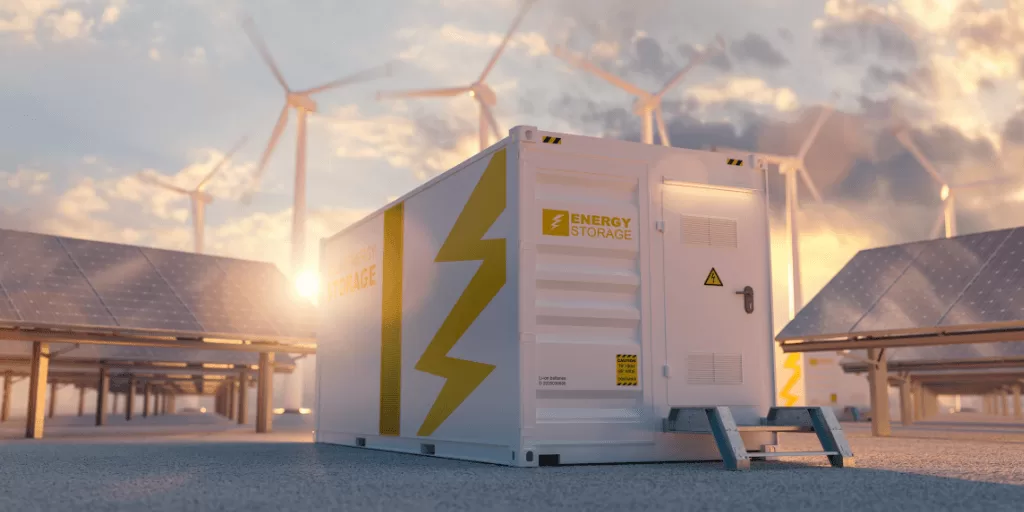
The Chinese company Sungrow has laid the foundation stone for a new factory specializing in advanced battery energy storage systems (BESS) in the Sino-Egyptian Economic and Commercial Zone, TEDA, at Ain Sokhna, Egypt. This marks the first such facility in the Middle East and North Africa region. The project aims to support the localization of clean energy technologies and enhance Egypt's capabilities in this sector. The factory will span 50,000 square meters and have a production capacity of 10 gigawatt-hours (GWh) per year when fully operational.
The factory is expected to start production in April 2027, creating around 150 direct jobs and aiming for the local integration of one of the major strategic industries related to renewable energies. This project constitutes a significant value addition to clean industries and marks a new chapter in the industrial and investment partnership between Egypt and China. The TEDA zone has become a major industrial hub for attracting investments and providing an integrated environment for manufacturing and exporting.
The choice of Ain Sokhna by Sungrow reinforces the region's positioning as a center for renewable energy industries and supports the state's strategy to attract high-tech investments and industries with high added value. The factory will manufacture cutting-edge energy storage systems, essential for ensuring the stability of electrical networks and increasing their capacity to integrate growing shares of renewable energies, particularly solar and wind power.
The importance of the project extends beyond production capacity to the transfer of technologies and expertise to the Egyptian market, training of specialized national cadres, and development of related industries linked to new renewable energy technologies. The company is encouraged to increase the share of local components in its products and strengthen collaboration with Egyptian research centers to sustain technology transfer and build local competencies.
The project aligns with Egypt's strategic orientation to expand the use of renewable energies alongside the development of associated local industries, enhancing the economy's capacity to attract new investments and build an industrial base oriented towards regional markets. Egypt's strategy for green and sustainable urban planning aims to create an integrated and sustainable urban system contributing to addressing climate change and reducing greenhouse gas emissions.
The localization of battery energy storage systems production in Egypt is expected to support the country's renewable energy targets and reduce reliance on fossil fuels. The project also presents opportunities for knowledge transfer and skills development in the local workforce. As the MENA region's first BESS factory, it sets a precedent for other countries to follow in the transition to clean energy.
The Egyptian government has been actively promoting investments in renewable energy and clean technologies. The new factory is a significant milestone in this effort, demonstrating the country's commitment to sustainable development and reducing carbon emissions. With Sungrow's investment, Egypt is poised to become a major player in the region's renewable energy sector.
Key points
- The factory will have a production capacity of 10 gigawatt-hours (GWh) per year when fully operational.
- The project aims to create around 150 direct jobs and support the localization of clean energy technologies.
- The factory will manufacture cutting-edge energy storage systems essential for ensuring the stability of electrical networks and integrating renewable energies.