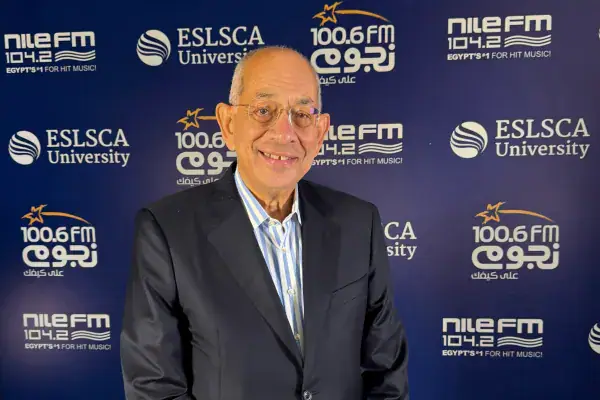
Former Egyptian Minister of Finance Youssef Boutros Ghali recently spoke at the fourth edition of ESLSCA's executive education summit, where he shared insights on the current state of the global economy. Ghali discussed the evolution of the global economic system since World War II, highlighting the agreements made in 1944 that established a framework for international economic cooperation. This framework included the establishment of organizations such as the United Nations, the International Monetary Fund, and the World Bank.
Ghali noted that the current global economic system is facing significant challenges, particularly with the United States' decision to deviate from the agreed-upon framework. He cited examples of this deviation, including the US approach to dispute resolution and the imposition of tariffs. These actions have implications for developing countries, including Egypt. According to Ghali, the changing global landscape requires countries to adapt and develop strategies to navigate these new challenges.
The impact of China's economic slowdown on the global economy was also discussed by Ghali. He pointed out that China's economic growth has been declining, with a projected growth rate of 4% for the upcoming year, down from 12% previously. This decline is attributed to various factors, including decreased consumer spending due to concerns about the future, lack of social support systems, and an aging population.
Ghali emphasized that Egypt and other developing countries face significant challenges in the current global economic landscape. However, he also highlighted the opportunities available to these countries, provided they develop effective policies and strategies. Ghali expressed confidence in Egypt's ability to overcome these challenges, citing the country's capabilities and potential for growth.
One of the key challenges facing Egypt, according to Ghali, is the need to boost exports. He stressed that increasing exports is crucial for achieving economic development in Egypt. To achieve this, Ghali suggested that Egypt needs to focus on building its presence on the international stage and developing its export sector.
The role of international organizations in addressing global economic challenges was also touched upon by Ghali. He noted that these organizations, such as the International Monetary Fund and the World Bank, play a critical role in promoting international economic cooperation and providing support to countries facing economic challenges.
In conclusion, Ghali emphasized that Egypt has the capabilities and opportunities to overcome the current global economic challenges. However, he stressed that the country needs to be intelligent in its approach and develop effective policies to harness its potential. With the right strategies in place, Egypt can navigate the complexities of the global economy and achieve sustainable growth.
Key points
- Egypt has the capabilities to face global economic challenges and can achieve growth with effective policies.