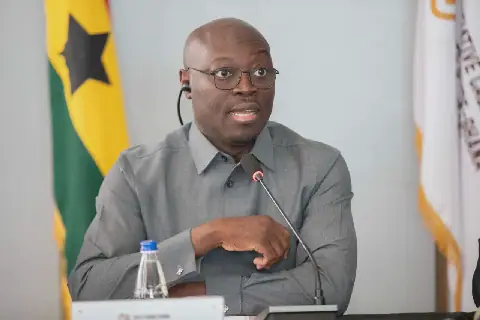
The Egyptian Ministry of Higher Education and Scientific Research, in collaboration with the French Embassy in Egypt, recently hosted a workshop titled "Towards a More Connected Innovation System." The event brought together representatives from academic, research, and industrial institutions from both countries to discuss ways to strengthen partnerships in innovation and technology development. Egyptian Minister of Higher Education and Scientific Research, Dr. Abdel Aziz Kansoua, emphasized the state's commitment to building a comprehensive innovation system that integrates universities, research institutions, funding agencies, industry, and investors.
Dr. Walaa Sheta, CEO of the Egyptian Science, Technology and Innovation Funding Authority, highlighted the importance of enhancing Egyptian-French cooperation in innovation and technology development. She noted that the authority supports scientific research and innovation at various stages, from basic sciences to applied research and industrial partnerships. The authority's programs, such as the "ASPIRE Egypt" program, aim to enhance the capabilities of researchers and research institutions and encourage collaboration with the industrial sector to develop innovative solutions to development challenges.
French Ambassador to Egypt, Eric Chevallier, stressed that scientific and academic relations between Egypt and France are a solid foundation for expanding cooperation in innovation and technology transfer. He reviewed partnership opportunities in sustainable energy, industry, artificial intelligence, healthcare, transportation, and communications. The ambassador emphasized the importance of supporting entrepreneurship and cooperation between universities and companies, as well as leveraging European funding programs, particularly "Horizon Europe."
The workshop featured a lecture by Professor George Blanc, Honorary Professor at HEC Paris, who discussed the role of universities in driving innovation and economic development. He emphasized the importance of integrating innovation into educational and research strategies by encouraging interdisciplinary work, qualifying project managers, and developing partnership services and intellectual property. The workshop also included sessions on building a more connected innovation system through international cooperation, exchanging experiences, and linking research priorities to industry and labor market needs.
The event showcased several projects, including "PHAROS," a cooperation project between Alexandria University and Paris-Saclay University, which aims to develop a model for linking scientific research to industrial needs through the technology valley at Alexandria University. Participants discussed French experiences in technology valleys and university innovation hubs, as well as mechanisms for coordinating between universities, companies, and technology transfer agencies.
The workshop concluded with a call to translate cooperation opportunities into concrete steps and joint research and technology projects that respond to industry needs. Recommendations included linking researcher exchanges and experiences to joint innovation projects, involving end-users in identifying needs, and leveraging humanities and social sciences to understand the market and society.
Key outcomes of the workshop included the importance of clear priorities, developing governance mechanisms and intellectual property rules, and enhancing funding for proof-of-concept and prototypes. Participants also emphasized the need to support technology transfer and marketing of research results, as well as expanding partnerships between universities, start-ups, and technology valleys in both countries to achieve sustainable cooperation and tangible economic and developmental impact.
Key points
- Egypt and France have agreed to enhance cooperation in innovation and technology transfer to drive economic growth and industrial competitiveness.