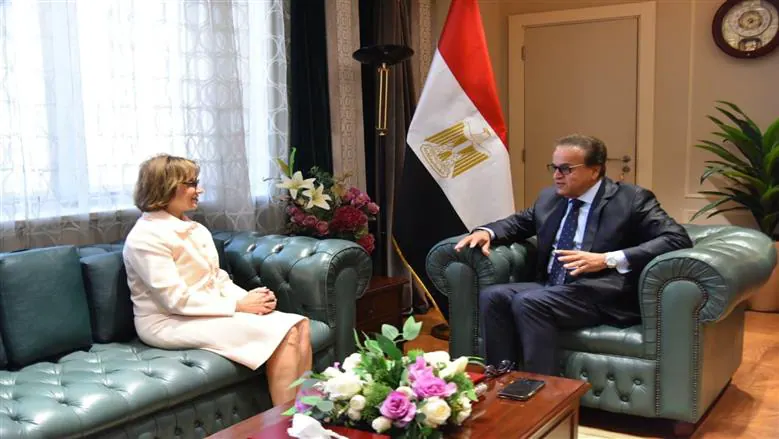
Egyptian Health Minister Dr. Khaled Abdel Ghafar met with Ozelim Fidanji, International Managing Director of Philips, to enhance cooperation and support efforts to localize medical device manufacturing in Egypt. The meeting, held at the ministry's headquarters in the new capital, aimed to discuss ways to strengthen their partnership and explore opportunities for growth. This development aligns with Egypt's goals to increase its production capacity and expand its local manufacturing sector.
The meeting covered the latest developments in the medical device manufacturing localization project, including discussions on the necessary steps to move the project forward. This project supports increasing production capacity and gradually expanding local manufacturing. The Egyptian government aims to integrate the latest healthcare technologies into its medical services. By doing so, they can improve the quality of care provided to patients and enhance the overall healthcare experience.
The meeting also reviewed the progress of cooperation between the Ministry of Health and Philips in establishing and developing specialized units for treating stroke patients. The two parties discussed ways to expand the application of successful models and generalize them to quickly address cases and improve the quality of services provided to patients. This collaboration seeks to enhance patient care and outcomes by leveraging Philips' expertise in stroke care.
The integration of modern medical technologies, including artificial intelligence, was also discussed during the meeting. This integration aims to increase the efficiency of healthcare services and improve the quality of care provided to patients. By incorporating cutting-edge technologies, Egypt's healthcare sector can benefit from enhanced diagnostic capabilities, streamlined clinical workflows, and better patient outcomes.
Another key topic of discussion was the proposed application of remote intensive care solutions, similar to models implemented in Sweden's Karolinska Institute. This would enable the use of digital technologies to monitor patients after they leave the hospital through home monitoring and follow-up solutions. The adoption of such solutions can help reduce healthcare costs, improve patient care, and enhance the overall efficiency of the healthcare system.
Ozelim Fidanji expressed Philips' commitment to continuing its investments in Egypt and its desire to utilize Egypt's capabilities as an export hub to African and Middle Eastern markets. She praised the existing partnership and cooperation with the Ministry of Health, highlighting the potential for growth and expansion. This commitment from Philips underscores the company's confidence in Egypt's economic prospects and its potential as a regional hub for medical device manufacturing.
The Egyptian government is keen to attract foreign investment and expertise to support the development of its healthcare sector. By partnering with international companies like Philips, Egypt can leverage their knowledge, technology, and resources to enhance its healthcare services and improve patient outcomes. The meeting between Dr. Abdel Ghafar and Ozelim Fidanji demonstrates the country's commitment to strengthening its partnerships with global healthcare leaders and driving growth in the medical device manufacturing sector.
Key points
- Egypt aims to establish itself as a medical device manufacturing hub for the African and Middle Eastern markets.
- Philips is committed to continuing its investments in Egypt and expanding its presence in the region.
- The Egyptian government is working to integrate modern medical technologies, including artificial intelligence, into its healthcare services.