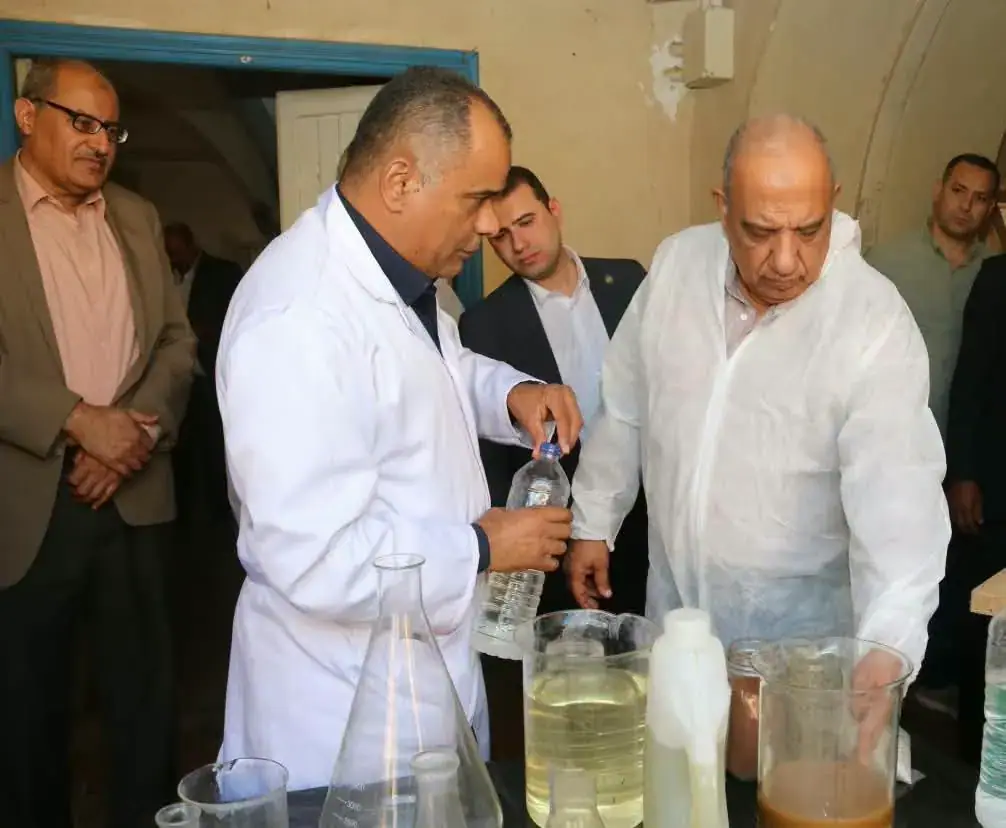
Egypt's Minister of Electricity and Renewable Energy, Mahmoud Esmat, recently visited the Nuclear Research Centre at the Egyptian Atomic Energy Authority's site in Anshas. During the visit, Esmat reviewed research projects focused on utilizing locally available raw materials to produce phosphoric acid, upgrade phosphate ore, and extract potassium. These projects aim to maximize the economic returns from natural resources and link scientific research with industrial applications.
The research projects include recovering and concentrating phosphorus pentoxide from phosphate mining waste, which contains concentrations ranging from 10% to 21%. The proposed process involves several stages, including the separation of silica and heavy elements such as iron, before converting the recovered material into purified phosphoric acid. This purified phosphoric acid can be used in agricultural, food, and industrial applications, contributing to the country's economic growth.
Esmat also reviewed research into the use of glauconite, a mineral rich in potassium and magnesium, as well as the production of ferrosilicon, a material used in metal manufacturing. The minister witnessed laboratory tests demonstrating the use of natural local materials for water purification. These tests showcased the potential of using locally sourced materials to address the country's water treatment needs.
The research team presented a locally developed technology for seawater desalination, which officials believe could help reduce the cost of treating saline water. Esmat described the projects as scientific and technological advances that could deliver more cost-effective solutions. The minister emphasized the importance of supporting the development of applied research projects and establishing the necessary economic entities in cooperation with relevant state institutions.
The Egyptian Atomic Energy Authority has accumulated expertise across several fields, including medical sciences, disease treatment, land reclamation, improving crop productivity, agricultural processing, and product preservation. The visit focused on ways to translate research findings into increased production and manufacturing capacity, make better use of domestic raw materials, and strengthen technology transfer.
During the visit, Esmat attended laboratory experiments demonstrating water purification using locally sourced natural materials. The projects are part of the government's efforts to maximize the economic returns from natural resources, link scientific research with industrial applications, and localize advanced technologies. The minister's visit highlights the government's commitment to promoting scientific research and innovation in various sectors.
The government aims to support the development of applied research projects and establish the necessary economic entities in cooperation with relevant state institutions. By doing so, Egypt can reduce its reliance on imported technologies and capitalize on its natural resources to drive economic growth. The projects reviewed during Esmat's visit have the potential to make a significant impact on the country's industrial and environmental sectors.
Key points
- Egypt's Minister of Electricity and Renewable Energy reviews research projects for local production of phosphoric acid and seawater desalination technologies.
- The projects aim to maximize the economic returns from natural resources and link scientific research with industrial applications.
- The locally developed technology for seawater desalination could help reduce the cost of treating saline water.