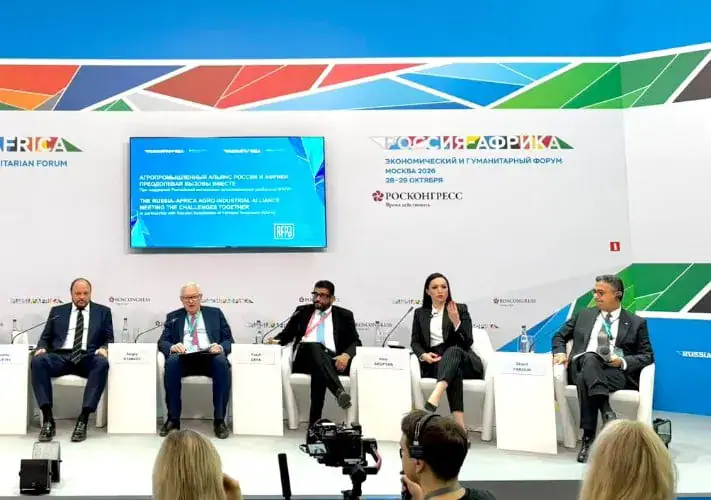
Egyptian Minister of Supply and Internal Trade, Dr. Sharif Farouk, participated in a session titled "The Russo-African Agricultural-Industrial Alliance: Facing Challenges Together" at the Russo-African Economic and Humanitarian Forum in Moscow, Russia. The session was part of the forum's activities, which aimed to enhance economic and trade cooperation between Russia and African countries. Dr. Farouk's participation was in line with Egypt's efforts to strengthen economic and trade ties with Russia and African nations.
During the session, Dr. Farouk emphasized the need to enhance the connection between trade and investment through projects that support transportation, manufacturing, and market access. This, he believes, will help regulate and stabilize food supplies, benefiting producers, importing countries, and investors alike. Egypt, with its strategic location, local market, and trade links with African countries and international markets, is well-positioned to play a significant role in this cooperation.
Dr. Farouk highlighted the potential for establishing projects that link grain and oil trade with storage, food manufacturing, and distribution activities. He revealed that Egypt is studying the feasibility of developing a logistics hub for grains and oils that combines trade, storage, manufacturing, and distribution. This project aims to secure local needs, provide investment and employment opportunities, and serve regional markets.
The proposed logistics hub is expected to support the country's food security and provide a platform for trade and investment. Dr. Farouk stressed the importance of creating suitable trade frameworks for successful investments, including clear responsibilities for partners, coordination between companies, banks, ports, and shipping companies, and long-term supply agreements. This, he believes, will foster trust and support investment planning and supplies.
The Egyptian minister also emphasized the need to improve the connection between ports, manufacturing facilities, and distribution networks to reduce delays and handling costs. This, he believes, will help lower the cost of delivering food products to markets and alleviate the burden on consumers. He highlighted the importance of cooperation based on specific projects, clear responsibilities, and measurable economic benefits.
Dr. Farouk expressed Egypt's readiness to cooperate with Russia and African partners to expand food trade and develop local manufacturing, aiming to achieve mutual benefits and sustainable economic value. The proposed logistics hub is expected to play a significant role in enhancing Egypt's position as a major player in the regional food trade.
The development of the logistics hub is subject to technical and economic studies, which will determine the project's viability and potential impact on the country's food security and economy. The project is expected to have a positive impact on Egypt's economy and food security, and will be implemented in cooperation with relevant stakeholders.
Key points
- Egypt is exploring the development of a logistics hub for grains and oils to link trade with storage, manufacturing, and distribution.
- The proposed hub aims to secure local needs, provide investment and employment opportunities, and serve regional markets.
- The project is subject to technical and economic studies to determine its viability and potential impact on Egypt's food security and economy.