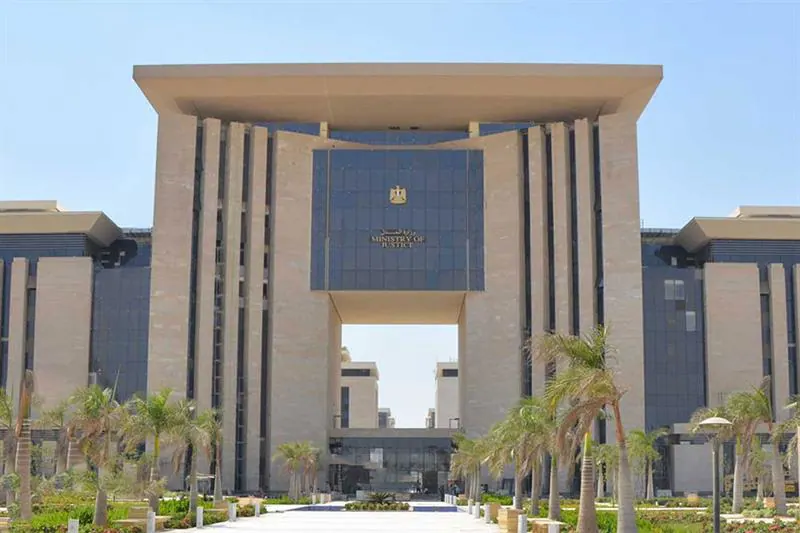
Egypt's Ministry of Justice has expanded the list of professional services suspended for people convicted of failing to pay court-ordered alimony. The new measures, published in the Official Gazette, were issued under Decree 5041 of 2026 and revise Article 1 of Decree 896 of 2026. The restrictions remain in place until the convicted person pays outstanding arrears to the beneficiary or Nasser Social Bank, as applicable, and submits a certificate confirming clearance of the debt.
The expanded list covers the issuance and renewal of professional driving licences and firearm licences for workers guarding facilities, both administered by the Interior Ministry. It also includes licences for medical facilities and medical practitioners under the Ministry of Health and Population, as well as Transport Ministry licences for companies operating domestic and international passenger transport services.
A substantial part of the amendment concerns services provided by five bodies under the Ministry of Industry. At the Egyptian Organization for Standardization and Quality, the restrictions cover purchases of Egyptian standards and guides, annual standards subscriptions, quality marks, conformity marks and certificates, and halal certification for food products. They also cover laboratory testing, quality training, registration of high-efficiency electric motors, energy-efficiency labels, verification of automotive component e-mark certificates, professional licenses, accreditation of training centers, and certification of processes and services.
The Industrial Control Authority is also affected, with restrictions covering technical studies on production inputs, licences for transporting and handling hazardous industrial waste, and licences for printing businesses that produce packaging materials. The list also covers accreditation of service and maintenance centres, issuance and renewal of industrial steam-boiler licences, approvals for importing passenger cars for commercial purposes, and assessments of subsidized alcohol allocations for industrial use.
The Egyptian Accreditation Council, the Executive Agency for Industrial Projects, and the Industrial Development Authority are also impacted by the expanded list. At the Egyptian Accreditation Council, the suspension covers accreditation services under international standards for testing and calibration laboratories, medical laboratories, inspection bodies, and bodies certifying management systems, personnel and products. For the Executive Agency for Industrial Projects, the restrictions cover ownership and lease contracts for units in industrial complexes and zones within its jurisdiction.
The expansion follows the introduction in August of an electronic enforcement system that links service suspensions to alimony non-payment across 38 primary court offices. In June, the ministry signed digital integration agreements to accelerate alimony enforcement through asset verification and electronic notifications. The Public Prosecution also launched an online inquiry service in September, allowing citizens to check their family case records and rulings.
The measures are part of a broader effort to enforce court-ordered financial obligations. Separately, the cabinet approved a draft law in May establishing a family support fund to expand mechanisms for enforcing court-ordered financial obligations. The amendment also covers licences issued by Olympic and Paralympic committees, Olympic and non-Olympic federations, specialized federations, and sports clubs, as well as licences for workers in youth organizations and sports investment companies.
Key points
- The Egyptian Ministry of Justice has expanded the list of services suspended for people convicted of failing to pay court-ordered alimony.
- The restrictions cover various licences and services provided by several ministries and bodies, including the Interior Ministry, Ministry of Health and Population, and Ministry of Industry.
- The expansion aims to enforce court-ordered financial obligations and follows the introduction of an electronic enforcement system.