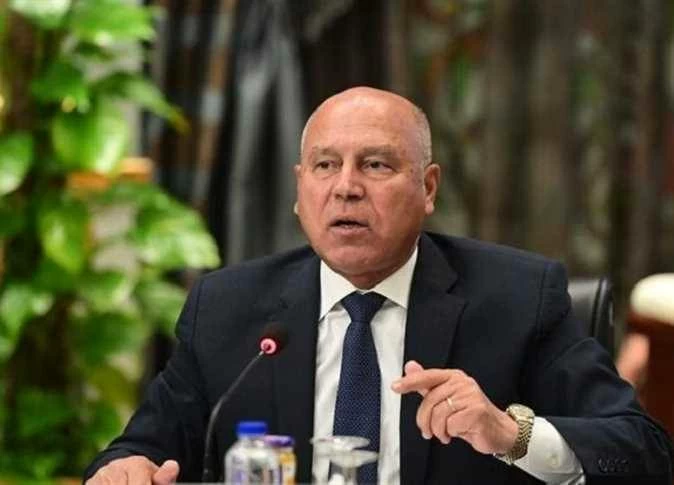
Egyptian Transport Minister, General Kamel El-Wazir, has emphasized the country's efforts to strengthen its role in global trade and transit. He highlighted Egypt's strategic location and extensive transportation networks linking its ports to Arab countries, amidst ongoing tensions in the Middle East. This positioning allows Egyptian ports to serve as crucial transit points for goods.
Goods from Arab countries arriving from Europe and America are routed through Damietta and Alexandria ports before being transported to other Egyptian ports such as Suez, Safaga, and Nuweiba. From there, they are shipped to neighboring Arab countries via the Northern and Southern Arab Trade Corridors. This logistical setup underscores Egypt's ambition to become a pivotal hub in global trade.
The Egyptian government has invested heavily in upgrading its ports to increase their capacity for handling larger vessels. The total length of port berths has been expanded to 100 kilometers, with water depths allowing for ships with drafts of up to 25 meters. These enhancements enable Egyptian ports to accommodate more substantial maritime traffic, further solidifying the country's role in international trade.
Significant developments have been noted in the ports of Sokhna and Damietta. Sokhna is cited as the first port globally to be constructed on land, while Damietta is recognized as one of the world's most advanced ports in terms of development. These projects reflect Egypt's commitment to modernizing its port infrastructure.
Minister El-Wazir has also addressed concerns regarding the sale of Egyptian ports, clarifying that the government does not intend to sell these critical assets. Instead, Egypt collaborates with international operators to manage and operate its ports, ensuring efficient and globally competitive services.
In the realm of urban transportation, the minister pointed out that Egypt has focused on enhancing its internal transport networks, including roads and public transit systems, to facilitate movement within and between cities. This development was crucial for enabling workers to commute to their jobs and for connecting various parts of the country, including its ports.
The development of transportation infrastructure in Egypt has yielded substantial economic benefits, including annual savings of $8 billion. Furthermore, plans are underway to establish an advanced metro system in Alexandria, with construction slated to begin in May. These initiatives contribute to a robust and efficient urban transport network in Egypt.
Key points
- Egypt aims to become a global trade and transit hub.
- The country has invested in port modernization and urban transport development.
- Egypt's transport upgrades have resulted in significant economic savings.