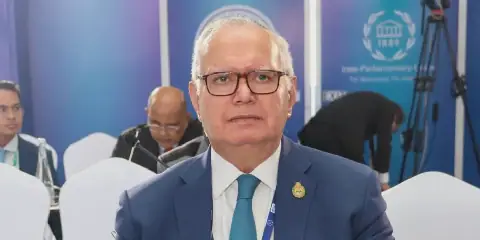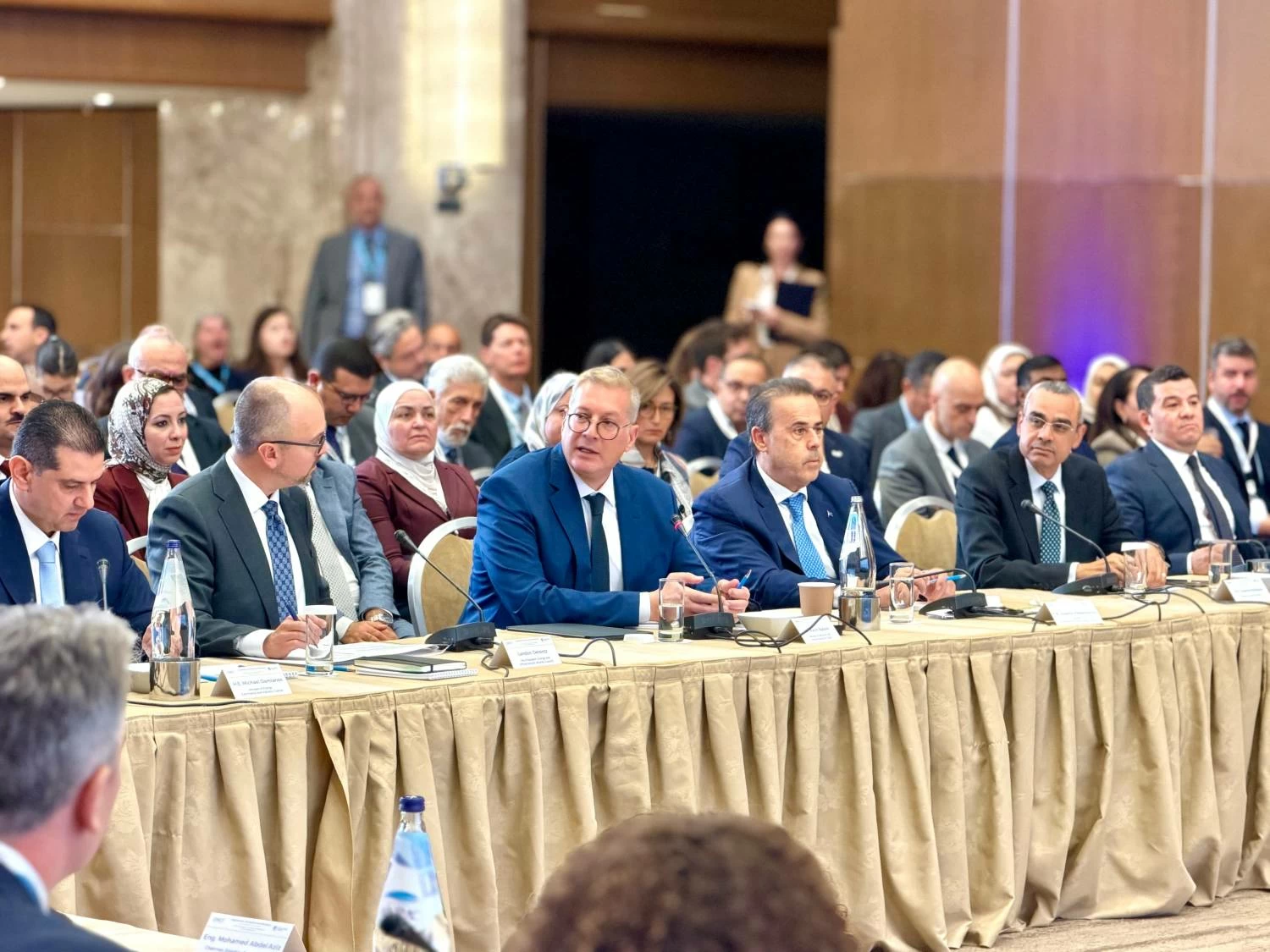
Egyptian Minister of Petroleum and Mineral Wealth, Karim Badawi, stated that Egypt's cooperation with Cyprus in the gas sector has transitioned from a strategic partnership to actual implementation on the ground. This development involves connecting Cypriot gas fields to Egypt's infrastructure. Badawi made these remarks during a high-level roundtable meeting of energy ministers and gas industry leaders in Athens, Greece. The meeting was organized by the East Mediterranean Gas Forum in collaboration with Hellenic Energy.
The roundtable meeting, which included energy ministers from Greece and Cyprus, as well as the Secretary General of the East Mediterranean Gas Forum and representatives from global companies, focused on the region's gas potential. Badawi highlighted that the East Mediterranean region possesses promising gas resources, while Egypt has a comprehensive system that includes production and processing facilities, a national gas grid, and two liquefaction plants in Idku and Damietta. This infrastructure makes Egypt an ideal platform for developing the region's resources and exporting them to global markets.
Badawi reviewed the progress of cooperation with Cyprus, citing the final investment decision for the Kronos field by the Eni and TotalEnergies consortium in July. He described this as a practical model of integration, where Cypriot gas will be transported to Egypt for processing and then re-exported as liquefied natural gas. This approach is expected to reduce investments and shorten the time it takes for the gas to reach markets.
The Egyptian minister also mentioned that work is ongoing to complete arrangements for reaching a final investment decision for the Aphrodite field. This follows the signing of a letter of intent in March in Cairo. Additionally, Badawi emphasized the importance of activating a memorandum of understanding signed in May 2026 with ExxonMobil and QatarEnergy. This agreement aims to study the development of the Glaucus and Pegasus discoveries using Egypt's infrastructure.
Badawi highlighted the significance of trilateral cooperation between Egypt, Cyprus, and Greece. The leaders of these countries met in El Alamein in September, emphasizing the need to accelerate the development of Cypriot gas resources. By integrating Cypriot resources with Egypt's processing and liquefaction capabilities and Greece's ability to receive gas, the region can export East Mediterranean gas to European markets.
Egypt's comprehensive infrastructure and strategic location make it an attractive partner for regional gas development. The country's two liquefaction plants, located in Idku and Damietta, have a significant role to play in exporting gas to global markets. By leveraging these facilities, Egypt aims to become a major player in the region's gas sector.
The cooperation between Egypt and Cyprus marks a significant step forward in the region's gas development. With several projects underway, including the Kronos and Aphrodite fields, the two countries are poised to strengthen their partnership in the energy sector. As the East Mediterranean region continues to unlock its gas potential, Egypt's role as a key player is likely to expand.
Key points
- Egypt and Cyprus have moved forward with cooperation in the gas sector, with projects such as Kronos and Aphrodite underway.
- Egypt's comprehensive infrastructure makes it an ideal platform for developing East Mediterranean gas resources.
- Trilateral cooperation between Egypt, Cyprus, and Greece aims to accelerate gas development and export gas to European markets.