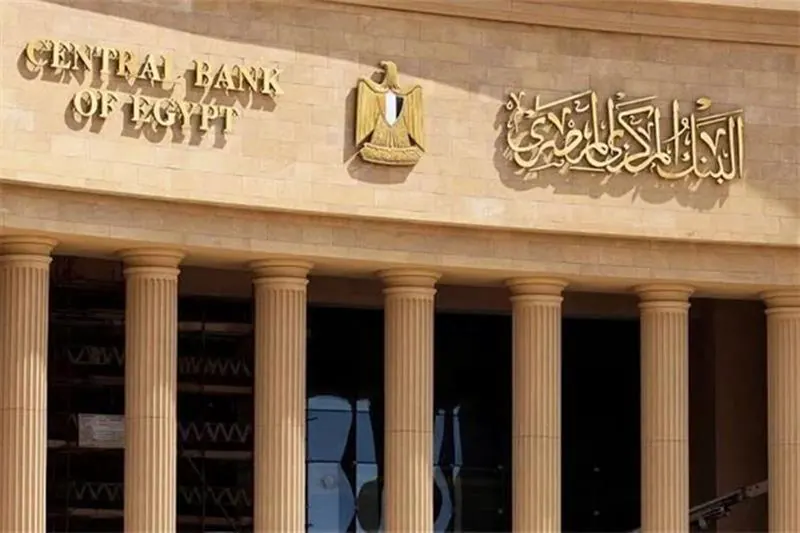
The Central Bank of Egypt (CBE) has maintained its key policy rates at their current levels, citing a sufficiently tight monetary stance to support the continued decline in inflation while providing a buffer against rising risks from regional tensions. The Monetary Policy Committee (MPC) kept the overnight deposit rate at 19 percent, the overnight lending rate at 20 percent, and the rate of the main operation at 19.50 percent. The discount rate was also kept at 19.50 percent.
The decision reflects the committee’s assessment of recent and expected inflation trends and the balance of risks surrounding the inflation outlook, the CBE said. The bank noted that domestic economic activity moderated, with real GDP growth slowing to 4.7 percent in the second quarter of 2026 from 5 percent in the first quarter, mainly due to the adverse impact of regional tensions. Real GDP growth averaged 5.1 percent in the fiscal year 2025/2026.
Despite the moderation, output remains below its potential level and is expected to gradually converge towards full capacity by the second half of 2027. The resulting output gap is expected to keep demand-side inflationary pressures limited in the short term, supported by the current tight monetary policy stance, the CBE said. The bank expects annual headline inflation to remain broadly stable on average during the third quarter of 2026.
Annual headline inflation eased slightly to 14.5 percent in August 2026, mainly due to lower food inflation, which offset increases in electricity tariffs and housing rents. Core inflation remained relatively stable at 14.9 percent in August, reflecting broadly stable price developments in core food, retail goods and services. The CBE said price dynamics continued to show signs of disinflation.
The CBE revised its inflation forecast downward from its previous MPC meeting in August, saying inflation outcomes had been more favourable than expected. The bank expects annual headline inflation to remain broadly stable on average during the third quarter of 2026 before gradually declining towards the target of 7 percent ±2 percent in the second half of 2027.
Despite the improved inflation outlook, the balance of risks remains tilted to the upside, the CBE said, citing the resurgence of regional hostilities. These risks could affect domestic inflation through a higher-than-expected pass-through from fiscal consolidation measures and international food prices, particularly if global energy prices remain elevated for an extended period.
The CBE said maintaining the current degree of monetary policy restrictiveness would provide a buffer against these risks while supporting the projected disinflation path. The committee said it would continue to assess monetary policy in light of economic developments, the inflation trajectory and the balance of risks, while remaining ready to use available policy tools to safeguard price stability.
Key points
- The Central Bank of Egypt kept its key policy rates unchanged.
- The bank expects annual headline inflation to decline towards 7 percent ±2 percent in the second half of 2027.
- Regional tensions pose upside risks to the inflation outlook.