In a rapidly changing global landscape, Egypt has emerged as a crucial meeting point for world leaders. Egyptian President Abdel Fattah el-Sisi recently hosted Chinese President Xi Jinping, Saudi Crown Prince Mohammed bin Salman, Palestinian President Mahmoud Abbas, and US Central Intelligence Agency Director John Ratcliffe. These visits signify Egypt's growing importance in international relations, particularly in the Middle East.
President Xi Jinping's visit to Egypt on September 1-2 marked 70 years of diplomatic relations between the two countries. The visit went beyond celebrating this milestone, with discussions on strategic partnerships, regional issues, and international cooperation. The joint statement issued by both countries covered political, economic, and security cooperation, as well as developments in the Middle East, the Palestinian issue, and security in the Red Sea and Horn of Africa.
Egypt's diplomatic efforts are aimed at maintaining a balance between major powers. The country is strengthening its partnership with China while keeping channels open with the United States. This approach allows Egypt to expand its international relationships rather than aligning with a single global axis. The visits by President Xi and CIA Director Ratcliffe demonstrate Egypt's ability to engage with different global powers.
The visit by Saudi Crown Prince Mohammed bin Salman on September 15 highlighted regional security concerns. The prince and President el-Sisi emphasized the importance of maintaining freedom and security of navigation in the Red Sea and Bab al-Mandab Strait. They also discussed developments in Yemen and regional security issues. The Red Sea and Bab al-Mandab have become critical components of the global energy and trade landscape.
The Palestinian issue was also on the agenda with the visit of President Mahmoud Abbas. Gaza remains a key concern for Egypt, with implications for regional balances and international relations. Egypt's role in addressing these issues has become increasingly important, given its geographic location and the interconnected nature of regional crises.
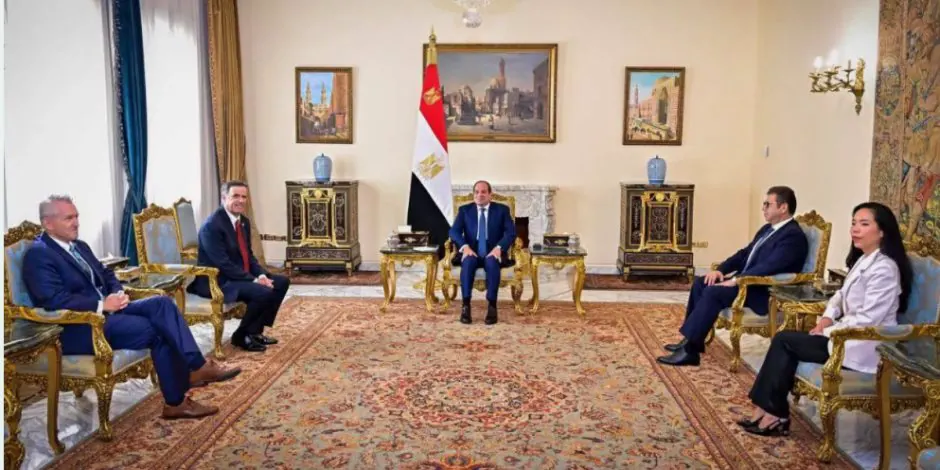
The meeting between President el-Sisi and CIA Director Ratcliffe on September 20 added a security dimension to Egypt's international engagements. The discussions focused on regional security issues, including the situation in Gaza, the Red Sea, and the Horn of Africa. Egypt's intelligence chief, Hassan Rashad, was also present at the meeting, underscoring the significance of the talks.
The concentration of high-profile visits in Cairo can be attributed to Egypt's strategic location, where multiple regional crises intersect. The country's position allows it to play a key role in addressing issues such as the Palestinian conflict, security in the Red Sea, and stability in the Horn of Africa. Egypt's ability to engage with various global and regional powers has made it a focal point for international diplomacy.
Key points
- Egypt's strategic location makes it a crucial meeting point for global and regional powers.
- The country is pursuing a balanced approach to international relations, engaging with major powers such as China and the United States.
- Egypt's role in addressing regional security concerns, including the Palestinian issue and security in the Red Sea, has become increasingly important.