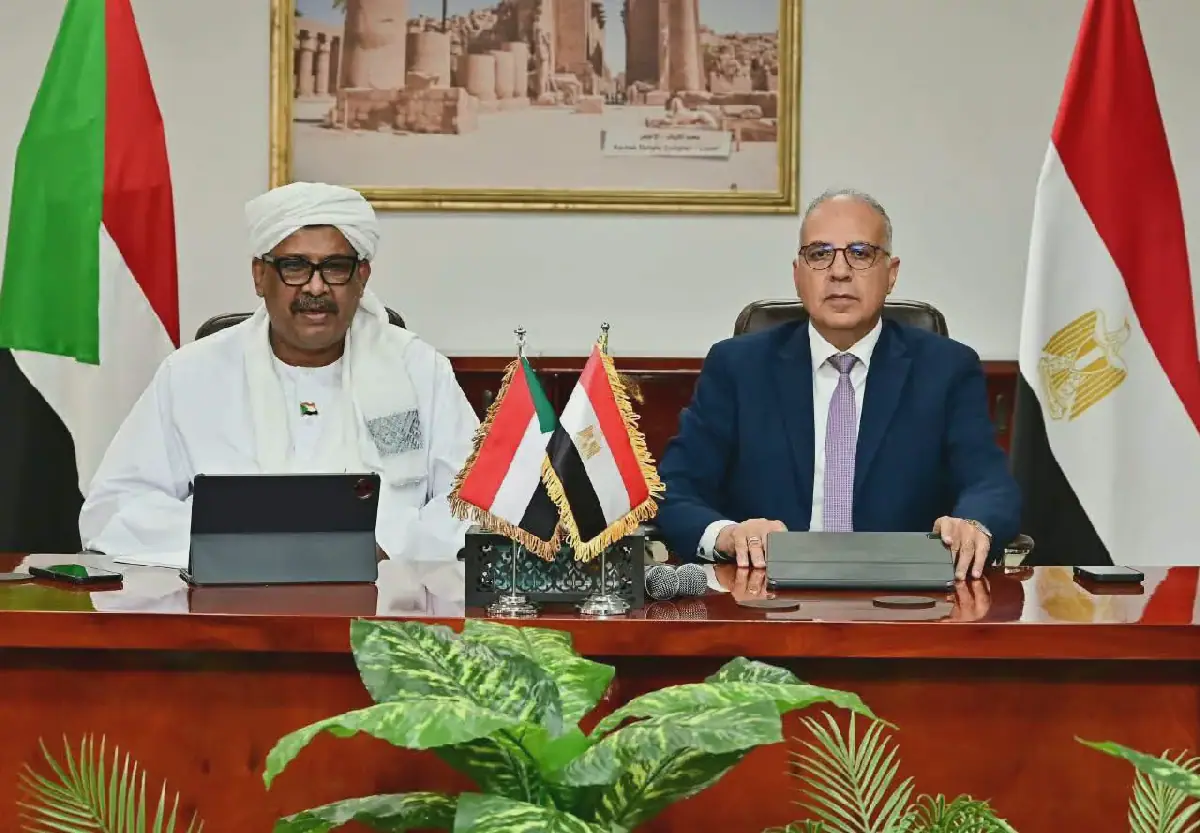
Egyptian Minister of Water Resources and Irrigation, Hani Suwailm, met with Sudanese Minister of Agriculture and Irrigation, Ismat Qureshi, to discuss enhancing cooperation on water management and coordination regarding the Nile River. The meeting took place after the second session of the 66th Permanent Technical Committee for Nile Waters. Both ministers emphasized the depth of historical and fraternal relations between the two countries and considered water cooperation a cornerstone for achieving water security and sustainable development for the people of the Nile Valley.
Suwailm praised Sudan's participation in the 9th Cairo Water Week and the positive outcomes of the Permanent Technical Committee meeting. The committee was established under the 1959 agreement for the full utilization of Nile waters. Suwailm noted that the committee represents a robust institutional framework for water cooperation between the two countries, providing a technical reference for coordinating positions, exchanging data, and monitoring Nile water issues.
The meeting covered enhancing technical coordination and exchanging hydrological data to support the safe operation of dams and reservoirs in Sudan and the High Dam in Egypt. The ministers also discussed protecting cities, water facilities, and irrigation intakes during the flood season. They reviewed progress on rehabilitating the Jebel Al-Uliya reservoir and hydrological monitoring systems in Sudan.
Suwailm and Qureshi explored cooperation in rainwater harvesting, establishing solar-powered groundwater stations, and controlling aquatic weeds. They also touched on training, capacity building, and exchanging expertise. The ministers reviewed the final steps of a memorandum of understanding between the two countries on water resources and agreed to expedite its signing and implementation.
The memorandum aims to meet local community needs and support Sudan's recovery and reconstruction efforts. Regarding the Ethiopian dam, the ministers reiterated Egypt and Sudan's rejection of unilateral actions on the Blue Nile. They stressed the importance of adhering to international law, particularly prior notification and not causing harm.
The two countries agreed to continue close consultation and coordination in the coming phase to enhance water cooperation and achieve mutual benefits for the two nations. This cooperation reflects their commitment to managing shared water resources effectively and addressing regional water security challenges.
The discussions demonstrate Egypt and Sudan's ongoing efforts to strengthen bilateral ties and address common challenges related to the Nile River. Their cooperation underscores the importance of collaborative water management in the region.
Key points
- Egypt and Sudan reject unilateral actions on the Blue Nile.
- The two countries agree to enhance technical coordination on water management.
- They plan to expedite the implementation of joint water projects.