Egypt and Sudan have renewed their opposition to Ethiopia's independent operation of the Grand Ethiopian Renaissance Dam (GERD), citing historic Nile water-sharing accords. In a joint statement on November 2, the two countries demanded a binding legal framework for the dam, more than a year after its inauguration. They described downstream water security as "indivisible" and warned that Ethiopia's dam operation without an agreement threatens this security.
The joint statement followed the third round of "2+2" foreign-minister and irrigation-minister consultations held in Cairo. Egypt and Sudan urged Ethiopia to abandon "unilateral policies" and return to negotiations based on international law principles, such as avoiding significant harm, prior notification, consultation, and consensus. They also insisted that the dispute remain confined to the three riparian states, rejecting broader involvement from other Nile Basin countries.
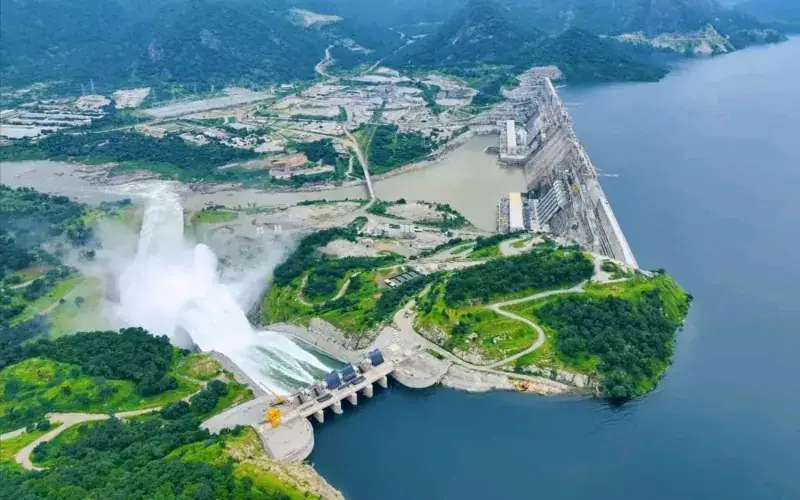
Ethiopia, which inaugurated the GERD in September 2025, maintains that the dam is a sovereign development of the Blue Nile, aimed at electricity generation rather than water consumption. The GERD has a generation capacity of about 5,150 MW and a reservoir of roughly 74 billion cubic meters, making it Africa's largest hydro-electric project. It was celebrated domestically as a milestone in national self-reliance.
Egypt and Sudan continue to invoke the 1959 Nile Waters Agreement, an accord signed solely between them that allocated 55.5 billion cubic meters annually to Egypt and 18.5 billion to Sudan, excluding Ethiopia. Ethiopia rejects the colonial-era treaty as invalid for upstream states, arguing that equitable and reasonable utilisation should replace historic allocations that excluded it.
Negotiations have repeatedly stalled, with Egypt seeking United Nations involvement and labeling Ethiopia's dam filling as unilateral, while Ethiopia calls for a cooperative approach that recognises all riparian development needs. Tensions have risen in 2026 as Egypt objects to Ethiopia's plans for additional Blue Nile projects and as Cairo and Khartoum coordinate more closely on water policy.
The GERD has been a contentious issue since its inception, with Egypt and Sudan expressing concerns about its impact on their water security. Ethiopia, on the other hand, sees the dam as a vital development project that will help meet its growing energy needs. The dispute has significant implications for the region, with potential consequences for the stability and security of the Nile Basin.
The situation remains complex, with no clear resolution in sight. Egypt and Sudan are likely to continue pressing for a binding agreement, while Ethiopia remains committed to its sovereignty over the GERD. The international community is watching closely, as the dispute has the potential to escalate into a broader conflict with far-reaching consequences for the region.
Key points
- Egypt and Sudan invoke 1959 Nile Waters Agreement to press for binding framework for GERD
- Ethiopia rejects colonial-era treaty, arguing for equitable and reasonable utilisation of Nile waters
- Negotiations have repeatedly stalled, with Egypt seeking UN involvement and Ethiopia calling for cooperative approach