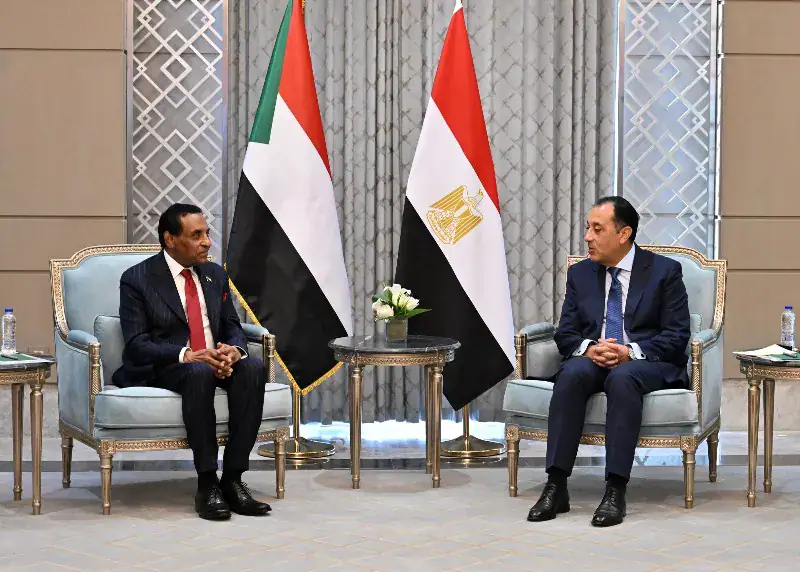
Egypt and Sudan have reaffirmed their commitment to the 1959 Nile water agreement, emphasizing that their water security is crucial for human survival and economic growth. The two nations have warned that they will not tolerate any encroachment on their water rights or allocations under the agreement. This stance was reiterated during a visit to Cairo by Sudanese Transitional Council Prime Minister Kamil Al-Tayeb Idris, who met with Egyptian President Abdel Fattah al-Sisi.
The joint statement issued by both governments highlights the importance of dialogue and mutual benefit under international law. They have welcomed African backing for downstream states' rights to safeguard vital resources and develop on equal footing with the rest of the continent. The statement also addresses Ethiopia's unilateral dam project, emphasizing that such actions breach international law and pose a hazard downstream.
Egypt and Sudan have urged Ethiopia to abandon unilateralism and return to cooperative norms grounded in no significant harm, prior notification, consultation, and consensus. The two nations have also agreed to track the implementation of recommendations from the Permanent Joint Technical Commission for Nile Waters under the 1959 pact. This will shape a common stance across water files, alongside joint meetings uniting their foreign and irrigation ministers.
The Nile Basin Initiative has been highlighted as a central mechanism for regional cooperation. Egypt and Sudan have pointed to shared regional momentum to finish consultations and rebuild consensus toward an inclusive basin-wide commission. The consultative mini-committee chaired by Uganda, alongside Rwanda and South Sudan, has issued a report urging steps to restore full participation.
The report recommends revising and updating the framework agreement to accommodate every stakeholder's concerns. Egypt and Sudan have praised the efforts of the mini-committee and emphasized the importance of coordination mechanisms and regional basin talks. These efforts aim to ensure that the rights and interests of all stakeholders are protected.
The 1959 Nile water agreement has been a cornerstone of cooperation between Egypt and Sudan. The agreement allocates water rights and sets a framework for cooperation between the two nations. Egypt and Sudan have reiterated their commitment to this agreement and urged Ethiopia to respect their rights and interests.
The joint stance taken by Egypt and Sudan reflects a broader regional effort to promote cooperation and stability in the Nile basin. The two nations have emphasized the importance of working together to address the challenges facing the region. Key points include:
Key points
- Egypt and Sudan have reaffirmed their commitment to the 1959 Nile water agreement.
- The two nations have urged Ethiopia to abandon unilateral dam moves and return to cooperative norms.
- Egypt and Sudan have emphasized the importance of dialogue and mutual benefit under international law.
Reporting sources
- Egypt and Sudan reiterate 1959 water rights and reject unilateral dam moves · Egypt Independent