Egyptian President Abdel Fattah El-Sisi and South Korean President Lee Jae Myung welcomed a children's choir singing the Egyptian song "Feeha Haga Helwa" during El-Sisi's historic state visit to Seoul on October 8, 2026. The cultural moment marked a warm start to the visit, focused on strengthening political and economic ties between the two nations. The visit led to the elevation of their relationship to a strategic partnership, paving the way for closer cooperation in various areas.
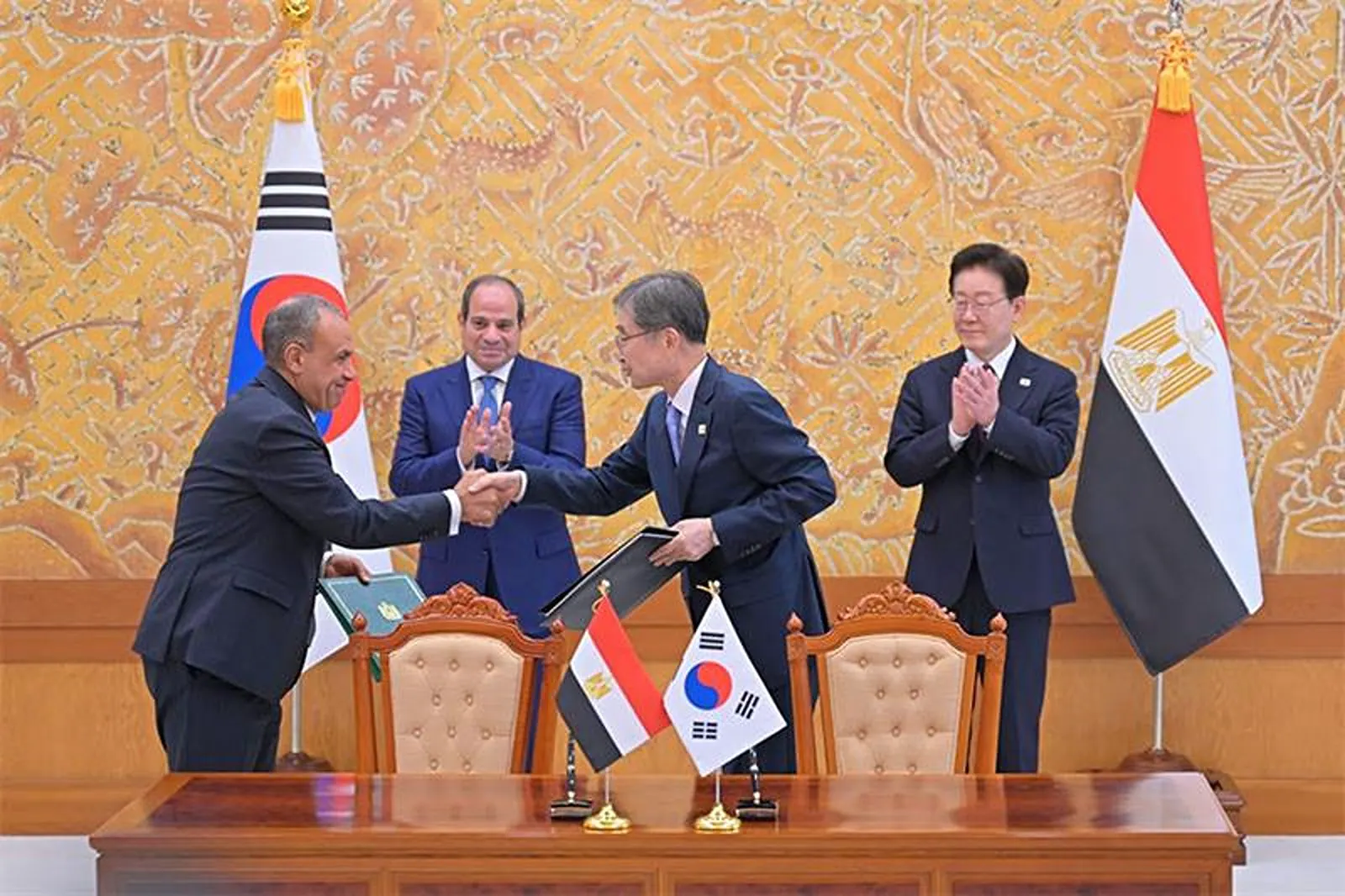
During talks in Seoul, El-Sisi and Lee discussed expanding cooperation in trade, investment, technology, energy, infrastructure, shipbuilding, and artificial intelligence. The two sides signed 12 memoranda of understanding and agreements covering multiple sectors and agreed to begin negotiations on a Comprehensive Economic Partnership Agreement (CEPA). This agreement aims to boost economic ties and provide a framework for future collaborations.
Egypt views South Korea as a crucial source of investment and technology, while South Korean companies see Cairo as a gateway to wider African markets. The leaders agreed to strengthen cooperation in education and culture, designating 2027 as the Year of Cultural Exchanges. Plans include expanding educational programs, scholarships, youth exchanges, and Korean-language education in Egypt, fostering people-to-people connections between the two nations.
One of the tangible projects emerging from the visit is the hydrogen-powered tram initiative. Egypt's National Authority for Tunnels and South Korean company Hyundai Rotem signed an MoU to explore a project involving 44 hydrogen-powered tram trainsets for Egypt's New Administrative Capital. The feasibility study will examine potential cooperation in construction, railway systems, operations, and maintenance.
El-Sisi encouraged Korean companies to expand their investments in Egypt, particularly in manufacturing and advanced industries. During a meeting with representatives of 23 major Korean companies in Seoul, he renewed Egypt's proposal for an integrated Korean industrial zone in the Suez Canal Economic Zone. This zone could become a production and export hub for regional and international markets, boosting Egypt's economic growth.
The strategic partnership between Egypt and South Korea is expected to have a significant impact on the economic and cultural landscape of both countries. By strengthening ties in various sectors, the two nations aim to create new opportunities for cooperation and mutual benefit. The hydrogen tram project is a notable example of the innovative collaborations that can arise from this partnership.
As Egypt and South Korea move forward with their strategic partnership, they are likely to explore new avenues for cooperation in the coming years. With a focus on trade, investment, technology, and culture, the two nations are poised to deepen their relationship and create lasting benefits for their citizens. The success of this partnership will depend on the effective implementation of the agreements and MoUs signed during El-Sisi's visit.
Key points
- Egypt and South Korea have elevated their relationship to a strategic partnership, paving the way for closer cooperation in trade, investment, technology, and culture.
- The two countries have agreed to explore a project involving 44 hydrogen-powered tram trainsets for Egypt's New Administrative Capital.
- Egypt has proposed an integrated Korean industrial zone in the Suez Canal Economic Zone to boost economic growth and attract Korean investments.