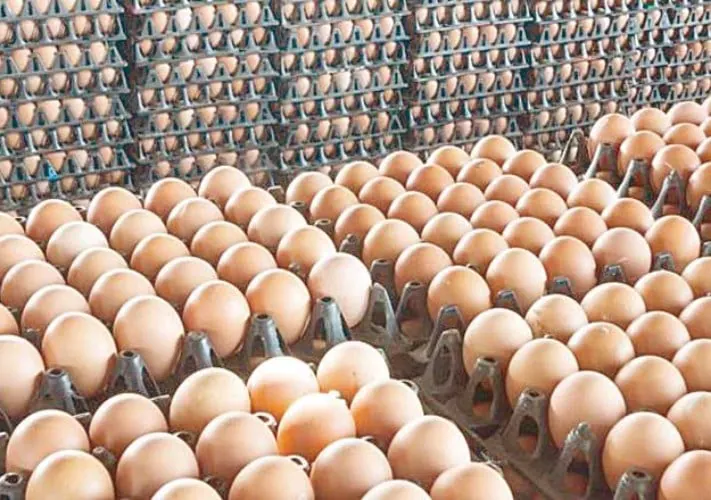
The Egyptian poultry sector has seen significant growth, providing direct and indirect job opportunities for around 3.5 million citizens, according to Dr. Tariq El-Sleman, head of the animal and poultry wealth development sector. This sector plays a crucial role in the country's food security and economy. With over 27,000 diverse farms, Egypt's poultry industry includes egg production, broiler farms, parent stock farms, and companies specializing in producing parent and grandparent stock.
On September 22, 2026, the prices for egg cartons in Egypt remained stable. White eggs were priced at 110 pounds per carton for consumers, while red eggs cost 135 pounds per carton. According to Dr. Tariq El-Sleman, egg production reached 16 billion eggs, an increase from 14 billion eggs the previous year. The production of local breed chickens also saw a rise, with 360 million birds, marking an increase of over 12%.
The wholesale prices for egg cartons on September 22, 2026, ranged between 110 pounds for white eggs and 120 pounds for red eggs. The Egyptian government is working to support small and large producers, aiming to open new export markets in Arab, African, and international markets. This effort follows Egypt's approval as one of the countries applying the isolated poultry farm system, adhering to the World Organisation for Animal Health (WOAH) regulations.
The average annual consumption of eggs per person in Egypt from local farms is around 140 eggs, according to Agriculture Minister Alaa Farouk. The Ministry of Agriculture is providing financing options for breeders in collaboration with the National Bank of Egypt and the Egyptian Agricultural Bank. This initiative supports the purchase of production necessities such as feed, chicks, medicines, and veterinary vaccines.
The price of white eggs for consumers stood at 110 pounds per carton on September 22, 2026. The poultry sector in Egypt has experienced unprecedented investment and production growth in recent years, with investments exceeding 200 billion pounds, as stated by Dr. Tariq El-Sleman. The sector's growth is attributed to its importance in food security and the economy.
The Egyptian poultry industry consists of a significant number of farms and companies. There are efforts to develop breeding houses and convert them from open to closed systems, enhancing production efficiency and economic returns. The government's support and the sector's potential for growth indicate a positive outlook for Egypt's poultry and egg production.
Key factors contributing to the stability and growth of Egypt's poultry sector include government support, increased production, and a focus on export expansion. With a strong foundation, the sector is poised for continued development, playing a vital role in the country's economy and food security.
Key points
- The Egyptian poultry sector provides job opportunities for around 3.5 million citizens.
- Egg production in Egypt reached 16 billion eggs, an increase from 14 billion eggs the previous year.
- The poultry sector's investments have exceeded 200 billion pounds in recent years.