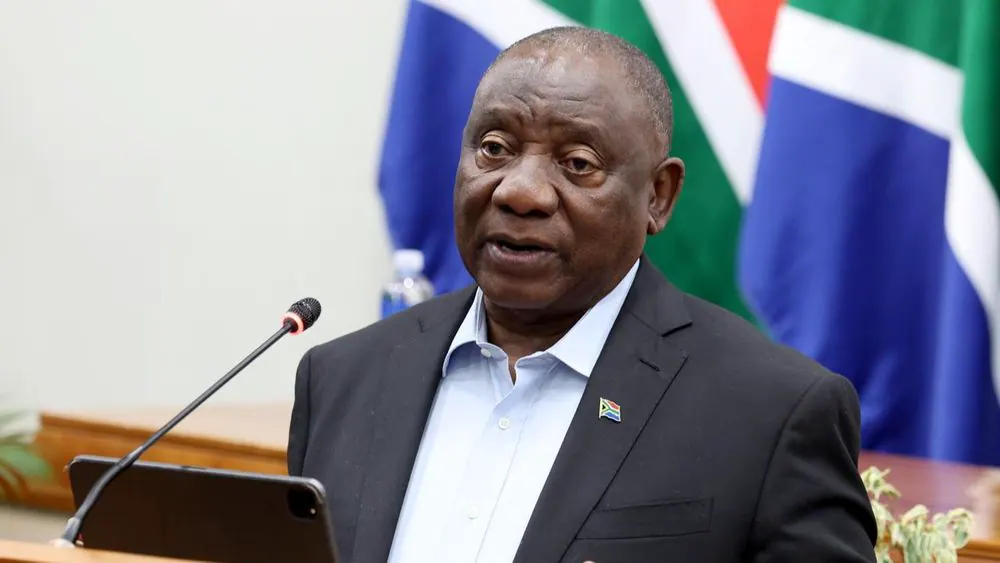
The Economic Freedom Fighters (EFF) has criticized President Cyril Ramaphosa for allegedly pretending to support the proposed Insourcing Bill. The bill, introduced by EFF Treasurer-General Omphile Maotwe on July 31, 2025, seeks to compel government organs, departments, and municipalities to directly employ workers for ongoing essential services instead of using private contractors. Ramaphosa had previously agreed that insourcing workers would protect jobs and improve state capacity during a parliamentary session in March.
The proposed bill comes at a critical time as South Africa faces intense economic pressures, including an unemployment rate of 33.6%. The state is struggling with systemic tenderpreneurship and procurement-related corruption, with estimates showing that over 50% of the state's annual procurement budget has been lost to intentional system abuse. Acting Chief Procurement Officer at the National Treasury, Willie Mathebula, said South Africa loses billions of rand annually to procurement fraud.
The EFF's criticism of Ramaphosa follows continued briefings and parliamentary deliberations with the Presidency, National Treasury, and the Department of Public Service and Administration (DPSA), which have failed to yield results. The National Treasury and DPSA have argued that mandatory insourcing is financially unachievable and too expensive for the current fiscus. However, federation union Cosatu has previously expressed support for the bill to directly employ workers for routine government services.
The Auditor-General report revealed that R406 billion has been lost to corruption and irregular expenditure over the 2018-2024 administrative term. The Special Investigating Unit (SIU) also identified R7.8 billion in irregular, unlawful, or fraudulent contracts linked directly to Covid-19 procurement. The SIU found that 62% of 2,549 contracts were irregular, and separate investigations into the Temporary Employer/Employee Relief Scheme (TERS) exposed millions of rand mismanaged or stolen.
Governance expert and political analyst Professor Andre Duvenhage said the government should empower and equip state structures to do the job instead of outsourcing or insourcing capacity. He argued that under exceptional circumstances, outsourcing may be necessary, but the priority should be to build capacity within existing structures. Another governance expert, Sandile Swana, argued that the main issue with government services in South Africa is not whether the state outsources them or handles them internally, but that politically connected criminal networks have hijacked the state's procurement system.
The EFF said redirecting funds lost to corruption could help build a proper public healthcare system. The party added that the bill will ensure that workers are paid directly and on time, following incidents at Chris Hani District Municipality and Tembisa Hospital, where cleaners and security guards protested over unpaid salaries. The EFF's call for action comes as the party continues to push for the implementation of the Insourcing Bill.
The Presidency has not responded to questions about why Ramaphosa's administration has not mandated a fiscal reallocation strategy from corrupt procurement budgets to permanent salary lines. The EFF's criticism of Ramaphosa highlights the ongoing challenges in implementing reforms aimed at addressing corruption and improving governance in South Africa.
Key points
- The EFF has accused President Cyril Ramaphosa of dishonesty over the proposed Insourcing Bill.
- The proposed bill aims to compel government organs to directly employ workers for essential services instead of using private contractors.
- South Africa faces intense economic pressures, including an unemployment rate of 33.6% and systemic tenderpreneurship and procurement-related corruption.