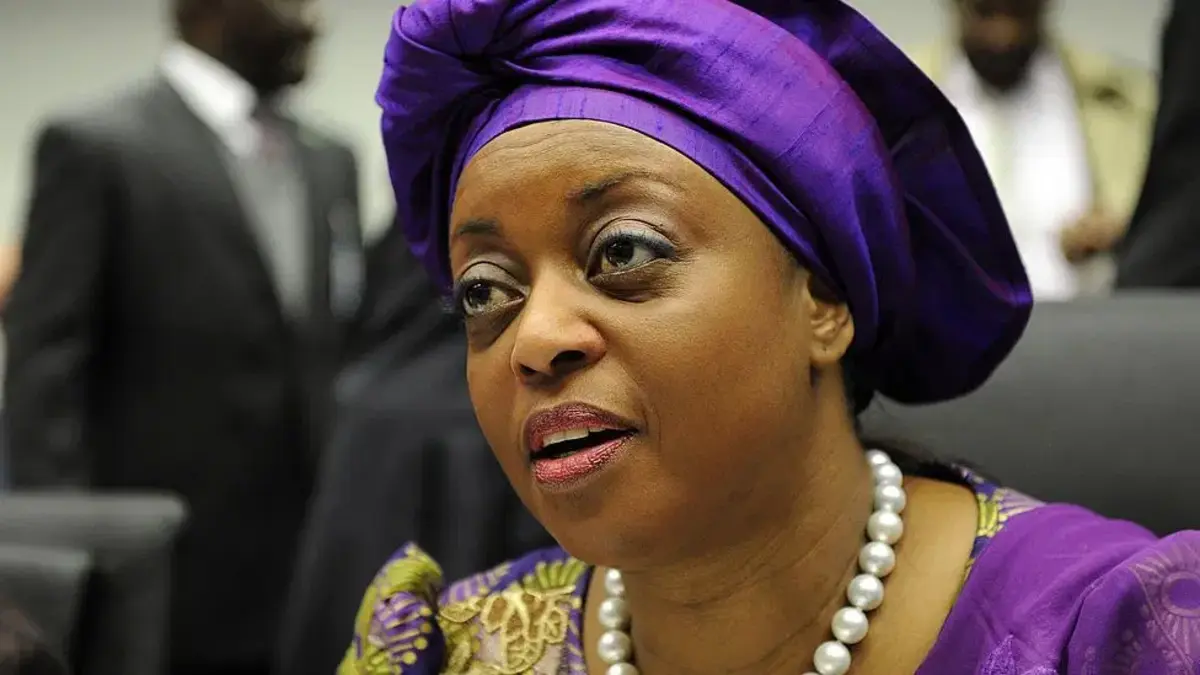
The Economic and Financial Crimes Commission (EFCC) has opposed an application by former Minister of Petroleum Resources, Diezani Alison-Madueke, to present evidence of her acquittal by the Southwark Crown Court in London before the Federal High Court in Abuja. The anti-graft agency argues that the purported acquittal is not material or relevant to the issues requiring determination in the Nigerian proceedings. This development is part of the ongoing legal battle between Diezani and the EFCC over assets which Diezani is seeking to reclaim.
Diezani was acquitted by the Southwark Crown Court in London on June 17 in relation to criminal allegations of bribery brought against her. Following the acquittal, Diezani sought to rely on the UK court's decision in a suit filed before Justice Inyang Ekwo, where she is challenging the forfeiture of assets. The suit, marked FHC/ABJ/CS/21/2023, has the EFCC as the sole respondent. Diezani's lawyer, Godwin Iyinbor, had sought permission to file a further or supplementary affidavit to bring the UK court judgment before the court.
The EFCC responded with a further counter-affidavit opposing Diezani's move, questioning the relevance of the UK judgment to the asset forfeiture proceedings. The commission argued that the proceedings before the Southwark Crown Court and the purported acquittal concerned a criminal proceeding that was not being prosecuted before any Nigerian court. According to the EFCC, the UK proceedings therefore had no connection with the substantive suit pending before Justice Ekwo.
The EFCC also challenged Diezani's claim regarding the properties involved in the asset forfeiture proceedings. The commission argued that there was nothing in the public sale notice indicating that any of the properties listed belonged to Diezani. The commission further stated that the forfeiture order related exclusively to items of jewellery and did not extend to other categories of assets or properties.
The EFCC consequently argued that parties to a case were not permitted to expand the scope of proceedings by introducing issues that were not part of the original dispute. The commission urged the court to discountenance Diezani's further or supplementary affidavit on the grounds that it introduced irrelevant facts and diverted attention from the core issues requiring determination.
When the case came up on Tuesday, counsel for Diezani, Mrs Queen-Ubokutom Uwe, informed the court that the matter had been scheduled for the hearing of the EFCC's preliminary objection and the originating motion. However, the EFCC had served her legal team with a fresh motion shortly before the commencement of proceedings. Uwe said the new process was the respondent's further counter-affidavit to their further and supplementary affidavit.
Justice Ekwo subsequently adjourned the matter until November 11 for the hearing of the pending motions. The court will have to determine the parties' respective arguments when the matter resumes, including the EFCC's objection to Diezani's attempt to place evidence of her UK acquittal before the Nigerian court. The EFCC's objection is based on the grounds that the UK acquittal is irrelevant to the asset forfeiture proceedings in Nigeria.
Key points
- The EFCC opposes Diezani's application to present her UK acquittal in the Nigerian court, citing irrelevance to the asset forfeiture proceedings.
- Diezani was acquitted by the Southwark Crown Court in London on June 17 in relation to criminal allegations of bribery brought against her.
- The court has adjourned the matter until November 11 for the hearing of the pending motions.