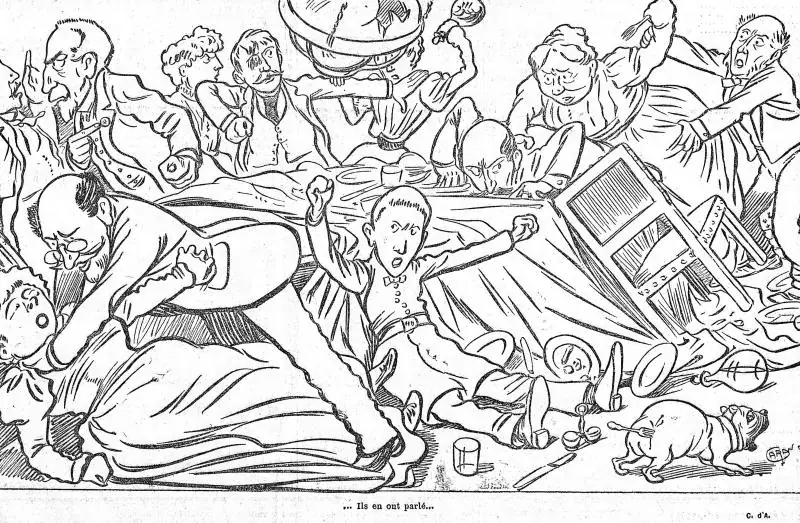
The Dreyfus Affair, a pivotal event in late 19th-century France, has been revisited through a collaborative educational initiative between RetroNews and Clionautes. This project aims to provide historical context and analysis of the affair's profound impact on French society during the Third Republic. The sequence is designed for fourth-grade students and focuses on the themes of society, culture, and politics in 19th-century France.
In 1894, Captain Alfred Dreyfus, a Jewish officer from Alsace, was accused of espionage, sparking widespread controversy and division in France. The case drew significant attention and polarized public opinion, with many questioning Dreyfus's guilt. The initial trial resulted in Dreyfus being found guilty of treason, with the court-martial declaring him a traitor. This verdict was met with both support and criticism, reflecting the deep-seated divisions within French society.
The Dreyfus Affair saw the involvement of prominent intellectuals and military figures, who took opposing stances on Dreyfus's culpability. Émile Zola, a renowned writer, publicly supported Dreyfus, while others vehemently opposed him. The affair highlighted the prevalence of anti-Semitism in French society, with Dreyfus's Jewish heritage playing a significant role in the public's perception of his guilt. The case also exposed tensions between the military and the civilian population.
A significant turning point in the affair came in 1898 when Esterhazy, an officer, was identified as the actual author of the incriminating "bordereau" that had led to Dreyfus's conviction. This revelation led to a retrial in 1899, during which Dreyfus was again found guilty but received a reduced sentence due to mitigating circumstances. The prolonged and complex nature of the affair, which spanned over a decade, ultimately led to Dreyfus's rehabilitation.
In 1906, a second appeal resulted in the annulment of Dreyfus's initial conviction, citing errors and wrongful judgment. Following his exoneration, Dreyfus was reinstated into the army, promoted to the rank of chef d'escadron, and honored as a chevalier of the Legion of Honor. The affair concluded with Dreyfus achieving the rank of lieutenant-colonel by the end of World War I.
The Dreyfus Affair serves as a critical case study for understanding the complexities of French society during the Third Republic. It highlights the tensions between the military, the government, and civil society, as well as the deep-seated prejudices that existed within the population. Educational sequences like this one aim to provide students with a nuanced understanding of this pivotal moment in history.
The pedagogical sequence on the Dreyfus Affair offers a comprehensive approach to teaching this complex historical event. By analyzing primary sources and engaging in discussions, students can gain a deeper understanding of the affair's historical context and its ongoing relevance. This educational initiative underscores the importance of critically examining historical events to better comprehend the intricacies of modern society.
Key points
- The Dreyfus Affair was a defining moment in French history, marked by widespread controversy, anti-Semitism, and ultimately, the exoneration of Captain Alfred Dreyfus.