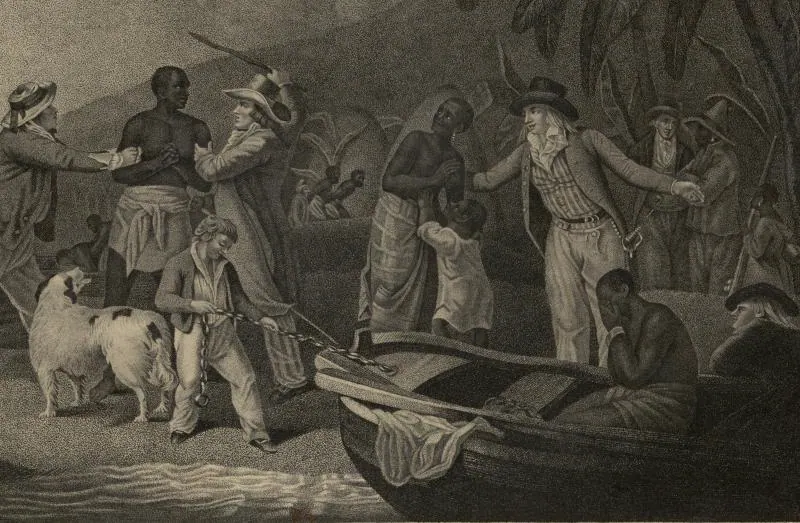
Educational resource providers RetroNews and Clionautes have collaborated to develop a series of educational sequences on historical topics, focusing on the Atlantic slave trade and its significance in 18th-century international commerce. This sequence is designed for fourth-grade students and aims to help them understand the triangular trade and create a map illustrating the routes. The resource is part of a larger program on 18th-century history, specifically Theme 1: Expansions, Lumières, and Révolutions.
The educational sequence begins by introducing the concept of the "African trade" and its importance in the 18th century. According to a 1759 article in the Journal de commerce et d'agriculture, the African trade was a crucial component of France and England's commerce and navigation, providing enslaved Africans for labor in colonies producing valuable commodities such as sugar, indigo, and cotton. The article highlights the significance of the African trade in supporting the colonial economy.
A key aspect of the African trade was the transportation of enslaved Africans across the Atlantic, known as the Middle Passage. A 1788 article in La Gazette de France provides insight into the scope of the slave trade, citing a calculation of enslaved Africans purchased by European nations along the African coast. The article reports that the English purchased 53,100 enslaved Africans, the French 23,500, and other European nations smaller numbers, totaling 104,000 enslaved individuals.
The conditions faced by enslaved Africans during the Middle Passage were harsh and often deadly. A 1787 article in La Gazette describes two incidents in which slave ships experienced catastrophic events, resulting in the loss of hundreds of enslaved lives. These accounts highlight the brutal and inhumane nature of the slave trade.
The collaboration between RetroNews and Clionautes aims to provide educational resources that meet the needs of history teachers and students. Camille Despinoy, a history professor and member of the Clionautes association, authored the educational sequence. The resource includes questions and activities designed to engage students and promote deeper understanding of the Atlantic slave trade.
The educational sequence also explores the impact of the African trade on European economies and the colonial system. According to a 1759 article in the Journal de commerce et d'agriculture, the African trade was essential to the French and English economies, providing the labor needed to produce valuable commodities in their colonies. The article highlights the interconnectedness of European and colonial economies.
The educational sequence on the Atlantic slave trade is a valuable resource for students and teachers seeking to understand this complex and significant historical topic. By examining primary sources and engaging with questions and activities, students can develop a deeper understanding of the slave trade and its enduring impact on modern society.
Key points
- The educational sequence provides a comprehensive overview of the Atlantic slave trade, including its significance in 18th-century international commerce and its impact on European and colonial economies.