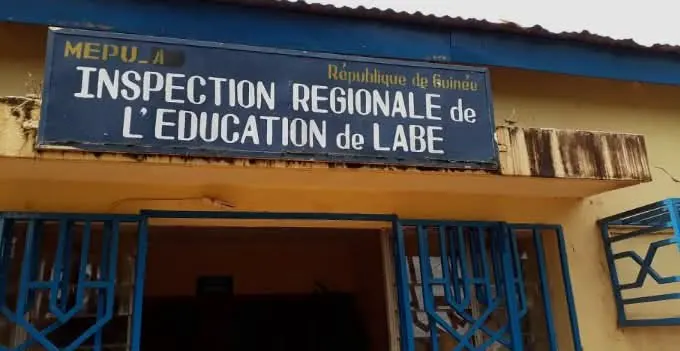
As the 2026-2027 academic year approaches, educational authorities in Guinea's Labé region are intensifying preparations to ensure a smooth start. The prérentrée, or pre-entry period, began on September 21, with various educational institutions and deconcentrated education services engaging in activities to ready themselves for the new academic year. According to Elhadj Mamadou Garanké Baldé, head of the pedagogical section of the Regional Education Inspection (IRE) in Labé, several activities are planned during this period.
The pre-entry period involves the IRE, DPE, DSEE, and educational institutions. On the ground, teams are focusing on cleaning and refurbishing school premises, classrooms, and furniture. Additionally, they are organizing pedagogical and administrative documents, as well as creating timetables for the new academic year. Baldé explained that the pre-entry period is crucial for the region's educational institutions to prepare for the upcoming academic year, which is set to commence on October 5.
Despite these efforts, the region still faces a significant shortage of teachers. According to Baldé, this shortage is an annual concern, prompting the Ministry of Public Service to plan recruitment of new teachers to address the gap. In some schools, the lack of personnel is particularly acute, with institutions having six classes but only three teachers. This situation forces administrators to implement measures to ensure continuity of classes.
The shortage of teachers also affects certain subjects in secondary schools. Some schools lack teachers for specific disciplines, which can disrupt the learning process. To mitigate the effects of the shortage, temporary solutions are being implemented. In some areas, local communities are supporting community teachers to enable schools to function normally.
Another strategy being employed is the use of "itinerant" teachers. When a secondary school teacher does not meet the required 18 hours of service, they can be assigned to another institution to complete their workload. The IRE coordinates this process to ensure that classes are covered. Additionally, some schools are using multigrade classes to cope with the shortage and prevent students from missing out on lessons.
As the new academic year approaches, Baldé is urging teachers to participate fully in pre-entry activities and collaborate with school administrators. He also appealed to parents and local communities to support state efforts, particularly in providing community teachers. The IRE and its deconcentrated services are working to address the challenges ahead of the October 5 start date.
With the academic year set to commence shortly, the Labé region's educational authorities face several challenges, primarily the teacher shortage. However, through collaborative efforts and temporary solutions, they aim to provide a conducive learning environment for students. The region's education sector is working diligently to ensure that students have a successful academic year.
Key points
- The Labé region in Guinea is preparing for the 2026-2027 academic year amid concerns over a shortage of teachers.
- Educational authorities are implementing temporary solutions, including community teachers and itinerant teachers, to address the shortage.
- The region's education sector is urging teachers, parents, and local communities to collaborate to ensure a successful academic year.