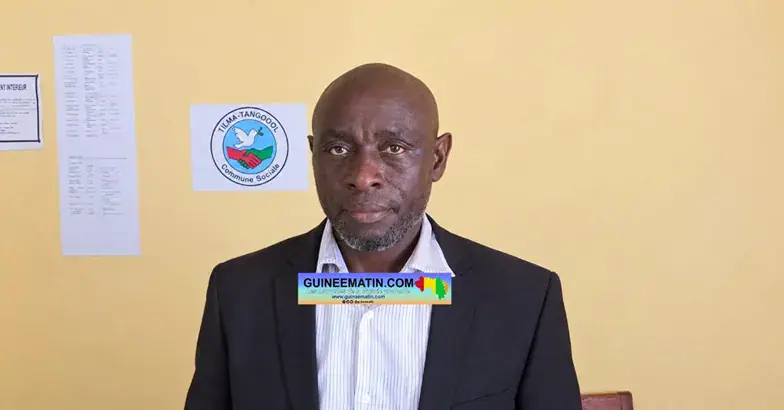
More than 100 days after taking office as head of Thiéwa commune in Beyla, Guinea, Mayor Sékou 1 Touré and his team have released a report on their initial actions and unveiled plans for local development. The commune faces challenges such as poor academic performance, difficulties in collecting taxes, and environmental issues. To address these concerns, the municipal team has launched several initiatives, including strengthening school supervision, establishing a functional health structure, and implementing weekly sanitation.
The commune's education sector was in a dire state, with only one student admitted to 7th grade out of over 30 candidates. Mayor Touré's team organized a meeting with teachers to identify the root causes of the problem. They discovered that the lack of a Director-General of Education (DSE) and inadequate teacher deployment were major contributors. The team successfully obtained a DSE and recruited five new teachers with the support of the Direction Préfectorale de l'Éducation (DPE). A meeting was held to discuss education, and the mayor is optimistic about achieving success in the sector.
In the health sector, the commune lacked a functional health and sanitation committee. Mayor Touré's team worked with local health structures and the head of the health center to establish a Comité d'Hygiène et de Salubrité (COSA). The team also focused on increasing tax revenue, as the commune lacks a market. They identified potential revenue streams, including machines used for processing and threshing. Animaters communautaires were engaged to work with the population and council, facilitating information sharing and tax payment.
The commune has initiated a comprehensive sanitation program, as the lack of waste management infrastructure was identified as a major issue. Animaters communautaires and groupements d'assainissement were established to oversee sanitation efforts. Every Tuesday, they conduct waste collection and segregation, using tricycles and fuel to transport waste to a designated site. The team also started composting organic waste to produce fertilizer.
Environmental conservation is another key priority for Mayor Touré's team. They met with the head of the cantonnement forestier to discuss reforestation efforts. The team plans to establish village nurseries in each district to promote local tree species and restore degraded areas. They also intend to introduce Chinese bamboo, which can help reduce pressure on local tree species and attract humidity.
In addition to these initiatives, the commune has started implementing a plan to develop a new mairie (town hall). Three commissions were established to oversee the construction process, including a pilotage commission, a suivi-évaluation commission, and a réclamation commission. The mayor emphasized the importance of good governance and community involvement in the development process.
The commune is also working to revitalize its agricultural sector, particularly the maraîchère (market gardening) industry. Mayor Touré, an agro-economist, aims to support local farmers in extending the productivity of their land beyond the rainy season. By promoting market gardening and other agricultural initiatives, the team hopes to improve food security and stimulate local economic growth.
Key points
- Mayor Sékou 1 Touré's team has made significant progress in education, sanitation, and reforestation in Thiéwa commune.
- The commune faces challenges such as poor academic performance, difficulties in collecting taxes, and environmental issues.
- The municipal team has launched several initiatives to address these concerns and promote local development.