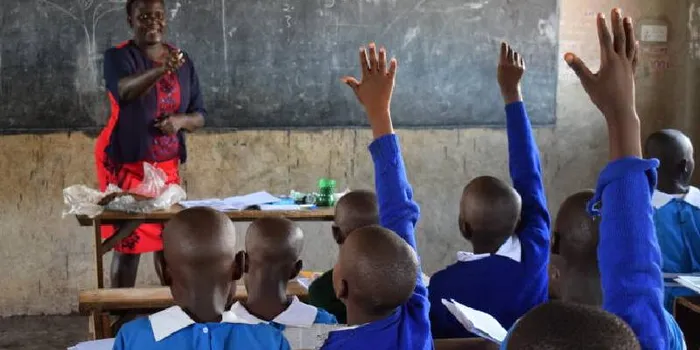
Education officials in Garissa, Kenya, have proposed introducing Arabic instruction from Grade 4 as part of a broader effort to reform the country's education system. During public consultations on six Education Reform Bills held in Garissa University and Fort Hall, Lamu County, officials urged Parliament to formally recognize Arabic in Kenya's curriculum. This move aims to bridge the gap between formal schools and madrasa education, which is a common learning pathway in the region.
Garissa Sub-County Director of Education Rashid Mohammad suggested that introducing Arabic from Grade 4 would give learners an earlier opportunity to develop proficiency in the language. He argued that this would help to address the challenges faced by students who transition from madrasas or informal settings to formal schools. Mohammad's proposal was echoed by County Education Board Secretary Abdi Maalim, who emphasized the need to integrate madrasa learning into the national curriculum.
Maalim highlighted that most children in the region start education in madrasas or informal settings, with 90 percent being pastoralists and 95 percent Muslims. He noted that this creates a significant gap when they transition to formal schools, which often do not recognize madrasa education. To address this issue, stakeholders urged the government to set up a task force to devise a framework for integrating madrasa education into the national curriculum.
Maalim also pointed out that sufficient Arabic teaching resources exist in the country, and that the language offers a rich literary heritage. He claimed that Arabic literature is more extensive than that of Chinese, German, and other foreign languages. This assertion was made in support of the proposal to introduce Arabic as a formal subject in Kenyan schools.
The proposal to introduce Arabic instruction from Grade 4 and integrate madrasa learning into the national curriculum follows President William Ruto's June directive to Education Cabinet Secretary Julius Ogamba. The President emphasized that children in northern Kenya and other marginalized areas remain excluded from formal schooling because alternative learning pathways lack official recognition. Ruto's directive aims to address this issue by pursuing reforms that formally recognize madrasa, informal religious learning, and pastoralist instruction.
The public consultations on the Education Reform Bills were attended by various stakeholders, including education officials, community leaders, and parents. The stakeholders discussed the need to reform the education system to make it more inclusive and responsive to the needs of learners in different parts of the country. The proposed introduction of Arabic instruction from Grade 4 and integration of madrasa learning into the national curriculum are seen as key steps towards achieving this goal.
The implementation of the proposed reforms is expected to have a positive impact on education in Kenya, particularly in regions where madrasa education is prevalent. By formally recognizing Arabic and integrating madrasa learning into the national curriculum, the government aims to provide learners with a more inclusive and comprehensive education. This, in turn, is expected to improve learning outcomes and increase access to education for marginalized communities.
Key points
- Education officials in Garissa propose introducing Arabic instruction from Grade 4 to bridge the gap between formal schools and madrasa education.
- The proposal aims to address the challenges faced by students who transition from madrasas or informal settings to formal schools.
- The introduction of Arabic instruction from Grade 4 is part of a broader effort to reform Kenya's education system and make it more inclusive.