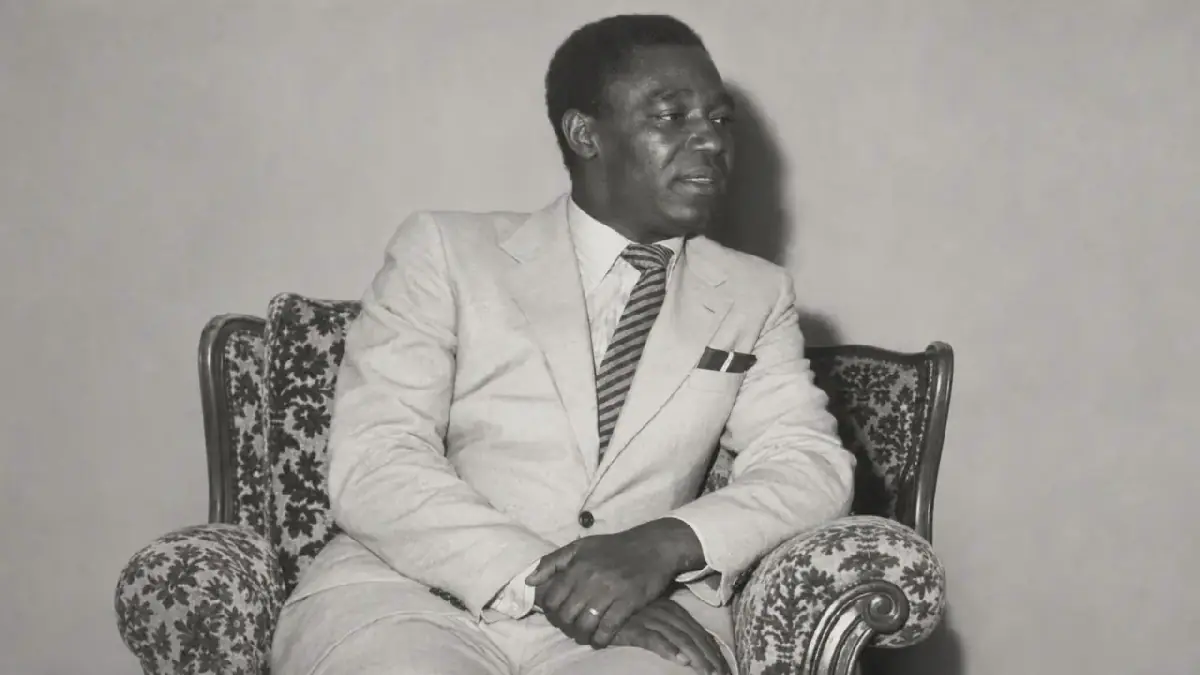
On August 4, 1980, a vehicle carrying heavily armed men, led by Edgar Zivanai "Two-Boy" Tekere, pulled up at Stamford Farm, near Salisbury. The squad launched an armed assault on the farmstead, resulting in the execution-style shooting of Gerald William Adams, a 68-year-old white farm manager. Adams, an unarmed civilian, was shot dead ostensibly to flush out an alleged military threat. The incident shocked the fledgling nation attempting to heal from a brutal decade-long liberation war.
Prime Minister Robert Mugabe, who had emphasized racial reconciliation, respect for the rule of law, and national unity, was faced with an acute political disaster. His trusted comrade, key strategist, and political ally, Tekere, was implicated in an act of vigilante violence. The Stamford Farm shooting stood as an early warning of a fundamental tension in Zimbabwean politics: transitioning a movement forged in violent guerrilla insurgency into a disciplined civilian administration bound by institutional restraint.
Tekere and seven of his bodyguards were promptly arrested and charged with murder. The trial, held in the Salisbury High Court in late 1980, became a major legal test for the young republic. The prosecution built a formidable case, demonstrating that Tekere had led an organised, heavily armed assault on the farm premises. Tekere's defence team relied on the Indemnity and Anti-Terrorism Act of 1975, which protected officials who acted in "good faith" to suppress terrorism.
In December 1980, the court delivered its verdict, finding Tekere guilty of murder. However, under the Rhodesian-derived judicial system, the judge could be outvoted by his two lay assessors. The assessors ruled that Tekere had acted in good faith, believing he was safeguarding state security under the provisions of the 1975 Act. By a 2-to-1 majority decision, Tekere and his co-defendants were acquitted of murder. While legally freed, Tekere emerged from the dock politically altered.
The trial laid bare the friction between the government's official pledge of racial reconciliation and the uncompromising militancy of its guerrilla vanguard. The legal outcome preserved judicial process on paper but left a lasting impression that senior figures within the ruling elite could operate above the law. Tekere's actions had significant implications for Zimbabwe's post-colonial politics and its fragile compromise governing the state.
Born in April 1937 in Umtali, Tekere grew up in the Eastern Highlands. His nickname "Two-Boy" originated in his childhood, reflecting his combative spirit and eagerness to fight. Educated at St Augustine's Mission in Penhalonga, Tekere matured into a fiercely independent young man. He entered nationalist politics during the late 1950s, joining the Southern Rhodesia African National Congress and later forming the National Democratic Party and the Zimbabwe African People's Union.
Tekere forged a decisive personal alliance with Robert Mugabe, then a cerebral nationalist serving as ZANU's publicity secretary. His organising capacity made him an indispensable figure within ZANU's internal hierarchy. The incident marked a turning point in Tekere's relationship with Mugabe, transforming him from a trusted ally to a troublesome rival.
Key points
- Tekere was acquitted of murder due to the Indemnity and Anti-Terrorism Act of 1975.
- The trial highlighted the tension between racial reconciliation and militant politics in post-colonial Zimbabwe.
- The incident marked a turning point in Tekere's relationship with Mugabe.