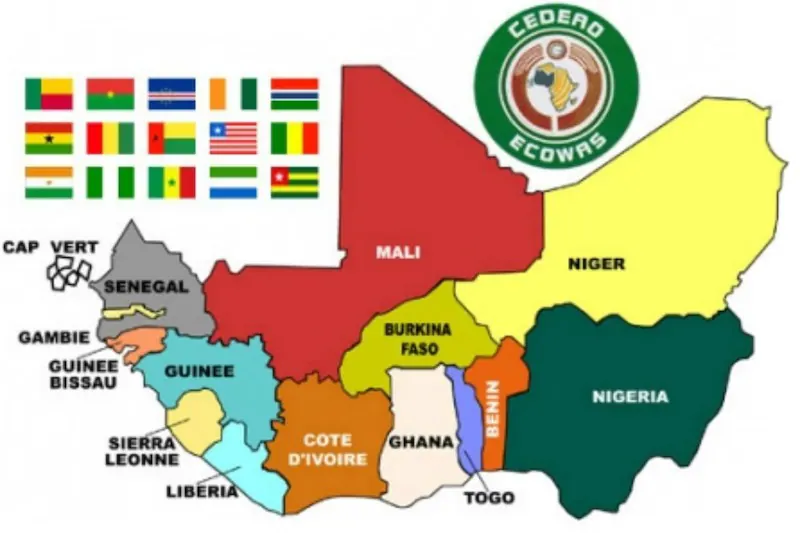
Ghana has urged West African governments to move beyond climate policy commitments and implement adequately funded programmes to address environmental degradation, population displacement, and insecurity. The call was made during the ECOWAS Parliament's second 2026 Parliamentary Seminar and Second Extraordinary Session in Accra. The discussions focused on strengthening climate resilience, protecting vulnerable populations, and preventing environmental pressures from escalating into humanitarian and security crises.
Representing President John Dramani Mahama, Ghana's Vice-President, Professor Jane Naana Opoku-Agyemang, emphasised the need for a coordinated regional response to address both immediate emergencies and their underlying causes. She noted that environmental stress, insecurity, and disrupted livelihoods in one part of West Africa placed pressure on communities and national systems elsewhere, making isolated national responses inadequate.
Opoku-Agyemang called for stronger early-warning systems, improved support for communities hosting displaced people, more resilient livelihoods, and closer coordination across national borders. She stressed that Ghana was working with ECOWAS to strengthen early-warning mechanisms through improved data sharing, closer cooperation, and stronger links between national and regional response systems.
The Vice-President also emphasised the need for greater access to climate finance and increased investment in resilient agriculture, water management, coastal protection, and clean energy. She acknowledged that ECOWAS already had frameworks addressing free movement, disaster risk reduction, climate action, and early warning, but stressed that their effectiveness depended on full implementation and adequate funding.
The Speaker of the ECOWAS Parliament, Hadja Mémounatou Ibrahima, echoed Opoku-Agyemang's sentiments, calling on lawmakers to ensure that climate commitments were reflected in legislation, government budgets, and concrete action. Ibrahima noted that climate change was increasingly affecting forests, coastlines, and livelihoods, contributing to population displacement, and making it necessary for national and regional policies to address the wider humanitarian and security consequences.
Ibrahima emphasised that parliamentarians had a responsibility to ensure that climate resilience policies incorporated economic, social, migratory, and security concerns alongside environmental protection. She stressed that public policy and budgets devoted to climate resilience must contain humanitarian dimensions, economic, social, migratory, and security concerns.
The ECOWAS Parliament's seminar and session aimed to strengthen regional cooperation and address the challenges posed by climate change. The discussions highlighted the need for a coordinated response to climate-related displacement and environmental degradation. Key stakeholders emphasised the importance of translating policy commitments into practical measures capable of protecting communities and reducing the risks associated with climate-related displacement.
Key points
- Ghana's Vice-President calls for stronger early-warning systems and greater access to climate finance.
- ECOWAS Parliament Speaker emphasises need for climate commitments to be reflected in legislation and government budgets.
- West African governments urged to move beyond climate policy commitments and implement funded programmes.