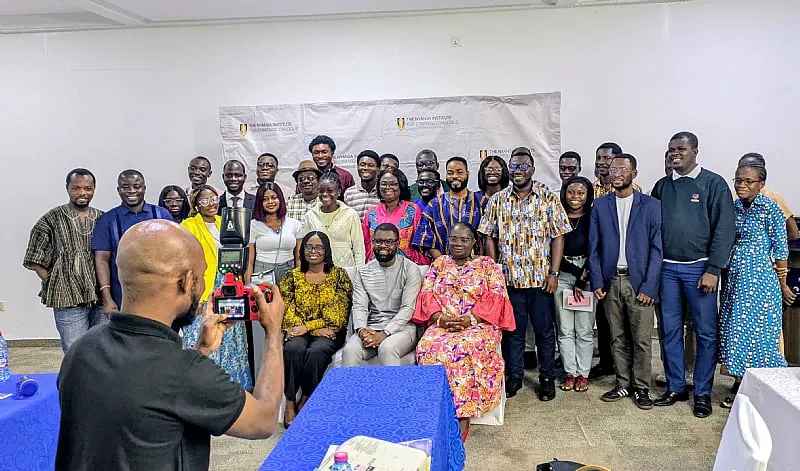
The Economic Community of West African States (ECOWAS) needs significant institutional reforms to remain relevant in the region, according to experts. This call was made at the fourth Nyansa Dialogue Series, organised by the Nyansa Institute for Strategic Dialogue, held in Accra on September 18. The dialogue focused on the theme "Regional allies in peril: Can a fractured ECOWAS still be a force for good?"
Dr. Emma Birikorang, Director of Research at the Kofi Annan International Peacekeeping Training Centre (KAIPTC), stated that increasing dissatisfaction among young people with elected governments is linked to their inability to provide human security, public services, and economic opportunities. This dissatisfaction has led some young people to welcome military takeovers as an alternative to existing political systems.
Dr. Birikorang also noted that the emergence of new external partners and alternative regional alliances has changed West Africa's political and security dynamics, weakening ECOWAS' ability to manage conflicts and enforce its protocols on democracy and good governance. This shift has significant implications for the region's stability and ECOWAS' role within it.
Dr. Juliana Appiah, Senior Research Fellow at the Legon Centre for International Affairs and Diplomacy (LECIAD), argued that ECOWAS' challenges stem from both member states' conduct and structural weaknesses within the organisation. She stated that member states have failed to uphold commitments under ECOWAS protocols, particularly those related to democracy and good governance.
According to Dr. Appiah, ECOWAS was established in 1975 as an economic integration project, but its responsibilities have expanded to include security, democracy, and environmental issues. However, its intergovernmental structure is a major weakness, as the ECOWAS Commission lacks sufficient authority to hold member states and their leaders accountable.
Despite the withdrawal of Burkina Faso, Mali, and Niger from ECOWAS, Dr. Appiah believes the organisation can still be salvaged. She called for greater powers and resources for the ECOWAS Commission, including the authority to impose and enforce targeted sanctions against political leaders. This, she argues, would enable ECOWAS to effectively address its current challenges.
Samuel Koranteng Adjei, Executive Director of the Nyansa Institute for Strategic Dialogue, emphasised Ghana's direct interest in ECOWAS' stability and effectiveness due to its geographical, economic, and security links with neighbouring countries. He warned that instability in the Sahel could have far-reaching consequences, including disruptions to trade, migration, organised crime, and terrorism.
Key points
- Experts call for ECOWAS reforms to address changing realities in West Africa.
- ECOWAS faces challenges due to member states' conduct and structural weaknesses.
- The organisation's intergovernmental structure is a major weakness.