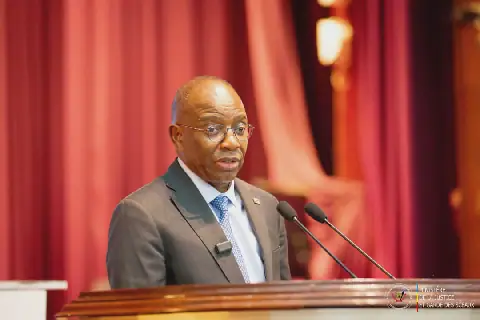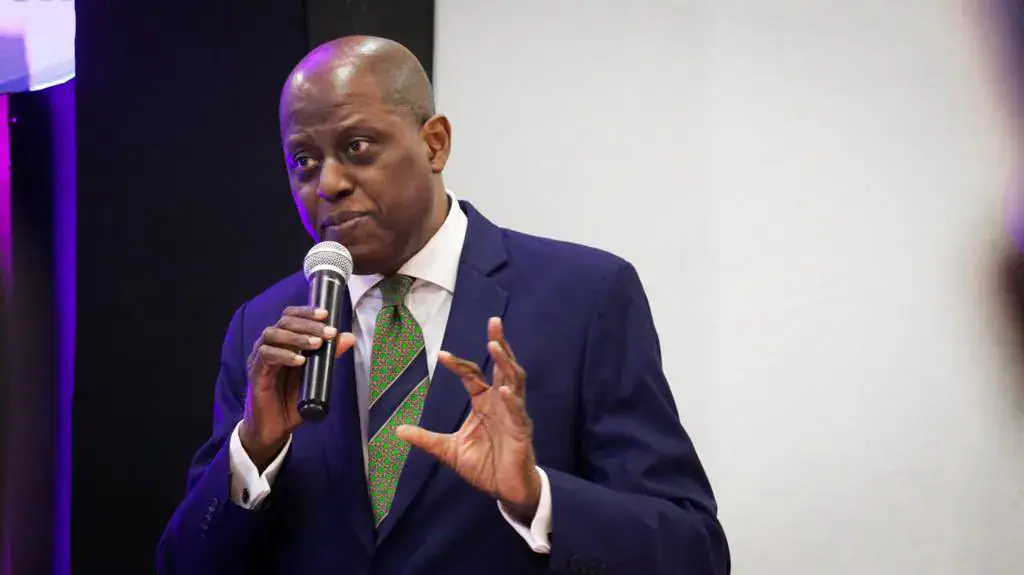
Central Bank Governor Olayemi Cardoso has called for a fair governance structure in the proposed ECOWAS Monetary Union. He made this statement while representing Nigeria at the Ministerial Session of the 6th Presidential Task Force Meeting on the ECOWAS Single Currency Programme in Abidjan, Côte d’Ivoire, on November 20. Cardoso emphasized that countries making greater financial contributions and assuming bigger economic responsibilities must have meaningful participation in the Union’s leadership and decision-making processes.
Cardoso warned that allowing member states to share financial obligations without corresponding influence could threaten the long-term sustainability of the proposed regional monetary arrangement. He stressed that the principles of regional solidarity and respect for the sovereignty of member states must be balanced with the financial commitments, economic responsibilities, and risks undertaken by individual countries. This balance is particularly important in determining leadership appointments and participation in the governance of the proposed Union.
The CBN governor argued that countries with larger economies and greater financial responsibilities should be given appropriate consideration in the allocation of governance responsibilities. He cited their contributions and systemic importance to the West African economy as reasons for their significant role. Cardoso specifically stated that bigger economies should be considered to play a significant role due to their risk and systemic importance in the sub-region.
Nigeria has reaffirmed its commitment to the ECO single currency project. Cardoso described Nigeria’s support for the establishment of the ECO single currency as longstanding and unwavering. He said Nigeria had consistently demonstrated its commitment through substantial financial contributions, sustained technical support, and compromises made in the broader interest of achieving regional consensus.
Cardoso explained that Nigeria’s demand for equitable representation was not driven by a desire for dominance or entitlement but by the responsibilities associated with its position as West Africa’s largest economy and one of the principal contributors to the proposed Monetary Union. He emphasized that Nigeria will commit substantial financial resources, reserves, and institutional capital to the success of the regional monetary project.
The CBN governor urged delegates to approach the outstanding issues with openness, mutual respect, and a willingness to compromise. He expressed confidence that a balanced agreement could be reached in the collective interest of the region. Cardoso also described the meeting as a defining milestone in the ECOWAS monetary integration process, with deliberations focusing on critical aspects of the institutional architecture of the proposed Monetary Union.
The proposed Monetary Union’s governance structure, leadership appointments, and allocation of authority and responsibilities among participating countries were key discussion points. Cardoso cautioned that the decisions being considered would shape the future of the proposed Union for decades, influencing its credibility among investors and development partners, its legitimacy among citizens, and the confidence of member states in the regional project.
Key points
- The proposed ECOWAS Monetary Union governance structure should reflect a fair balance between the obligations undertaken by member states and their participation in the institutions responsible for managing the Union.