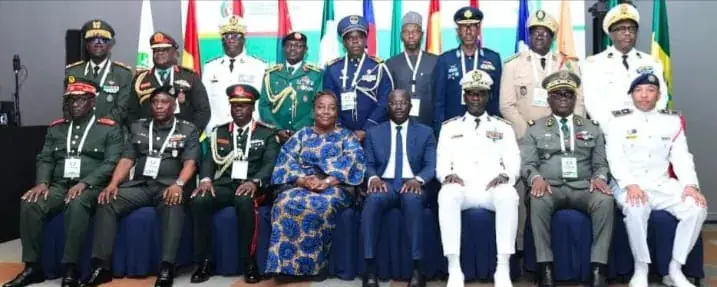
The 45th meeting of ECOWAS Chiefs of Staff kicked off in Senegal on Monday, with a focus on expediting the operational activation of a regional force to combat terrorism. The force aims to enhance the region's collective security and response to growing threats from armed groups. Senegalese Defence Minister Yankoba Diimey urged member states to strengthen cooperation, share resources, and bolster the group's financial autonomy.
Diimey emphasized the need for a more harmonized and robust approach to addressing evolving security threats in the region. He called on member states to adapt their cooperation and work together more effectively to tackle the challenges. The meeting, which will run until March 18, brings together military leaders from ECOWAS member states to discuss key security issues and strategies.
Senegalese General Omar Wade, Chief of Staff of the Senegalese Armed Forces, reaffirmed his country's commitment to regional military cooperation. He highlighted the importance of strategic dialogue, experience sharing, and solidarity among West African militaries. Wade's remarks underscored the need for a cohesive and effective response to regional security challenges.
ECOWAS Commissioner for Political Affairs, Peace, and Security, Francisca Biage Alagali, stressed the importance of strengthening regional mechanisms for crisis prevention and management. She also emphasized the need to enhance the group's operational capabilities to effectively address security threats. The meeting aims to build on previous agreements, including the establishment of a regional force to combat terrorism and intervene in cases of military coups.
The regional force was announced in December 2022, and its activation was decided in March following a meeting of ECOWAS Chiefs of Staff in Sierra Leone. The force is intended to enhance the region's collective response to growing security threats, including attacks by armed groups in several West African countries. ECOWAS member states have faced significant security challenges in recent years.
The meeting takes place against the backdrop of significant developments within ECOWAS. In January 2025, Mali, Niger, and Burkina Faso announced their withdrawal from the organization, citing a lack of support in addressing security threats. The withdrawals followed a period of strained relations with ECOWAS, triggered by military coups in the three countries. The regional group's efforts to address security challenges will be closely watched.
The discussions will focus on addressing key security challenges, including terrorism, and developing effective strategies to mitigate these threats. ECOWAS aims to strengthen its collective response to security challenges and enhance cooperation among member states. The meeting's outcome is expected to shape the region's security landscape and inform future cooperation among ECOWAS member states.
Key points
- ECOWAS member states aim to strengthen cooperation and activate a regional force to combat terrorism.