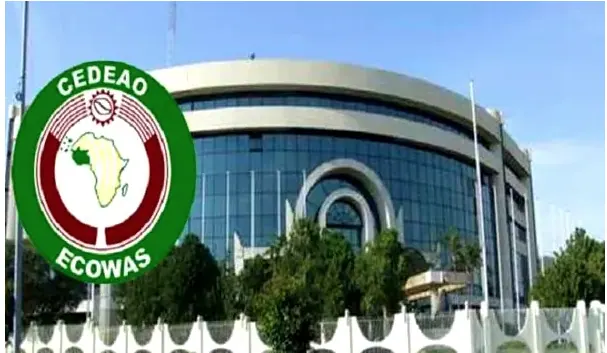
The ECOWAS Community Court of Justice is turning to journalists to help bridge the enforcement gap of its judgments. President of the Court, Hon. Justice Ricardo Claudio Monteiro Gonçalves, made the call at a three-day training workshop for journalists from ECOWAS Member States. He urged participants to use their media platforms to draw attention to governments' obligations under regional treaties. This move aims to strengthen the role of journalists in holding member states accountable.
Gonçalves expressed concerns over the level of compliance with the Court's judgments, describing it as below expectation. The Court's existing enforcement mechanism places responsibility for executing its judgments on member states. However, the Court's authority to directly enforce its decisions is limited. Under Article 24 of the Court's Supplementary Protocol, judgments are enforced through a writ of execution submitted by the Chief Registrar to the relevant member state.
The ECOWAS Community Court of Justice serves as a regional judicial institution within the Economic Community of West African States. Its jurisdiction includes human rights cases involving member states. The Court's judgments can address allegations of human rights violations and provide remedies to applicants. However, enforcement depends on mechanisms involving national authorities rather than the Court independently executing its own decisions.
Gonçalves identified limited public understanding of the Court's mandate, procedures, jurisdiction, and judgments as a challenge. He attributed this partly to gaps in media coverage. To address this, the workshop aims to improve judicial reporting and establish a network of journalists across the ECOWAS region. The president emphasized that journalists need a sound understanding of the institution's composition, structure, and legal responsibilities to communicate its work accurately.
The Court has taken steps to improve enforcement, including bilateral engagements with national authorities in countries such as Guinea, Sierra Leone, and Nigeria. These engagements focused on compliance, institutional cooperation, and practical enforcement challenges. The Court recognizes that differences in domestic procedures, institutional capacity, and the implementation of regional legal instruments can affect how judgments are carried out.
The ECOWAS Court's reliance on member states for enforcement has raised concerns about the effectiveness of its judgments. Gonçalves urged journalists to engage member states on the need to faithfully implement the Court's decisions in accordance with their treaty obligations. By doing so, the Court hopes to increase compliance and ensure that its judgments translate into practical outcomes for individuals and communities.
The training workshop for journalists is part of the Court's efforts to strengthen its relationship with the media and improve public understanding of its work. By establishing a network of journalists across the ECOWAS region, the Court aims to increase awareness of its judgments and promote cooperation between the regional institution and national authorities. This, in turn, is expected to enhance the enforcement of the Court's decisions.
Key points
- The ECOWAS Court is seeking journalist help to hold member states accountable for implementing its judgments.
- The Court's enforcement mechanism relies on member states, but compliance has been below expectation.
- The Court has engaged with national authorities to discuss compliance and enforcement challenges.