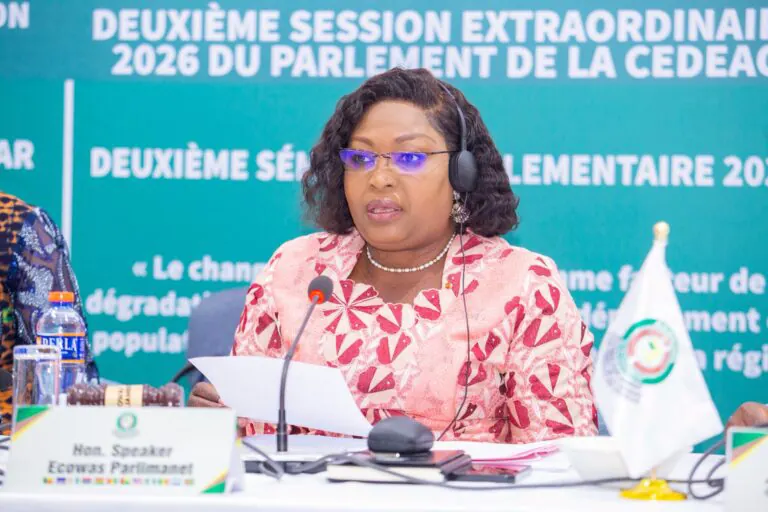
The ECOWAS Parliament has expressed concerns that West Africa's climate crisis is being hindered by poor funding and a lack of implementation, despite having strategies in place to tackle the issue. The Parliament's Speaker, Memounatou Ibrahima, stated that the region's credibility would be measured by its ability to produce concrete improvements in the lives of citizens. Climate change is no longer just an environmental concern, but a growing driver of displacement, insecurity, and instability in the region.
According to the Parliament, the region has developed climate policies and regional instruments, but implementation is constrained by financing gaps, institutional weaknesses, and competing national priorities. Guinean lawmaker Bademba Baldé identified effective implementation, financing, and national ownership as the principal obstacles confronting regional climate action. The Parliament's deliberations found that the region's central challenge is translating existing frameworks into tangible benefits.
The lawmakers' diagnosis connects climate vulnerability directly to security, highlighting displacement, competition over land and water, pastoral mobility, and resource-related conflicts as interconnected regional challenges. Their recommendations go beyond environmental protection, demanding that climate resilience be incorporated into national budgets, development plans, land-use policies, conflict prevention, and disaster-risk reduction. This approach aims to address the root causes of climate-related issues in the region.
The ECOWAS Parliament is pushing for a regional climate-resilience and human-security fund to support climate action in West Africa. The Commission is expected to produce a five-year implementation roadmap to guide the region's climate efforts. This move is seen as crucial in turning ambitious resolutions into funded, measurable action. The Parliament's warning exposes a familiar regional paradox: governments have developed climate policies, but implementation remains a challenge.
Climate change is affecting millions of people in West Africa, with 32 million people expected to be forced to move due to climate-related issues. The region's climate crisis is increasingly a test of governance, requiring regional institutions to take concrete action. The ECOWAS Parliament's call for a regional climate-resilience fund is seen as a step in the right direction. West Africa's climate challenge requires a coordinated response from governments, regional institutions, and international partners.
The ECOWAS Parliament's Second Extraordinary Session closed on Saturday, with a clear message: West Africa's climate challenge is a pressing issue that requires urgent attention. The Parliament's credibility will be measured by its ability to produce concrete improvements in the lives of citizens. The region's leaders must work together to address the climate crisis, which is driving displacement, insecurity, and instability. A coordinated response is necessary to mitigate the effects of climate change.
The ECOWAS Parliament's recommendations are clear: climate resilience must be incorporated into national budgets, development plans, land-use policies, conflict prevention, and disaster-risk reduction. The region's leaders must prioritize climate action and provide the necessary funding and political will to support implementation. The Parliament's call for a regional climate-resilience fund is a step in the right direction, but more needs to be done to address the scale and complexity of West Africa's climate crisis.
Key points
- ECOWAS Parliament warns that climate change is driving displacement, insecurity, and instability in West Africa due to poor funding and lack of implementation.
- The region has developed climate policies and regional instruments, but implementation is constrained by financing gaps, institutional weaknesses, and competing national priorities.
- The ECOWAS Parliament is pushing for a regional climate-resilience and human-security fund to support climate action in West Africa.