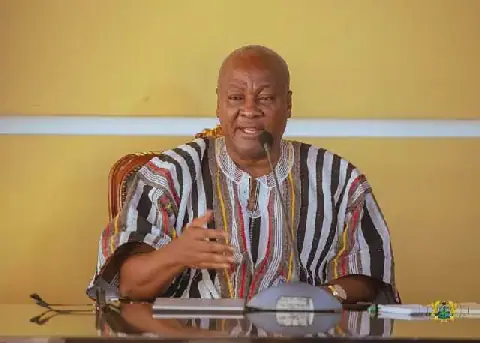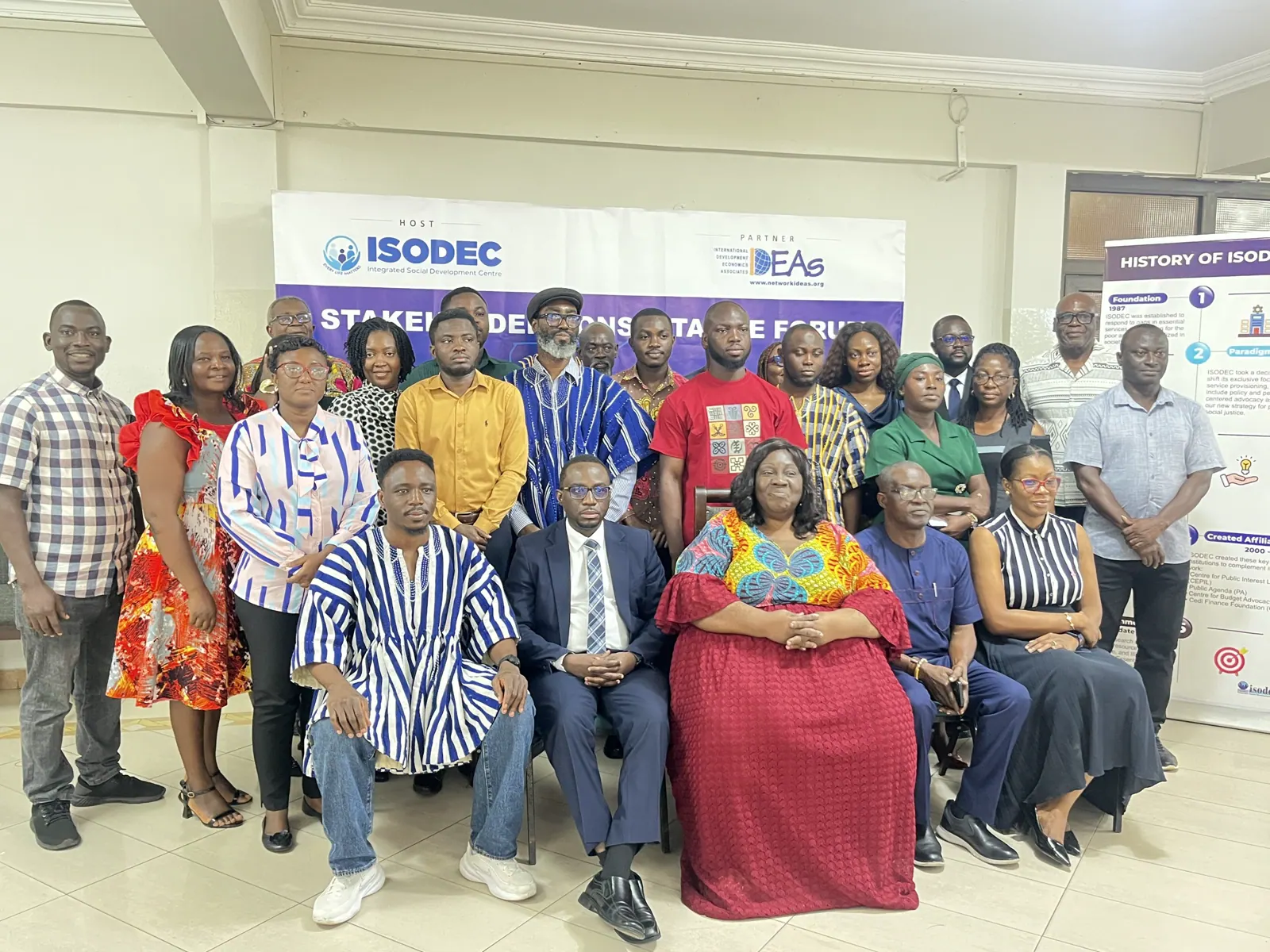
Dr. Adamu Braimah Abille, Policy Analyst at the Integrated Social Development Centre (ISODEC), has urged the Bank of Ghana (BoG) to reassess its monetary policy strategy. He made the call at a stakeholder consultation forum on Alternative Economic Models for Ghana, organised by ISODEC in partnership with the International Development Economics Associates (IDEAS). The forum aimed to generate concrete policy inputs to improve proposed models for possible implementation.
Dr. Abille challenged conventional assumptions underpinning monetary policy, including the role of banks as financial intermediaries. He argued that commercial banks do not simply take deposits from savers and lend them to borrowers but create new money when they extend credit. This, he said, suggests that bank lending could create new purchasing power in the economy. His assertions were based on an analysis of the current monetary policy framework.
The Policy Analyst also questioned the assumption that lower interest rates necessarily stimulate economic growth while higher rates constrain it. Citing analysis of Ghanaian and South African data, he said the evidence does not establish a stable relationship between interest rates and economic growth. Instead, he suggested that quantity constraints could be more important than the price of money in determining economic activity.
Dr. Abille further proposed a monetary policy framework that places greater emphasis on the allocation and quality of credit. This includes a shift from predominantly inflation and interest-rate targeting towards credit quantity and quality targeting. He also identified three key assumptions requiring review: the role of banks as financial intermediaries, the relationship between interest rates and economic growth, and the quantity theory of money.
Other participants at the forum shared their perspectives on the proposed monetary policy framework. Dr. Isaac Abotebuno Akolgo, an Economist at IDEAS, called for stronger government and central bank intervention to stabilise food prices and create reliable markets for farmers and food producers. He proposed three possible financing models to support the food sector.
The forum also heard from Mr. Charles Abugre, the Executive Director of IDEAS, who noted the significance of the Bank of Ghana's intervention in the gold sector through the GoldBod. This intervention provided liquidity to support gold purchases without relying solely on government borrowing. Mr. Sam Danse, Executive Director of ISODEC, emphasised the importance of generating concrete policy inputs from the forum.
The stakeholder consultation forum was a collaborative effort between ISODEC and IDEAS to develop alternative economic models for Ghana. The forum brought together experts and stakeholders to discuss and refine proposals for improving the country's economic policy framework. Key outcomes from the forum are expected to inform future policy decisions.
Key points
- Dr. Adamu Braimah Abille urges the Bank of Ghana to shift its monetary policy focus from interest rates to credit quantity and quality.
- The proposed framework aims to drive economic activity and control inflation by emphasising the allocation and quality of credit.
- The forum generated concrete policy inputs to improve proposed models for possible implementation.