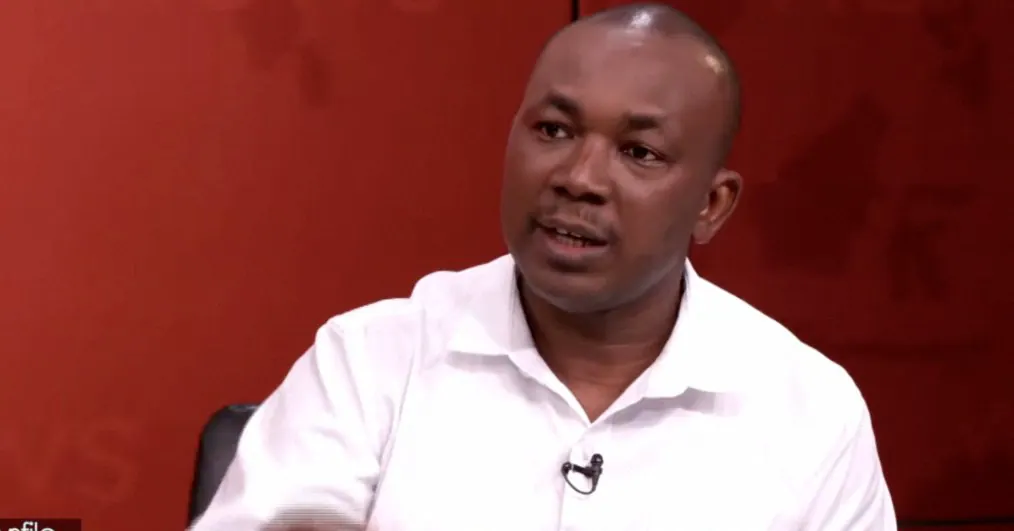
Professor Godfred Bokpin, a leading economist and Professor of Finance at the University of Ghana Business School, has cautioned that Ghana's bid to join BRICS will not automatically transform the country's economy. He emphasized that domestic reforms are essential to turn the economy around, and BRICS membership should not be seen as a substitute for these reforms. Bokpin made these remarks on Joy FM's Super Morning Show on October 8.
Bokpin's comments come as the Ghanaian government expresses optimism about its BRICS bid. Foreign Minister Samuel Okudzeto Ablakwa confirmed on October 6 that Ghana intends to formally apply for BRICS membership, following Cabinet approval. While some analysts, like Dr. Nana Yaw Mireku, argue that joining BRICS will provide Ghana with diplomatic "options" beyond traditional Western partners, Bokpin's intervention adds an economic counterweight to this framing.
According to Bokpin, BRICS is still an evolving bloc, even among its founding members, and there is no settled framework for absorbing new entrants like Ghana. He noted that several nuances around the bloc's direction and structure would need to be worked out. Despite this caution, Bokpin supports the government's push to join BRICS from a purely economic standpoint, citing the bloc's growing share of global output.
The combined GDP of BRICS' 11 founding members and 10 partner countries now exceeds that of the G7, accounting for close to 40 percent of global GDP. Bokpin pointed out that BRICS members have higher growth potential than most other economic groupings. He also cited long-term projections showing China overtaking the United States as the world's largest economy by 2050, with three of the world's top five economies by that year belonging to BRICS.
Ghana is already feeling the pull of emerging economies through its trade relationship with China, even without BRICS membership. Bokpin noted that China has effectively taken over Ghanaian markets that were once served by traditional Western trading partners. This shift gives an economic rationale for Ghana to look more closely at BRICS, although geopolitical and other factors will also influence the decision.
BRICS is a bloc of major emerging economies that began with Brazil, Russia, India, China, and South Africa, and has since expanded to include additional founding and partner countries. The bloc, taken together with its partner nations, now represents a larger share of world economic output than the G7. Bokpin's figures suggest that Ghana's economic fate still rests on decisions made at home.
The timeline for Ghana's formal BRICS application and membership negotiations is unclear. For ordinary Ghanaians, the immediate practical question of whether BRICS membership will affect trade costs, access to new markets, or investment flows remains unanswered in the absence of a clear framework. Bokpin himself flagged this uncertainty, describing the bloc's rules for new entrants as still unsettled.
Key points
- BRICS membership will not automatically transform Ghana's economy without domestic reforms.
- The bloc's rules for new entrants, including Ghana, are still unsettled.
- Ghana's economic fate still rests on decisions made at home.