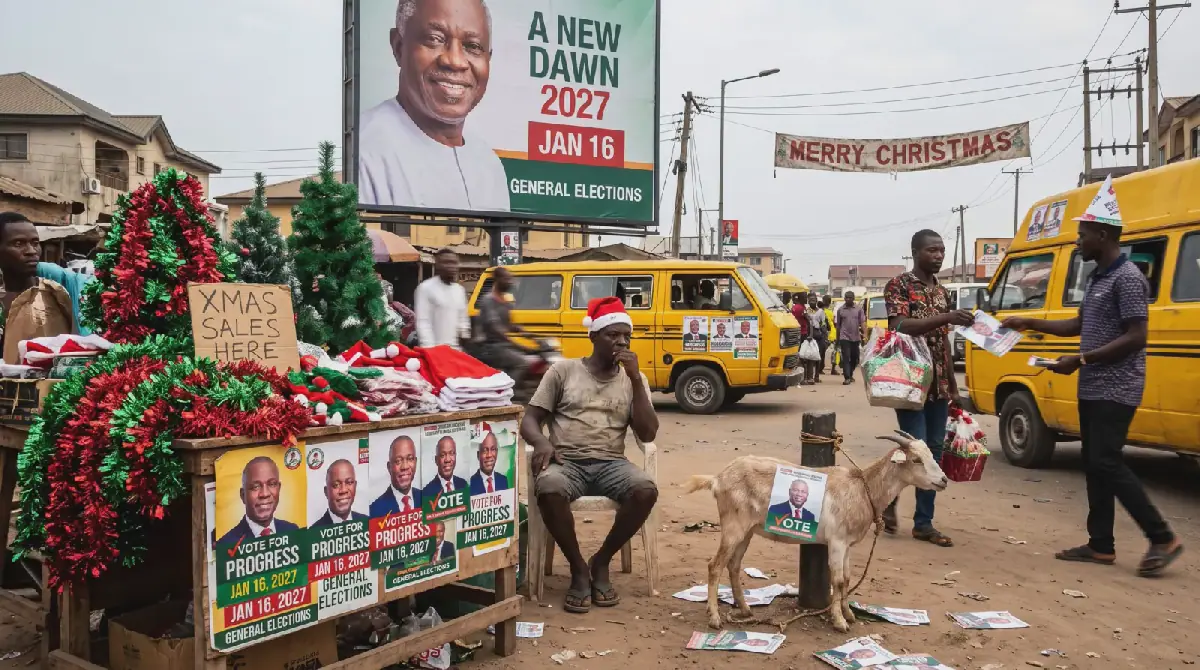
As Christmas approaches in Nigeria, the usual festive atmosphere is dampened by economic hardship and the upcoming 2027 general elections. Despite the traditional Detty December celebrations, Nigerians are tightening their belts due to financial constraints. Concerts and events are still selling out, but the overall mood is subdued. Campaign activities have intensified, with politicians' billboards and messages dominating the streets.
The 2027 general elections, scheduled for January 16, have contributed to the economic strain. The Independent National Electoral Commission (INEC) pushed the elections to the edge of the constitutional window, leaving barely two weeks between New Year's celebrations and polling day. This has resulted in a surge in campaign activities, with party convoys and stadium rallies taking over weekends usually reserved for social events and trips to villages.
The economic hardship is evident in major markets like Balogun and Oke-Arin. Shoppers are hesitant to spend, and traders are feeling the pinch. Olamide Jinadu, a wholesale trader, reported reduced orders due to customers' inability to afford her prices. She noted that sales are down by more than half compared to the previous two years, even during the COVID-19 pandemic.
Food vendors are also struggling to make ends meet. A popular food vendor had to reduce portion sizes to keep the restaurant running, as customers are no longer booking events or willing to pay increased prices. Despite the National Bureau of Statistics reporting a slight ease in headline inflation to 14.06 per cent in October, food prices remain high. A 50kg bag of imported long-grain rice sells for between N62,000 and N75,000 in Lagos.
The Central Bank of Nigeria (CBN) is wary of the potential impact of festive spending and election-related cash injections on prices. Governor Olayemi Cardoso retained the benchmark interest rate at 23 per cent, warning of potential price increases. The foreign exchange market is also showing signs of strain, with the naira strengthening to N1,387.89 to the dollar at the official market but trading at higher rates on the parallel market.
Regular salary earners are experiencing a sudden outbreak of financial discipline. With the presidential election scheduled for mid-January, many are cautious about impulse buying. Corporate hampers are noticeably lighter, and office parties are shrinking. The combination of economic hardship and election fever has resulted in a subdued Christmas atmosphere in Nigeria.
As Nigerians approach the festive season, they are prioritizing essential spending over celebrations. The economic strain and uncertainty surrounding the elections have led to a decrease in festive activities and spending. With 18 presidential candidates vying for votes, the competition for dollars between holiday importers and campaign organizers is likely to drive prices up further.
Key points
- Economic hardship and election spending are threatening Nigeria's Christmas celebrations.
- The 2027 general elections have contributed to the economic strain, with campaign activities intensifying and dominating weekends.
- Food prices remain high, with a 50kg bag of imported long-grain rice selling for between N62,000 and N75,000 in Lagos.
Reporting sources
- Election Fever, Economic Hardship Threaten Nigeria’s Christmas Celebrations · Independent Nigeria