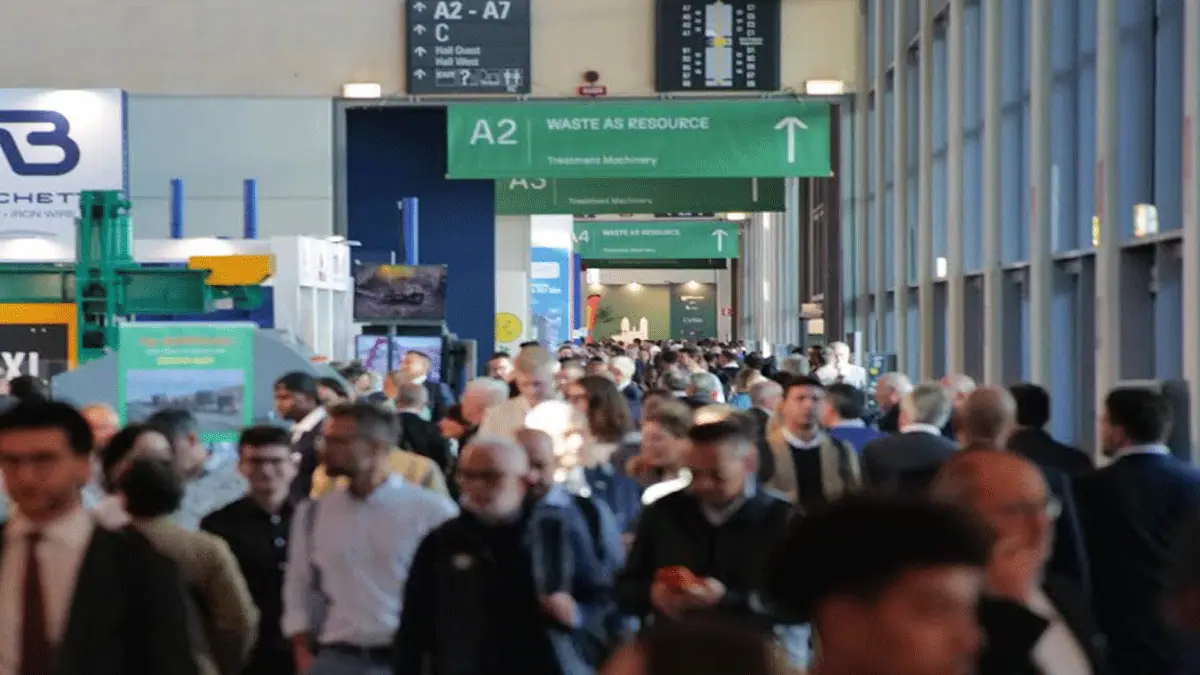
The Ecomondo 2026 conference, held in Rimini, Italy, from November 3 to 6, brought together leaders and experts to discuss the circular economy and its challenges. The event focused on transforming recycling and resource reuse into competitive industrial activities. Fabio Fava, president of the technical-scientific committee, emphasized Italy's high recycling rates but noted that the country struggles to translate this into sustainable industrial development.
According to Fava, investments in the circular economy represent only 0.5% of Italy's GDP, compared to 0.8% in the European Union. He identified the main priorities as ecodesign, new plastic treatment technologies, and recovering metals from electrical and electronic waste. Fava also highlighted the economic constraints of the ecological transition, particularly in a context of geopolitical tensions and concerns about the cost of living.
Corrado Peraboni, director general of Italian Exhibition Group, emphasized the importance of recovering raw materials to reduce Italy's dependence on external resources. He presented recycling as a response to this challenge, aiming to recover resources from waste and make the transition ecologically and economically advantageous for businesses and households. This approach reflects a shift in the industrial discourse, where waste valorization is seen not only as an environmental response but also as a means to secure supplies and improve production efficiency.
Ecomondo 2026 saw the participation of 1,850 exhibitors and covered an area of 171,000 square meters at the Rimini exhibition park. The event reinforced its international dimension, with a 19% increase in foreign exhibitors compared to 2025. The conference aimed to bring together businesses, researchers, and institutions to discuss the challenges and opportunities of the circular economy.
The event highlighted the importance of partnerships with Mediterranean countries, particularly Tunisia. Alessandra Astolfi, head of the Green & Technology division at Italian Exhibition Group, presented Tunisia as a key partner in several areas of the circular economy, including plastic recycling, metal valorization, and waste management. The presence of 40 Tunisian companies at the event, including 14 international buyers, demonstrated the potential for cooperation and technology exchange.
The conference also focused on water reuse as a crucial aspect of the circular economy. Francesco Fatone, coordinator of the water section of Ecomondo's scientific committee, presented the ARETUSA experience in Tuscany, which achieved significant water savings. This project exemplifies the potential for innovation and collaboration in addressing the challenges of the circular economy.
The discussions at Ecomondo 2026 underscored the need for effective cooperation between European and Mediterranean partners, including Tunisia and Morocco. The goal is to transform contacts into concrete technological and industrial collaborations, driving progress in the circular economy and sustainable development.
Key points
- Ecomondo 2026 highlights Italy's challenges in translating recycling rates into sustainable industrial development.
- The event emphasizes the importance of partnerships with Mediterranean countries, particularly Tunisia, in the circular economy.
- Water reuse and efficient resource management are crucial aspects of the circular economy discussed at Ecomondo 2026.