For years, residents of Baringo County have borne the brunt of climate change, as rising waters in Lakes Baringo and Bogoria swallow homes, displace families, and submerge once-productive farmland. The crisis is escalating, with experts warning of an ecological disaster if the situation is not brought under control. Lake Bogoria, an alkaline lake, is reportedly just seven kilometres from spilling into Lake Baringo, a freshwater lake. A merger of the two could trigger an ecological disaster, threatening both human and wildlife populations.
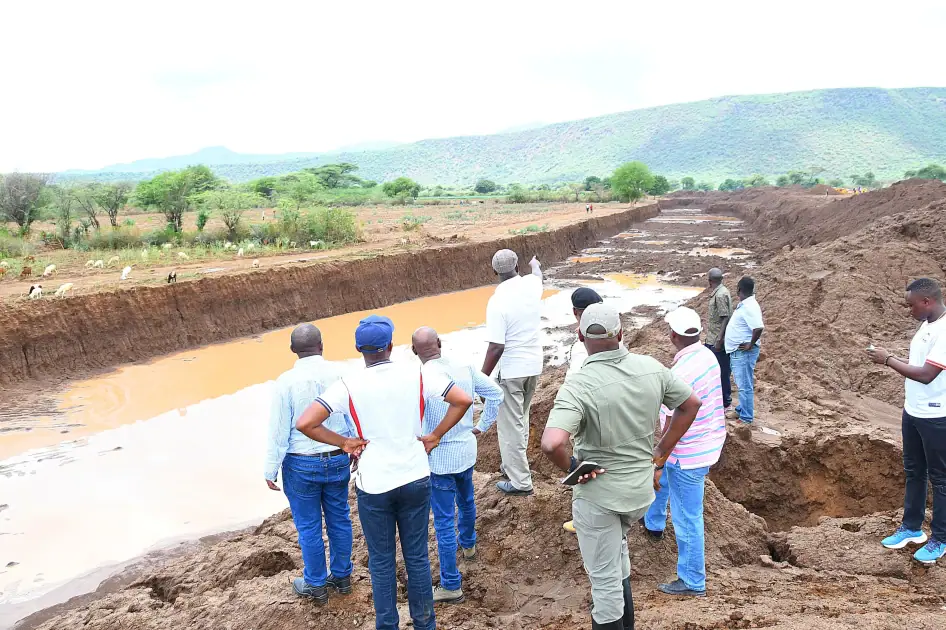
To contain the rising waters and avert this looming disaster, the government has deployed more than 100 excavators and other heavy machinery to divert Rivers Waseges and Loboi, which feed Lake Bogoria. Irrigation PS Ephantus Kimotho said the two rivers used to channel their water to Lake Baringo, but because of siltation over time, they have been taking water to Lake Bogoria. In fact, 60% of the water in Lake Bogoria comes from the two rivers.
The government is building a 25-metre-wide channel to conduct water from River Waseges back to the old swamp traditionally called Kimolong’o. The diversion project aims to protect threatened settlements and save the two lakes. However, another crisis is emerging for communities along the rivers earmarked for diversion, who may lose their livelihoods. Linah Karatu, a farmer in Loboi, has ten acres under maize and another three acres of tomatoes in Sandai, but the diversion project has cut off her irrigation water.
Several farmers claim that the ongoing excavation works have left them counting huge losses. The excavation works have trampled on tomatoes, vegetables, and farms, causing significant damage. Karatu said that before diverting the water, the government should have constructed irrigation canals first. The affected farmers are now facing an uncertain future.
Further downstream along River Loboi, the government’s intervention is creating another dilemma. As authorities race to divert the river back to its original course, several families now face the prospect of losing their homes to make way for the new channel. The residents have title deeds for their properties, but the county government has not taken any action.
According to the government, 21 plots have been affected by the River Waseges project, and 80 plots are affected by the River Loboi project. At Loboi Centre, once a vibrant tourism hub, the future looks increasingly uncertain as the waters of Lake Bogoria continue to rise. With heavy rains looming, the centre could soon disappear underwater.
The residents understand the need to protect communities and prevent an ecological disaster, but they are equally concerned about the economic consequences of losing access to irrigation water. Authorities have confirmed that phase two of the project will entail upgrading irrigation infrastructure, with about 250,000 acres already identified for irrigation development in Tiaty Constituency. The government is urged to help and compensate the residents living in the area.
Key points
- The government has deployed over 100 excavators to divert Rivers Waseges and Loboi.
- 250,000 acres have been identified for irrigation development in Tiaty Constituency.
- Lake Bogoria is just seven kilometres from spilling into Lake Baringo.