The West African Economic Community (ECOWAS) is accelerating preparations for the gradual rollout of its single currency, ECO, slated for 2027. According to reports from Radiodiffusion télévision ivoirienne (RTI), the project’s realization hinges on essential political and technical decisions. ECOWAS aims to introduce the currency as a significant step toward regional economic integration. However, several obstacles must be addressed before the launch. Key among them is establishing the West African Central Bank (WACB), whose location, governance structure, and first governor are yet to be determined.
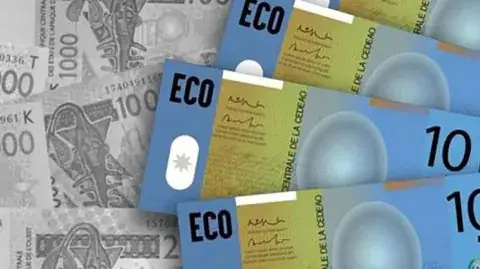
The Committee of Ministers of ECOWAS held meetings from November 17 to 19 in Abidjan, resulting in conclusions that will be submitted to the Presidential Task Force for review and decision. Institutional issues, such as the location of the regional payment and settlement system and the Community Solidarity and Stabilization Fund, require resolution. The ECO’s introduction is part of the 2027-2030 Agenda, which foresees a gradual rollout. The symbol “Ec” has been adopted for the currency, but other fundamental parameters, like the design of bills and coins and the exchange rate regime, remain to be finalized.
A critical challenge for ECO is ensuring economic convergence among member states. To join the monetary union, countries must meet specific criteria, including a budget deficit of no more than 3% of GDP and an inflation rate below 5%. The goal is to harmonize the macroeconomic performances of participating countries to minimize imbalances that could threaten the common currency. ECOWAS is adopting a gradual approach, allowing countries that meet the criteria to integrate into the first phase while others receive support to improve their economic performance.
The launch of ECO is expected to have significant economic implications. The currency aims to facilitate trade, reduce conversion costs, and simplify cross-border transactions. It could also promote investments, strengthen market integration, and enhance economic activities within the community. The introduction of ECO would mark a substantial transformation of West Africa’s monetary landscape, currently divided between the CFA franc in the UEMOA area and national currencies in other ECOWAS countries.
The success of ECO depends on the political will of member states, the effective establishment of common institutions, and adherence to convergence criteria. While the planned launch is set for 2027, the actual implementation may vary. ECOWAS member states have varying levels of development, productive structures, and budgetary situations, which could affect the currency’s stability. A phased approach is being considered to balance community ambitions with monetary stability requirements.
Hamed Nanéma reported for Lefaso.net on the developments. The ECOWAS Commission is working to address the challenges and ensure a smooth rollout of the single currency. The Task Force Presidential will play a crucial role in making key decisions on the project. The gradual introduction of ECO is anticipated to foster deeper economic integration and cooperation among West African countries.
The introduction of the ECO single currency is a significant milestone in the economic integration of West Africa. Its success will depend on the ability of ECOWAS member states to work together and address the challenges associated with its implementation. The project has the potential to transform the regional economy and promote sustainable growth.
Key points
- The ECO single currency is set to launch in 2027, pending key political and technical decisions.