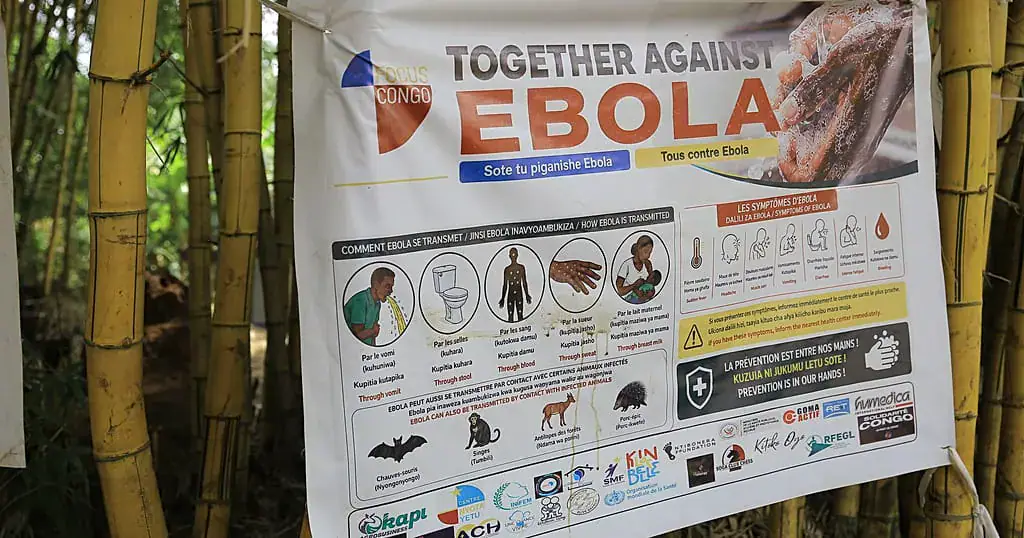
Health workers in the volatile eastern Democratic Republic of Congo are struggling to tackle local suspicions and resistance in their efforts to combat the Ebola virus. In the rural community of Bulambo-Isale, a small crowd gathered along a dirt track to prevent an ambulance from bringing the body of a local Ebola victim for burial. The Ebola response teams are facing significant challenges in convincing locals to adopt safe burial practices.
The locals are resistant to the Ebola response teams because they believe that the teams do not understand their customs and languages. According to Patricien Kambale, a local resident, the authorities have imposed the Ebola response on locals without first making sure how they interpret it. This has led to mistrust and suspicion among the locals, who fear that the health workers are using poisoned medicine to kill people.
The Ebola outbreak has killed more than 5,000 people out of more than 11,000 cases since May. Medical workers face almost daily attacks due to locals' hostility to efforts to respond to the outbreak. Wilson Kasyani, chief doctor for the Vuhovi health district, expressed concern for the safety of the ambulance and its occupants, citing the presence of weapons in the region.
The lack of understanding and mistrust of health workers is also fueled by the fact that they are often brought in from outside the community and do not speak the local languages. Roland Vivaya, head of the local youth council, admitted that he didn't believe in Ebola until he almost died of the virus. He said that the difficulty was not so much defiance but locals not understanding the virus.
The cultural and traditional practices of the Nande people, one of the eastern DRC's largest ethnic groups, are also posing a challenge to the Ebola response teams. Traditional chief Pimbo Kakule said that the Nande people believe in life after death and that their customs must be respected when a person is buried. The locals believe that if a person is not buried according to their customs, they cannot communicate with their dead and get into heaven.
The salaries offered to locally recruited people for joining the Ebola fight are also a source of mistrust. The wages, higher than the local average, feed jealousy and conspiracy theories. Salama Mwengesyali, who coordinates public Ebola information sessions, said that her team lacked money to motivate locals in rural farming communities to attend lengthy Ebola information sessions.
The Ebola response teams are working to overcome the resistance by training locals and getting them involved in tackling Ebola. However, they face significant challenges, including a lack of resources and funding. The teams are also working to improve communication and understanding with the locals, but it remains a difficult task.
Key points
- The Ebola response teams in DR Congo face significant challenges in convincing locals to adopt safe burial practices.
- The locals are resistant to the Ebola response teams due to cultural and linguistic barriers.
- The lack of understanding and mistrust of health workers is fueled by the fact that they are often brought in from outside the community and do not speak the local languages.