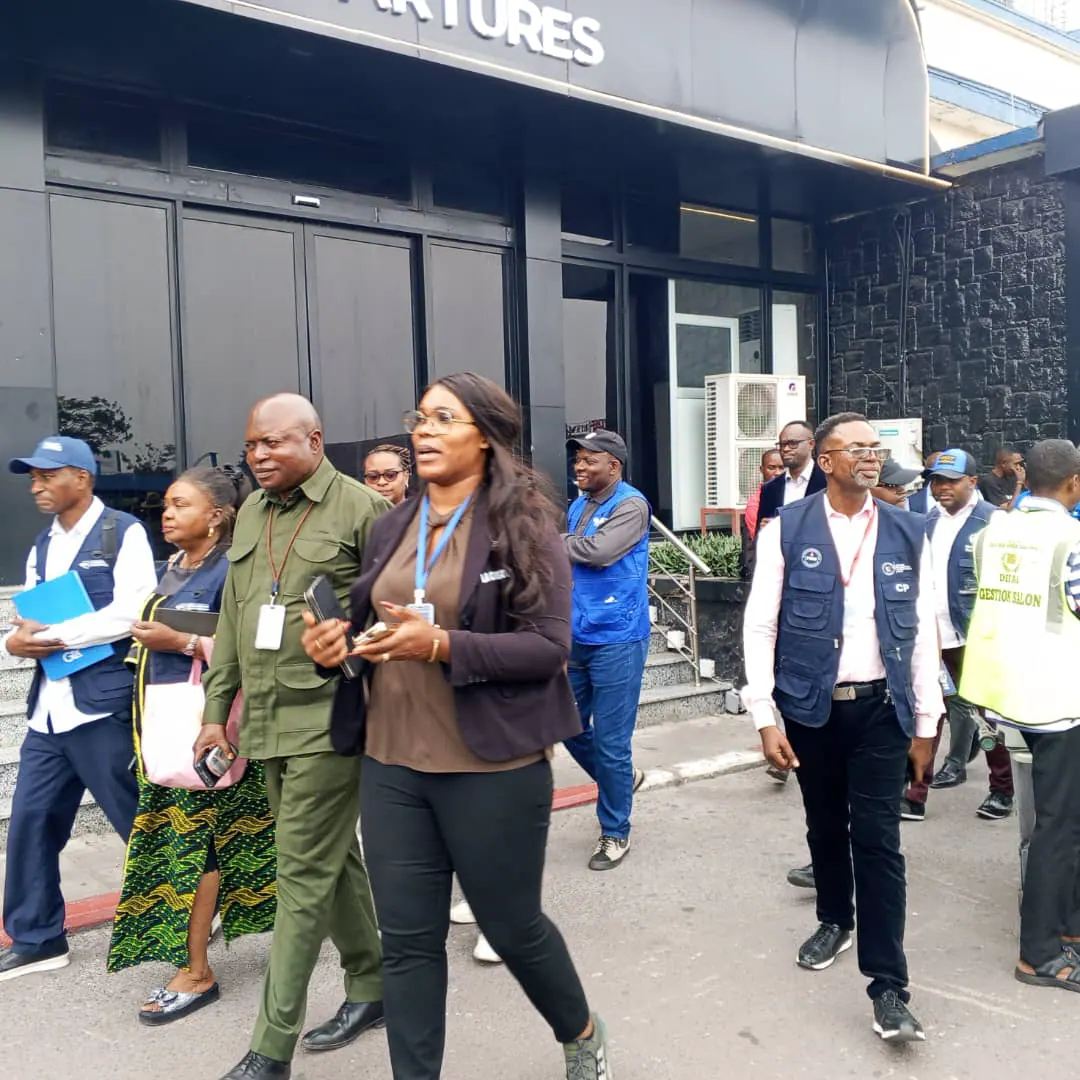
On September 30, 2026, donors and partners of the Democratic Republic of Congo evaluated the response measures in place at N'djili International Airport in Kinshasa. The assessment was conducted to determine the level of preparedness and response capacity at the airport. Mireille Lembwadio, Coordinator of the National Hygiene Program at Borders (Pnhf), stated that the evaluation aimed to identify areas for improvement and acknowledge the progress made so far.
The evaluation team consisted of representatives from various organizations, including the US Department of State, the Centers for Disease Control and Prevention (CDC), the International Organization for Migration (IOM), the World Health Organization (WHO), Afnet, Expertise France, Médecins Sans Frontières, and the Congolese government. They assessed the infrastructure and equipment put in place to prevent the spread of Ebola, including sanitary corridors, handwashing facilities, and ambulances.
Significant investments have been made at N'djili Airport to enhance its response capacity. These include the installation of sanitary corridors, handwashing facilities, and pre-positioned supplies. Additionally, medicalized ambulances and isolation containers have been set up in domestic and international terminals, as well as at the terminal used by the United Nations Mission in the Congo (MONUSCO).
Lembwadio expressed satisfaction with the level of coordination and collaboration among stakeholders, including the Congolese government, donors, and partners. She noted that the response efforts have been effective, with a high level of preparedness and response capacity at the airport. The evaluation team also acknowledged the support provided by the Régie des Voies Aériennes (RVA), the public operator responsible for managing airports in the country.
The DRC is currently experiencing its 17th Ebola outbreak. In response, the government has implemented various measures to prevent the spread of the disease. The National Hygiene Program at Borders (Pnhf) has played a crucial role in coordinating response efforts, including surveillance, prevention, and control of epidemics at borders.
The evaluation of response measures at N'djili Airport is part of a broader effort to strengthen the country's response to Ebola. The exercise aims to identify areas for improvement and ensure that the response efforts are effective in preventing the spread of the disease. The Congolese government and its partners remain committed to controlling the outbreak and protecting the population.
The response efforts at N'djili Airport have been deemed effective, with a high level of preparedness and response capacity. The evaluation team has praised the coordination and collaboration among stakeholders, and efforts will continue to improve the response measures in place. The DRC will continue to work with its partners to strengthen its response to Ebola and prevent the spread of the disease.
Key points
- The evaluation of Ebola response measures at N'djili Airport aims to identify areas for improvement and acknowledge progress made so far.
- The DRC is currently experiencing its 17th Ebola outbreak, and response efforts are focused on preventing the spread of the disease.
- The National Hygiene Program at Borders (Pnhf) has played a crucial role in coordinating response efforts, including surveillance, prevention, and control of epidemics at borders.