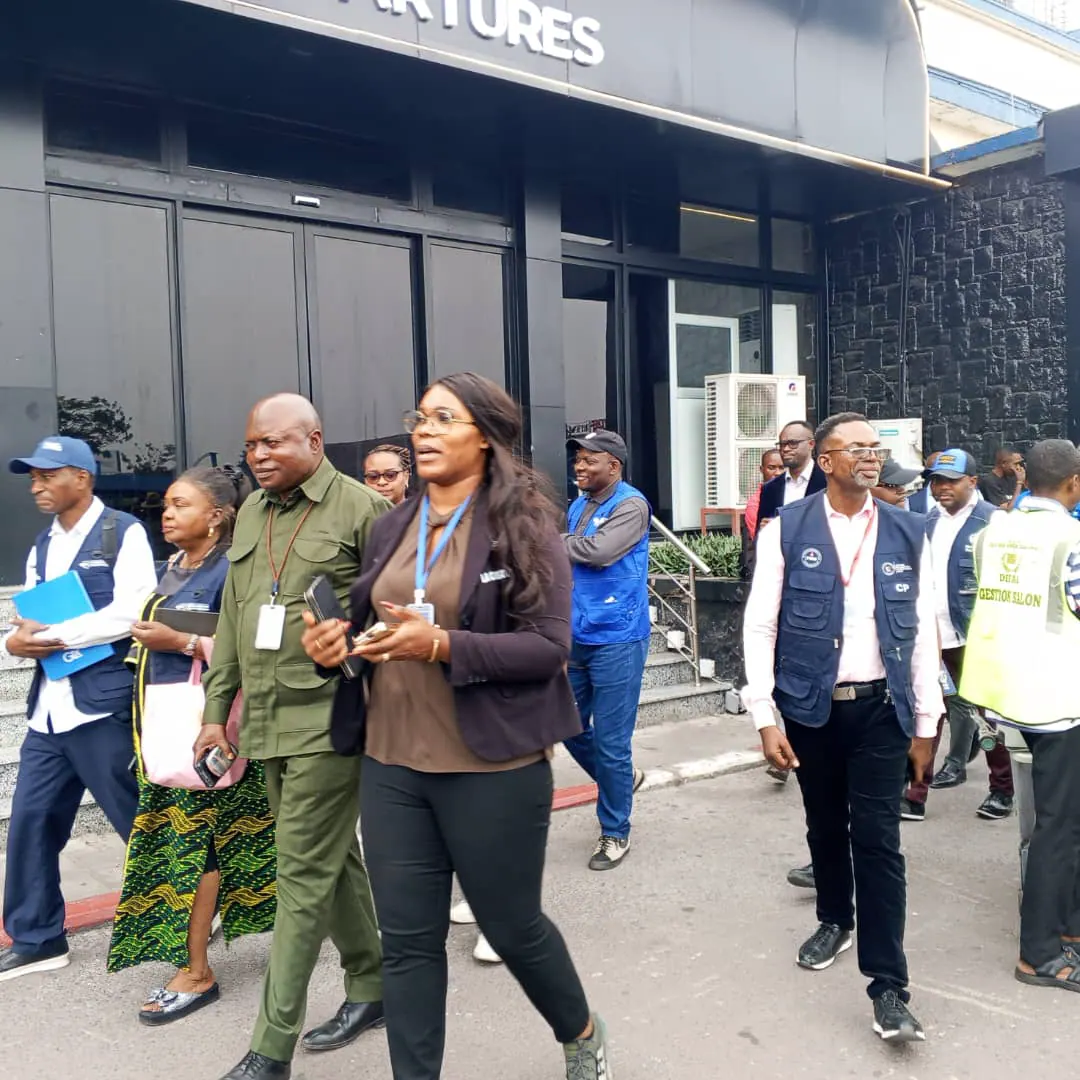
On Tuesday, September 29, 2026, donors and partners of the Democratic Republic of the Congo gathered at N'djili International Airport in Kinshasa to assess the measures in place to respond to the Ebola virus disease. The assessment was conducted by representatives from various organizations, including the U.S. State Department, the Centers for Disease Control and Prevention (CDC), the International Organization for Migration (IOM), the World Health Organization (WHO), AFNET, Expertise France, Médecins Sans Frontières, and the Congolese Government.
According to Mireille Lembwadio, coordinator of the National Border Hygiene Program (PNHF), the assessment aimed to evaluate the country's preparedness and response capacity at N'djili International Airport. The PNHF is responsible for monitoring epidemics at the country's borders. Lembwadio stated that the preparation phase allowed them to assess their capacity to respond to a potential incident in Kinshasa.
The assessment revealed that significant investments have been made at N'djili International Airport, including the establishment of health corridors, hand-washing facilities, and essential supplies that have been pre-positioned. Medical ambulances and isolation containers have also been set up in the domestic and international terminals, as well as at the terminal of the United Nations Organization Stabilization Mission in the Democratic Republic of the Congo (MONUSCO).
The coordinator commended the effective multisectoral coordination with security services operating at Kinshasa airport as part of the Ebola response. The support provided by Airways Management Authority (RVA), the public operator responsible for managing the country's airports, was also highlighted. Lembwadio expressed gratitude to the Government and partners for their contributions to the Ebola response.
The 17th outbreak of Ebola virus disease in the Democratic Republic of the Congo has prompted a robust response from the government and its partners. The assessment at N'djili International Airport is part of a broader effort to enhance preparedness and response measures across the country. The DRC has been dealing with Ebola outbreaks for several years, and the government has been working to strengthen its response capacity.
The assessment will inform efforts to improve the functioning of systems and infrastructure, as well as the personnel and human resources involved in the Ebola response. Donors and partners have expressed satisfaction with the progress made so far and have pledged to continue supporting the DRC in its efforts to combat the Ebola virus disease.
The Democratic Republic of the Congo will continue to work with its partners to enhance its preparedness and response capacity, with a focus on preventing the spread of Ebola and protecting the health of its citizens. The government's efforts to modernize its health infrastructure and strengthen its response systems are ongoing.
Key points
- The Democratic Republic of the Congo has conducted an assessment of its Ebola response measures at N'djili International Airport in Kinshasa.
- The assessment was conducted by representatives from various organizations, including the U.S. State Department, CDC, IOM, WHO, AFNET, Expertise France, and Médecins Sans Frontières.
- The assessment aimed to evaluate the country's preparedness and response capacity at N'djili International Airport and inform efforts to improve the functioning of systems and infrastructure.