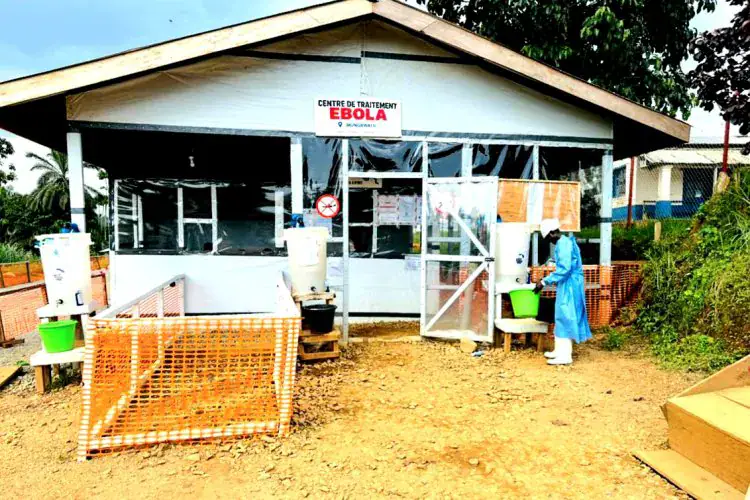
The Ebola outbreak in the Democratic Republic of Congo (DRC) has reached a critical stage, with nearly half of those infected succumbing to the disease. As of November 17, 2026, the outbreak has claimed over 5,400 lives, with a total of 11,000 reported cases. The virus has spread to 67 health zones in eight provinces, with the number of new cases per week ranging from 400 to 500.
The World Health Organization (WHO) and other health authorities have cited security concerns and logistical challenges as major obstacles in responding to the outbreak. The affected areas have experienced violent attacks on healthcare facilities and workers, hindering efforts to contain the virus. Furthermore, the movement of people and goods has been restricted in some areas, making it difficult to deliver medical supplies and personnel.
Children have been disproportionately affected by the outbreak, accounting for over 25% of reported cases. In children under the age of five, the mortality rate is alarmingly high, with seven out of ten infected children succumbing to the disease. Despite efforts to contain the outbreak, the number of new cases remains high, with the WHO expressing concerns about the slow pace of progress.
The outbreak has also highlighted the need for improved infection prevention and control measures in healthcare facilities. The WHO has reported that over 90% of deceased Ebola patients have been buried safely, with dignity and respect, to prevent further transmission of the virus. Laboratory capacity has also been enhanced, with over 20 laboratories now equipped to test for Ebola.
The response efforts have been led by the DRC government, with support from international organizations, including the WHO, the United Nations, and the Africa Centres for Disease Control and Prevention (Africa CDC). Over 17,000 healthcare workers and 46,000 community workers have been trained and equipped to respond to the outbreak.
Despite these efforts, security concerns persist, with attacks on healthcare facilities and workers continuing to hinder response efforts. The ADF militant group has been blamed for recent attacks, which have resulted in the deaths of civilians and healthcare workers. The situation remains volatile, with the WHO and other health authorities calling for increased support and resources to combat the outbreak.
The international community has been urged to provide additional support to combat the outbreak. The situation in DRC remains critical, with the Ebola outbreak posing a significant threat to public health.
Key points
- Over 5,400 people have died from Ebola in the DRC.
- Children under five years old have a mortality rate of 70%.
- Security concerns and logistical challenges continue to hinder response efforts.
Reporting sources
- Ebola imaze guhitana hafi kimwe cya kabiri cy’abayanduye muri... · Isango star Radio