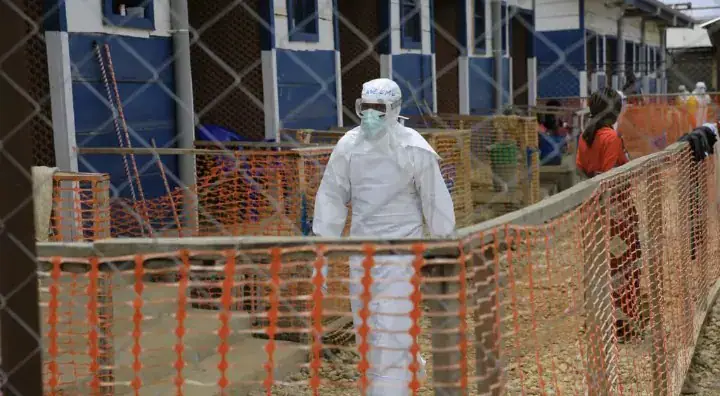
The Ebola epidemic in the Democratic Republic of Congo has now spread to eight provinces, six months after it was first reported in the eastern part of the country. The outbreak, which was officially declared on May 15, has resulted in over 5,500 deaths and 11,200 confirmed cases, making it the deadliest outbreak in the country's history. According to the Gabon Press Agency, the virus has spread rapidly, with 90% of cases concentrated in the provinces of Ituri and North Kivu.
The virus was first reported in the mining town of Mongwalu, in Ituri, and has since spread to 67 health zones across eight provinces. Despite efforts to contain the outbreak, the virus remains active in over 50 health zones, with new cases reported in recent weeks in Ituri and North Kivu. According to Africa CDC, 10 health zones are currently under "sustainable control", meaning no new cases have been reported in 42 days.
However, several obstacles are hindering the response to the outbreak, including inadequate contact tracing, community mistrust, and insecurity. According to Africa CDC, 64% of deaths occur within the community, meaning that patients who die from the disease do not seek medical attention and are not detected. Insecurity has also taken a toll on the response, with over 60 incidents reported against medical agents and health centers in six months.
The insecurity has taken two forms: direct attacks on medical agents and health centers, and violence by armed groups that causes population displacement and accelerates the spread of the virus. The situation is further complicated by the fact that the virus is caused by a rare strain, Bundibugyo, for which there is no specific treatment or vaccine. Researchers are working to develop new treatments and vaccines, but the response on the ground is facing significant challenges.
Despite these challenges, efforts are underway to contain the outbreak. The World Health Organization and other international partners are working with the DRC government to provide medical supplies, training, and support to affected communities. However, the situation remains fragile, and the risk of further spread remains high.
The DRC government has urged calm and called on citizens to take precautions to prevent the spread of the disease. The government has also deployed military personnel to affected areas to provide security and support to medical teams. International partners have also pledged support, with the United States and European Union providing significant funding to support the response.
As the situation continues to unfold, it is clear that the Ebola epidemic in the DRC will require a sustained and coordinated response to bring it under control. The response will require not only medical supplies and personnel but also a commitment to addressing the social and economic factors that are driving the spread of the disease. With the right support and coordination, it is possible to bring the epidemic under control and prevent further spread.
Key points
- The Ebola epidemic in the DRC has resulted in over 5,500 deaths and 11,200 confirmed cases.
- The virus has spread to eight provinces, with 90% of cases concentrated in Ituri and North Kivu.
- Insecurity and community mistrust are major obstacles to the response, with over 60 incidents reported against medical agents and health centers in six months.
Reporting sources
- RDC/Ebola : six mois après son apparition, l’épidémie poursuit sa progression · Gabon Press Agency