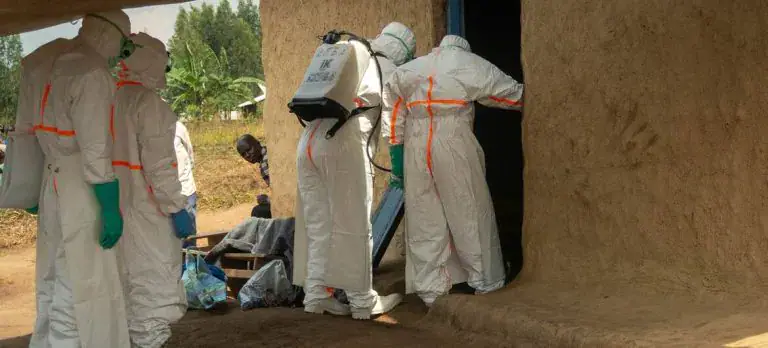
The 17th Ebola epidemic in the Democratic Republic of Congo (DRC) has surpassed 12,000 confirmed cases, with 5,904 deaths reported across eight provinces. According to the UN, the epidemic declared in May has become the country's largest in terms of cases since July. The provinces affected include Ituri, North Kivu, South Kivu, Haut-Uele, Bas-Uele, Tshopo, North Ubangi, and South Ubangi.
The Ituri province remains the main hotspot, accounting for 8,140 confirmed cases and 3,843 deaths, which is 67.7% of the total infections. As of November 24, 66 new cases and 37 deaths were reported, bringing the total number of people hospitalized or in isolation to 1,092, while 3,332 patients have been declared cured. The contact tracing rate stands at 85.1%.
The Ebola outbreak is caused by the Bundibugyo virus, for which no vaccine or specific treatment is currently approved. Health teams face challenges due to armed conflicts, deteriorating road infrastructure, and mistrust and misinformation among some communities. These conditions hinder the detection of new cases, tracking of exposed individuals, and care for patients.
Clashes in eastern DRC have prevented teams from accessing certain areas and disrupted activities at several treatment centers. On November 22, the UN peacekeeping mission in DRC, MONUSCO, deployed a mobile operational base in the Djugu territory, Ituri province, to enhance protection for civilians in the region.
Two days later, MONUSCO facilitated the evacuation of ten health workers, including a doctor and nurses from the Akwe general hospital, who were involved in the fight against the epidemic. Dr. Mohamed Janabi, the World Health Organization's (WHO) regional director for Africa, emphasized the need to protect healthcare professionals and ensure continuity of health interventions.
"Healthcare should never be targeted. Health professionals must be able to carry out their vital work safely," Dr. Janabi stated, calling for preservation of progress made and facilitation of aid access to affected populations. The situation on the ground remains complex, with security concerns and community resistance affecting response efforts.
The international community continues to support the response efforts, with the WHO and other organizations providing technical assistance and resources to combat the epidemic. The situation is being closely monitored, and efforts are being made to contain the outbreak and mitigate its impact on the affected communities.
Key points
- The epidemic has surpassed 12,000 confirmed cases and 5,904 deaths.
- The Ituri province is the main hotspot, accounting for 67.7% of infections.
- Health teams face challenges due to armed conflicts, infrastructure issues, and community mistrust.
Reporting sources
- Côte d’Ivoire-AIP/Inter/ L’épidémie d’Ebola dépasse les 12 000 cas confirmés et fait près de 6 000 morts en RDC (ONU) · Agence ivoirienne de presse