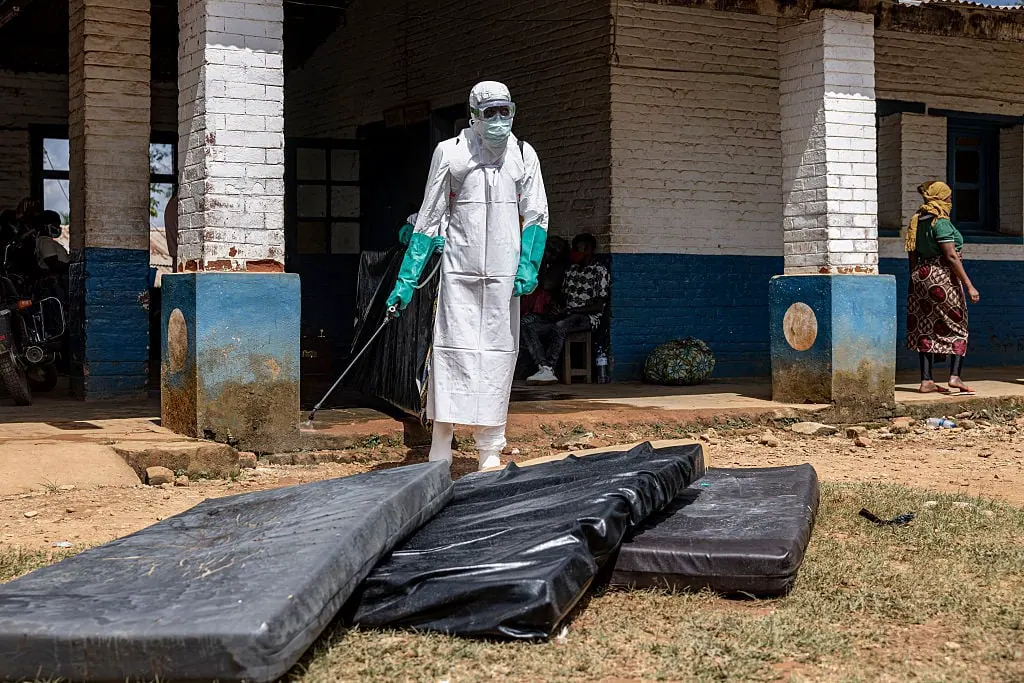
The Ebola outbreak in the Democratic Republic of Congo (DRC) has claimed over 4,000 lives, according to recent reports. The outbreak, which began in August 2018, has been ongoing for several months, with the virus spreading rapidly through the country. Health workers have been battling to contain the outbreak, but the number of cases and deaths continues to rise. The World Health Organization (WHO) has been providing support to the DRC government in its efforts to combat the outbreak.
The DRC's Ministry of Health has reported a total of 4,000 deaths from Ebola, with over 9,000 cases confirmed. The outbreak has been centered in the eastern part of the country, particularly in the cities of Goma and Beni. Health workers have been working tirelessly to vaccinate people and provide treatment to those infected, but the virus continues to spread. The WHO has described the outbreak as a public health emergency of international concern.
The Ebola virus is highly contagious and can cause severe symptoms, including hemorrhaging and organ failure. The virus is spread through direct contact with bodily fluids, such as blood and saliva, and can also be transmitted through contact with contaminated objects. The DRC government has implemented measures to control the spread of the virus, including quarantining affected areas and restricting travel.
The international community has been providing support to the DRC government in its efforts to combat the outbreak. The WHO has deployed teams of experts to the country to help with contact tracing, vaccination, and treatment. Other organizations, such as Médecins Sans Frontières (MSF), have also been providing medical care and support to affected communities.
Despite these efforts, the outbreak remains a significant challenge for the DRC government and the international community. The virus continues to spread, and the number of cases and deaths is expected to rise. The DRC government has appealed for more support and resources to help combat the outbreak, including funding, personnel, and equipment.
The Ebola outbreak in the DRC has also had significant economic and social impacts. The virus has affected trade and commerce, particularly in the eastern part of the country, and has also led to a decline in tourism. The outbreak has also had a psychological impact on affected communities, with many people living in fear of contracting the virus.
The South African government has expressed concern over the Ebola outbreak in the DRC and has offered support to the DRC government in its efforts to combat the virus. South Africa has also been providing medical care and support to its citizens who have been affected by the outbreak. The South African government has urged its citizens to exercise caution when traveling to the DRC and to follow all necessary health protocols.
Key points
- The Ebola death toll in the DRC has exceeded 4,000, with over 9,000 cases confirmed.