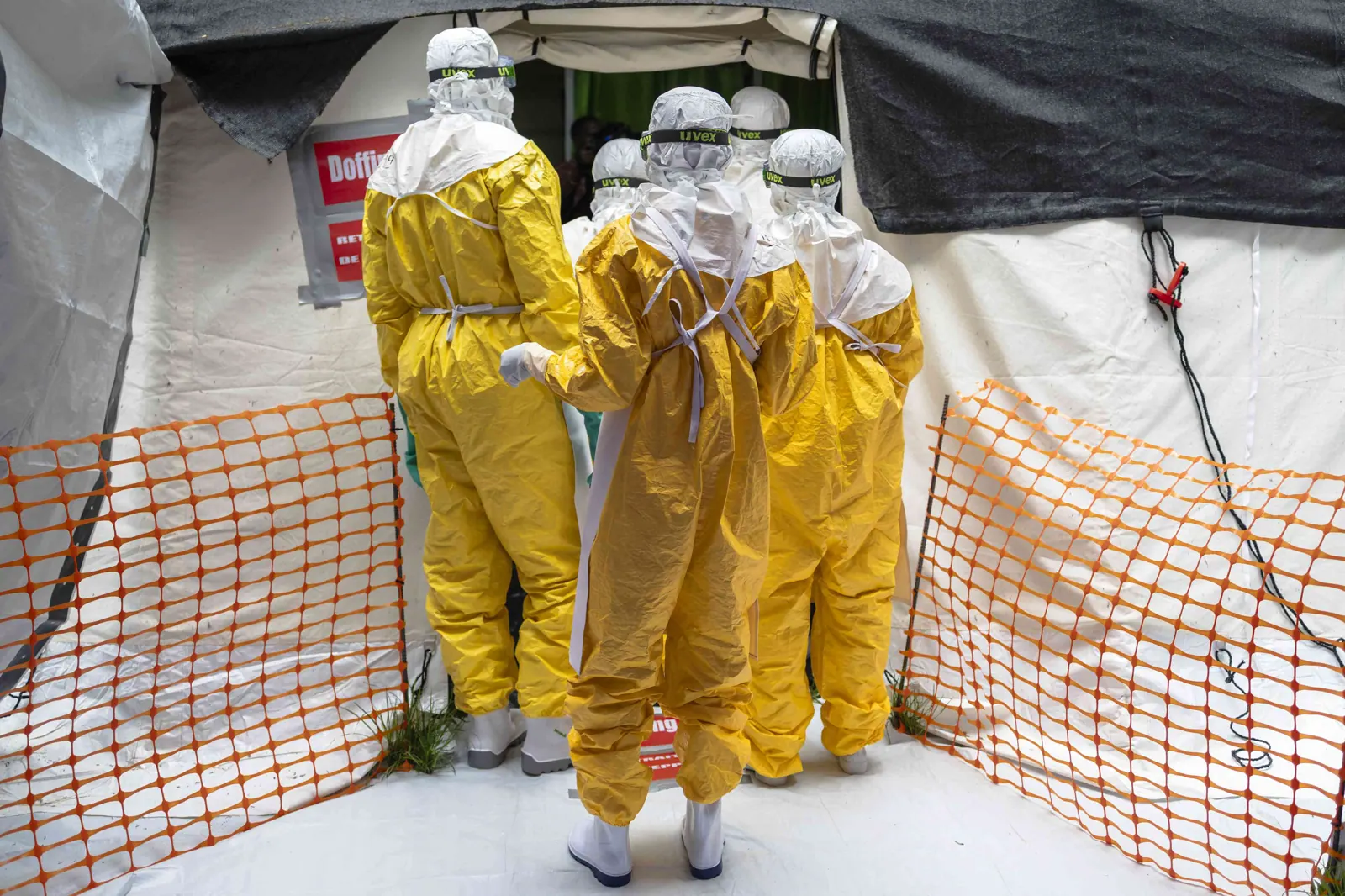
The Ebola outbreak in the Democratic Republic of Congo has reached 7,911 confirmed cases and 3,801 confirmed deaths. This puts the outbreak among the largest Ebola epidemics ever recorded in the country. The outbreak has now spread to 63 health zones across seven provinces. The latest affected area is Dungu in Haut-Uélé, which lies close to the South Sudan border.
The scale of the outbreak has grown sharply in recent weeks. The World Health Organization (WHO) reported 475 additional confirmed cases and 222 deaths in the week ending September 20. This takes the cumulative case fatality ratio to about 48.3 per cent. The continuing geographical expansion has placed greater emphasis on movement across borders, informal routes, and displacement sites.
The international response is increasingly focusing on population movement, particularly as the outbreak extends towards border areas. The International Organisation for Migration (IOM) said it is supporting Ebola preparedness and response operations in the DRC, Uganda, and nine other at-risk neighbouring countries. A major part of this work involves mapping population movement to identify major transport corridors and population hotspots.
The IOM has identified over 700 alerts through its efforts, with more than 60 confirmed Ebola cases detected through surveillance work. The agency's response has supported over 36 million health screenings and reached over 35 million people with risk-communication and community-engagement messages. The IOM says its response must move as fast as the outbreak.
The outbreak was declared a Public Health Emergency of International Concern in May and remains under international emergency coordination. WHO's emergency committee reviewed the situation again in August and maintained the designation. The challenge is no longer confined to the original epicentre in Ituri, with transmission reported across multiple provinces.
Hadja Habib, speaking from the European Union, emphasized that preparedness cannot begin once an emergency is already underway. She said pandemic preparedness must be built before a crisis hits, which means investing in surveillance, vaccines, and treatments, as well as resilient supply chains. The DRC outbreak involves the Bundibugyo virus, a species of Ebola for which there is no licensed vaccine or specific licensed treatment.
The WHO says research and testing of potential medical countermeasures are underway. The outbreak demonstrates why preparedness must be sustained before outbreaks escalate. The situation remains a concern, particularly as the outbreak moves through areas connected by trade, displacement, and cross-border travel, with informal crossing routes facilitating the export and import of the virus.
Key points
- The Ebola outbreak in the DRC has reached 7,911 confirmed cases and 3,801 confirmed deaths.
- The outbreak has spread to 63 health zones across seven provinces.
- The international response is focusing on population movement and preparedness.