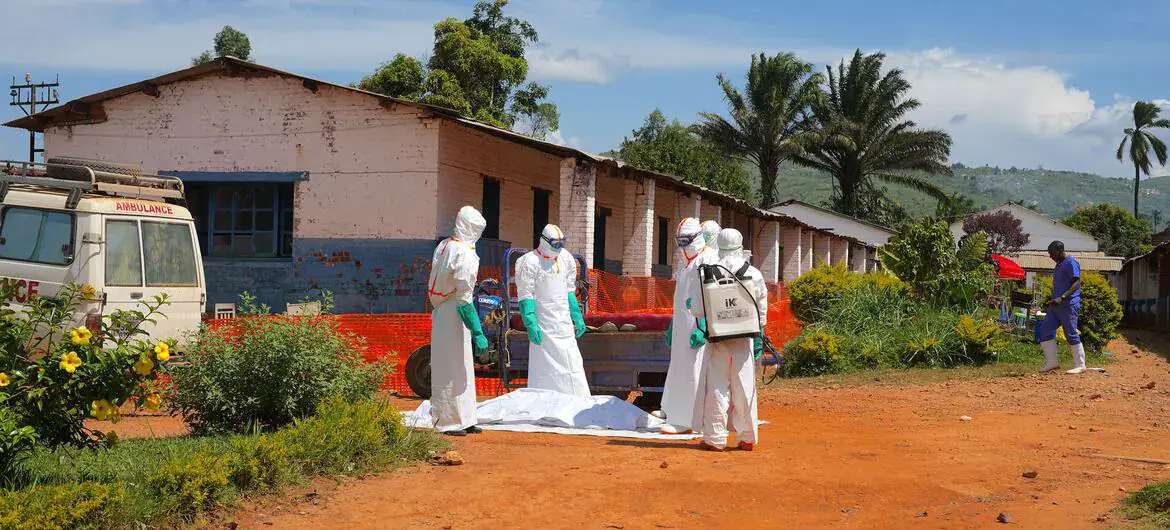
Health authorities in the Democratic Republic of the Congo's Ituri province have reported a decline in Ebola cases in several health zones. According to provincial health authorities, the number of positive cases is decreasing, with seven cases currently being treated at the Ebola treatment center of the Institut supérieur des techniques médicales (ISTM) in Bunia. This development is seen as encouraging, but health authorities are cautious about the risks of further transmission.
Despite the decline in cases, health authorities warn that the risks of propagation remain high due to insecurity, population movements, and resistance from some communities to response efforts. In the health zone of Niania, in the Mambasa territory, three positive cases are registered, and there are concerns about the arrival of patients from Bafwasende, in the Tshopo province, where health structures have been vandalized. This has raised fears of further transmission.
In the health zone of Mambasa, 14 positive cases are currently registered, down from about 20 cases in the previous three weeks. Health authorities attribute this improvement to greater community adherence to prevention measures and efforts by response teams. The respect of health measures, early reporting of suspected cases, and involvement of community relays are seen as key factors in reducing the spread of the disease.
However, several factors continue to worry health authorities, including insecurity, population movements, and community resistance. In some mining areas, such as PK 47 and PK 51, response teams face persistent resistance from some community members, complicating surveillance and patient care. In Mongwalu, population movements from North Kivu have raised fears of new contamination foci.
Health authorities are also concerned about the limited access of health teams to certain localities, including the Damas zone, due to insecurity. This has reduced the effectiveness of field interventions. Despite these challenges, health authorities are working to maintain prevention measures and collaborate with response teams to prevent a resurgence of the disease.
The decline in Ebola cases in Ituri province is a positive development, but the ongoing risks of transmission mean that vigilance is still necessary. Health authorities are urging communities to maintain prevention measures and work with response teams to prevent further transmission. This includes reporting suspected cases early and adhering to health measures.
The situation in Ituri province highlights the complexities of responding to Ebola outbreaks in areas affected by insecurity and community resistance. Health authorities and response teams face significant challenges in accessing affected areas and implementing effective response measures. The situation requires continued attention and support to prevent a resurgence of the disease.
Key points
- Health authorities report decline in Ebola cases in Ituri province.
- Risks of further transmission persist due to insecurity and community resistance.
- Communities are urged to maintain prevention measures and collaborate with response teams.