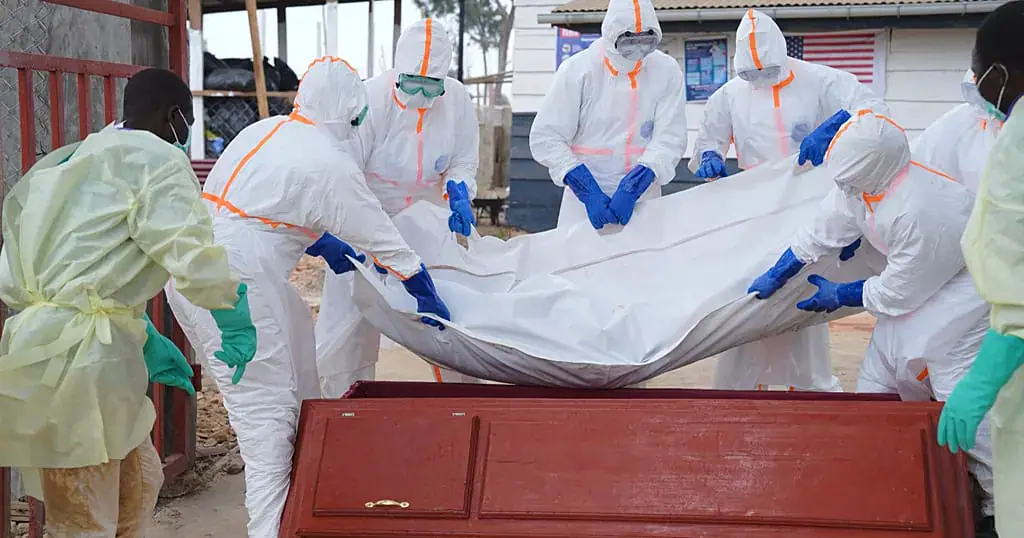
In the Democratic Republic of Congo, a team of dignified and safe burial workers is fighting against prejudice as they work to contain the Ebola outbreak. Chimène Mwanaki, a female team member, shared her experience of facing misconceptions about women in the fight against Ebola. She said some people believe that women like her might spread the disease to their husbands or struggle to find a spouse due to their role in the response effort.
The Ebola outbreak in the DRC has recorded over 11,000 cases, with nearly half of those infected resulting in death, according to government data. This outbreak is the deadliest in the DRC's history and is on track to surpass the death toll from the West African outbreak that occurred between 2014 and 2016. The disease has spread to eight of the country's 26 provinces, moving rapidly and straining the healthcare system.
To combat the spread of Ebola, the Dignified and Safe Burial (DSB) programme has established community-based teams, known as ECUMAIR, to handle deaths in areas where DSB teams are not present. These local teams work to ensure that burials are conducted safely and with dignity, in accordance with protocols that prevent team members from becoming infected.
Jean Manina, supervisor of the DSB teams in the Oicha health zone, visits local teams to ensure that work is being carried out according to burial protocols. He checks the dashboard daily for alerts from health zones with ECUMAIR teams and visits areas where mobile teams are deployed. This helps to prevent team members from becoming infected when they remove their protective gear.
Burial teams in the DRC face not only health risks but also attacks from community members who falsely accuse them of mutilating the bodies of the deceased. Team members take samples to test whether Ebola was the cause of death, which sometimes leads to misconceptions. Additionally, team members often face prejudice within their own neighborhoods, with some being told that they are making money and helping Westerners kill their fellow citizens.
Despite the challenges, burial teams continue to work tirelessly to break the chain of Ebola transmission. They face long hours, limited time with their families, and community hostility. However, their efforts are crucial in containing the outbreak and preventing further spread of the disease. The DSB programme and ECUMAIR teams are working together to ensure that burials are conducted safely and with dignity.
The Ebola outbreak in the DRC was declared six months ago, but the disease remains out of control, and efforts to contain it are faltering. The situation is being closely monitored, and response efforts are being adjusted to address emerging hotspots and prevent further spread of the disease. Key efforts include community engagement, safe burials, and contact tracing to identify and isolate new cases.
Key points
- The Ebola outbreak in the DRC has recorded over 11,000 cases, with nearly half of those infected resulting in death.
- Burial teams face health risks, prejudice, and community hostility as they work to contain the outbreak.
- The Dignified and Safe Burial programme and ECUMAIR teams are working together to ensure safe and dignified burials.