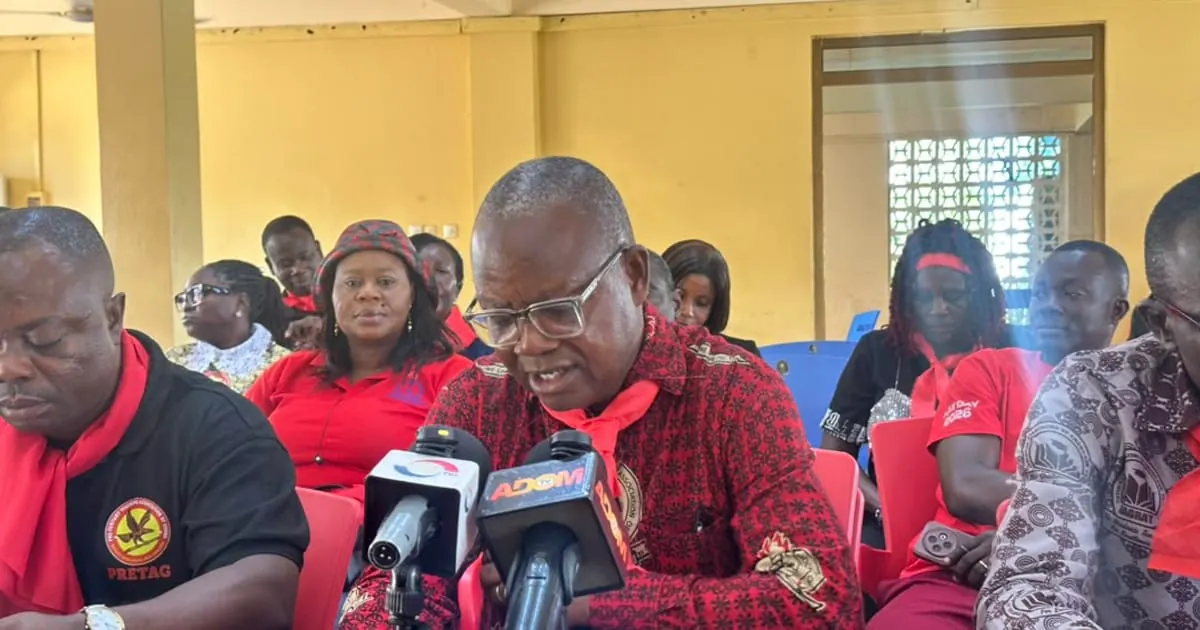
Teacher unions in the Eastern Region of Ghana have reaffirmed their commitment to the ongoing strike, citing unresolved concerns over their working conditions. At a press conference in Koforidua on October 2, 2026, the unions expressed their support for their national leadership and urged them to sustain the strike until their demands are met. The strike, now in its fifth day, has resulted in the closure of classrooms across the region.
The Regional Secretary of the Ghana National Association of Teachers (GNAT), William Boadu Abedi, addressed the media alongside other union leaders. He emphasized that the unions will not back down until their concerns are addressed and their expectations are met. Abedi acknowledged the impact of the strike on teaching and learning but stressed that teachers were compelled to take action due to unresolved concerns over their working conditions.
One of the major areas of concern is the negotiation of a new Collective Agreement, which was supposed to be concluded by June 2026 but remains unresolved. This has left teachers uncertain about the conditions governing their employment, including the security of their tenure and the employer's commitments to them. The existing agreement has elapsed, and teachers are currently working without a clear understanding of their employment conditions.
The teacher unions also expressed frustration over the employer's failure to automatically place teachers who passed their promotion examinations in December 2025 and February 2026 on their new ranks. This has resulted in delays in the payment of their corresponding salaries and arrears. Additionally, teachers have been denied the 20 percent Deprived Area Allowance, which is intended to compensate them for their sacrifices in teaching in underserved and remote areas.
The Eastern Regional GNAT Secretary, William Boadu Abedi, accused the employer, the Fair Wages and Salaries Commission, and the Controller and Accountant-General's Department of foot-dragging and delaying in addressing the concerns. He questioned whether it is a crime to be a teacher and why they are being held hostage by the delays. The unions are demanding prompt action to address these concerns and improve their working conditions.
The strike has significant implications for the education sector in the Eastern Region, with classrooms remaining shut for the fifth consecutive day. The teacher unions contend that persistent challenges affecting teachers, including poor conditions of service, are contributing to the poor performance of learners at both the basic and senior high school levels. The unions are calling for urgent attention to these issues to prevent further deterioration in the education sector.
The situation remains tense, with no immediate resolution in sight. The teacher unions have made it clear that they will not return to work until their demands are met. The government and relevant authorities will need to take swift and decisive action to address the concerns and prevent further disruptions to the education sector. The impact of the strike on the region's education system and the future of the students remains a pressing concern.
Key points
- The teacher unions in the Eastern Region of Ghana are demanding improved conditions of service, including a new Collective Agreement and the implementation of the 20 percent Deprived Area Allowance.
- The strike has entered its fifth day, with classrooms across the region remaining shut.
- The unions have accused the employer and relevant authorities of delaying in addressing their concerns.