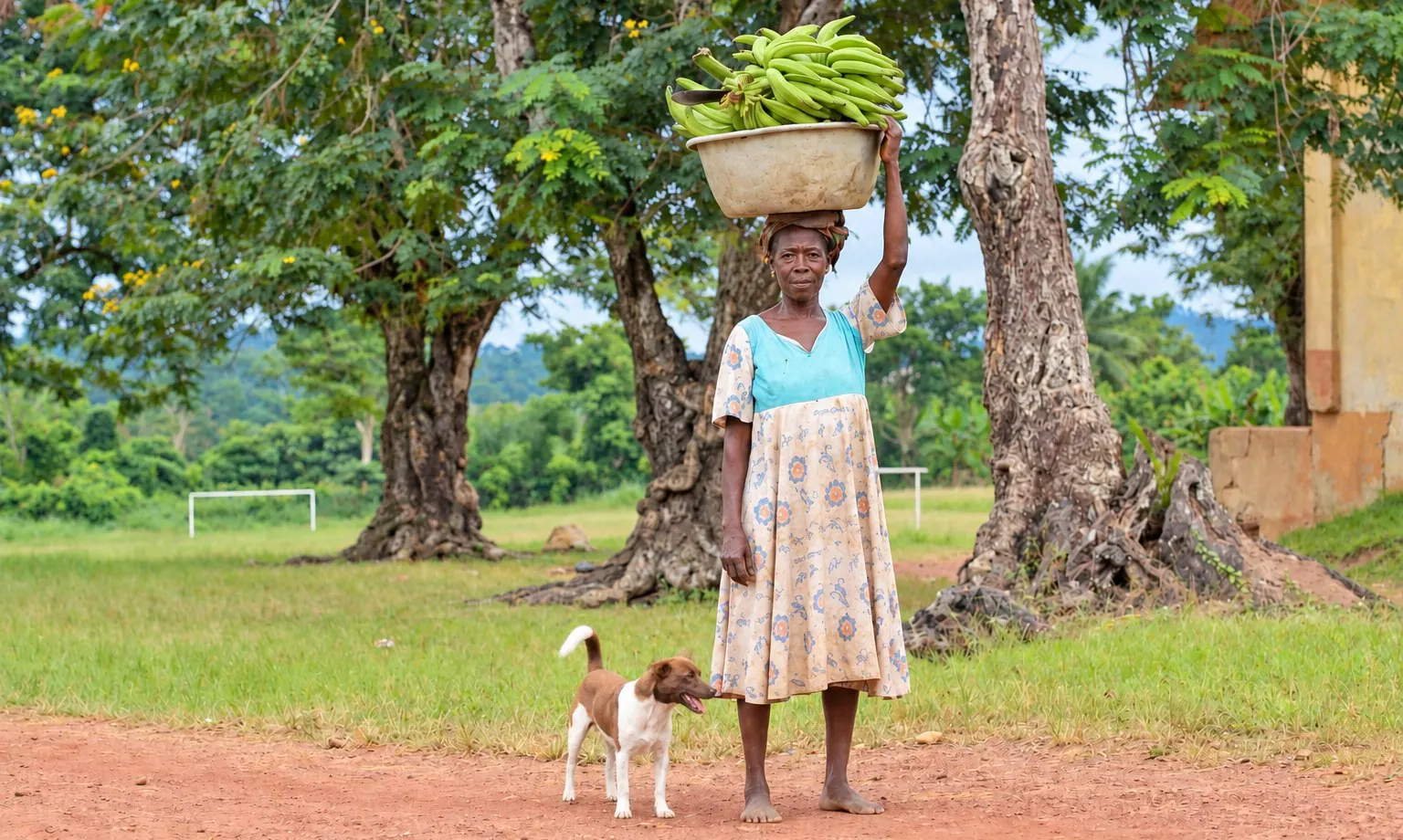
Maame Akosua Konadu, a farmer from Akroso in the Asene Manso Akroso District of Ghana's Eastern Region, embarks on a daily journey of over 20 kilometres to sell her plantains at market. She sets off early each morning, carrying a large pan of freshly harvested plantains on her head, accompanied by her small dog. This arduous trek is a necessary part of her daily routine, as she relies on the sale of her produce to support her family.
Maame Akosua's daily walk is not an isolated incident, but rather a reflection of the broader challenges faced by rural Ghanaian women. According to the Ghana Statistical Service's 2025 Quarterly Labour Force Survey, agriculture is the country's second-largest employment sector, engaging around five million people. However, rural women like Maame Akosua often lack access to credit, as they do not own land or other assets that financial institutions accept as collateral.
The lack of access to credit and other resources hinders the ability of rural women to expand their production and increase their income. Without capital, it is difficult for them to afford better transportation, storage, or processing facilities, leaving them to continue walking long distances to get their harvest to buyers. This perpetuates a cycle of poverty, particularly in rural areas where households depend on self-employed farming.
The absence of nearby markets or reliable transport options in areas like Akroso means that farmers bear the physical cost of moving their produce themselves, cutting into both their time and earnings. Data from the United Nations shows that women and girls aged 15 and above in Ghana spend 15.5 percent of their time on unpaid care and domestic work, more than three times the 4.6 percent recorded for men.
The burden of long market journeys is compounded by the time pressures faced by rural women. The UN notes that poverty in Ghana remains heavily concentrated in rural areas, particularly among households that depend on self-employed farming. Maame Akosua's daily trek illustrates this reality directly, highlighting the need for solutions to address the challenges faced by rural women.
Potential remedies to address the challenges faced by rural women like Maame Akosua include better rural roads, affordable transportation, access to credit, storage and processing facilities, and secure land rights for women. However, there is no indication of any specific intervention planned for Akroso or the surrounding district, nor any timeline for road or market improvements in the area.
For now, Maame Akosua's routine remains unchanged: waking, loading her pan, and walking with her dog toward a market more than 20 kilometres away, day after day, to keep her family fed. Her story highlights the resilience and determination of rural women in Ghana, who continue to face significant challenges in their daily lives.
Key points
- Rural Ghanaian women like Maame Akosua Konadu face significant challenges in accessing credit and other resources.
- The absence of nearby markets and reliable transport options exacerbates the burden of long market journeys for rural women.
- Potential remedies to address these challenges include better rural roads, affordable transportation, and access to credit and storage facilities.